



3601 – 3645 San Pablo Avenue
The western side of the 3600 block of San Pablo Avenue is rich with layered history spanning more than a century, and remarkably, many of its original buildings still stand today.
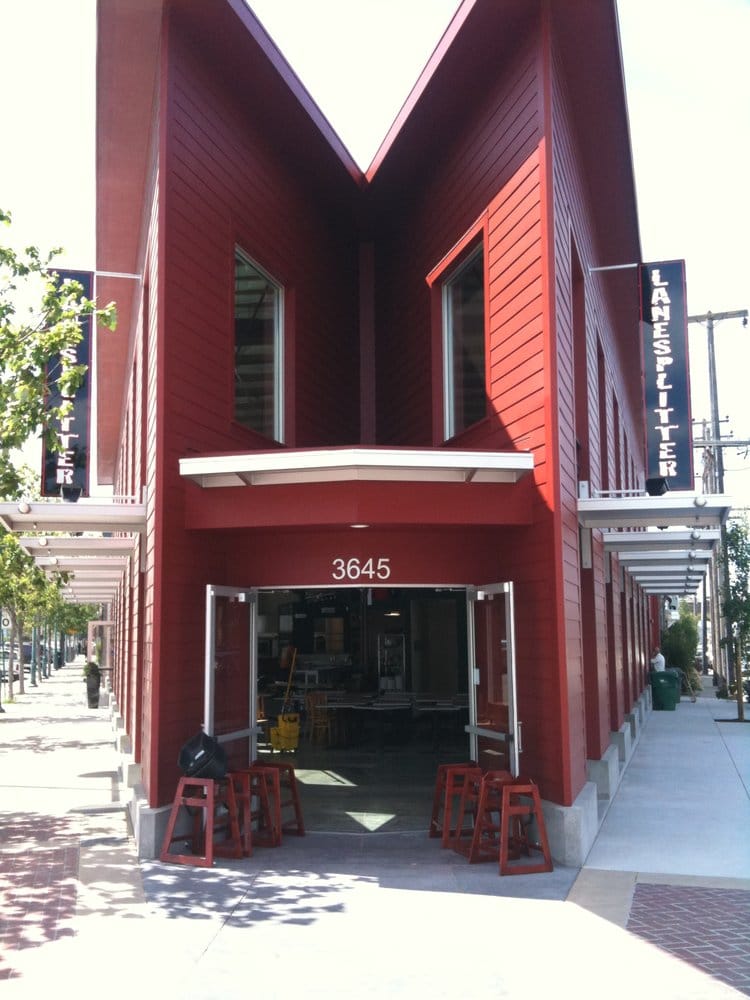
3645 San Pablo Avenue
We begin at 3645 San Pablo Avenue, now home to Lanesplitter Pizza. For much of the 20th century, this corner parcel was occupied by a service station, later followed by a Jug Liquor Store that remained in business until around 1997, closing after the passing of its longtime owner, Ira O’Neal.
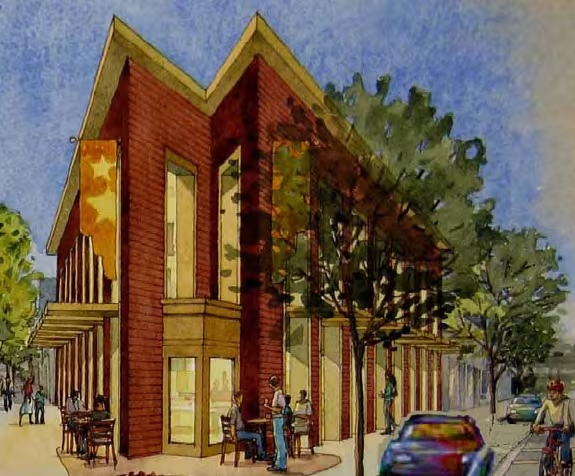
The distinctive flatiron-shaped building that Lanesplitter occupies today was approved by the city in 2007 and completed in 2010, making it the newest structure on the block.
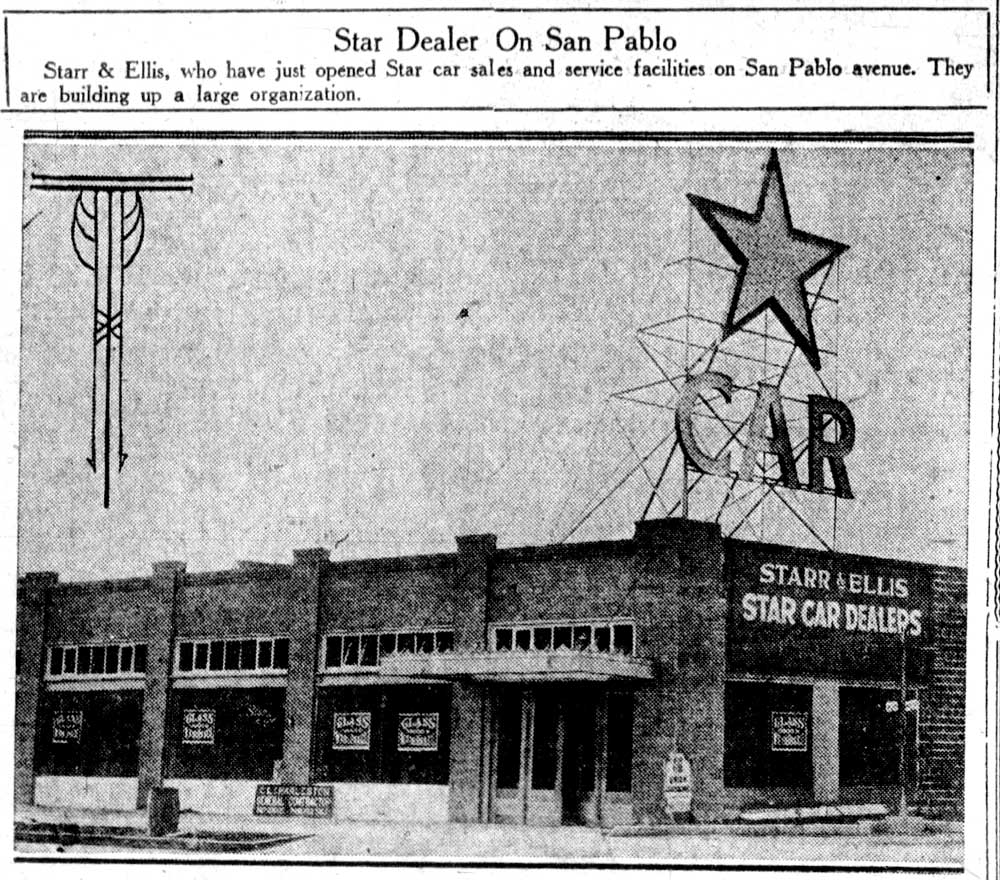
3631 – 3637 San Pablo Ave
Next is the long building spanning 3631–3637 San Pablo Avenue, originally constructed in 1923 as the Starr & Ellis automobile dealership. The firm sold the Star Car, an affordable model positioned as a competitor to the Ford Model T. The Star was produced by Durant Motors, founded in Lansing, Michigan, which also operated an assembly plant in East Oakland. Despite early promise, Durant struggled to compete with the growing dominance of Ford, General Motors, and Chrysler, and production of the Star ended in 1928.
Following the collapse of the Star brand, the building entered a period of rapid turnover. In 1929, it housed Apex Radio and an Automobile Clearing House, followed in 1930 by Cochran & Celli Used Cars.
From approximately 1931 through 1945, the property operated as The Key Garage, servicing automobiles and selling used vehicles during the Depression and wartime years.
By 1946, the space had transitioned to Key Auto Supply, and in 1953 it became the headquarters of the East Bay Union of Machinists, Local 1304, reflecting the corridor’s growing industrial and labor presence in the postwar era.
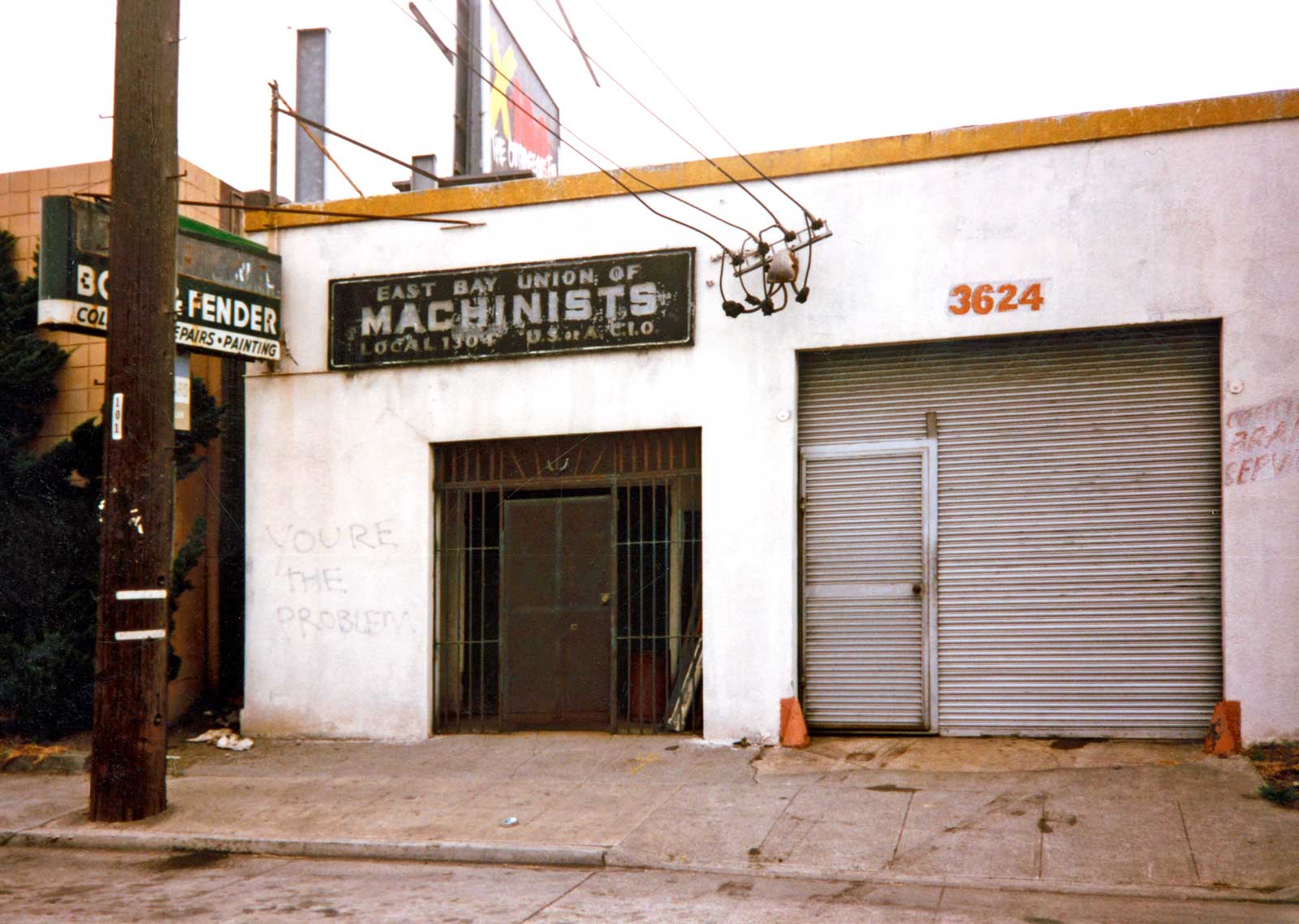
In the 1970s, the large building was partitioned into two with Local 1304 operating out of 3637 and a transmission shop moving into 3631.
These businesses remained until about 1992, when the building was purchased by builder Daryl Rush, who gutted and structurally reinforced the aging structure for use as his workshop. Rush, working alongside artist Will Tate, helped establish a collective of woodworkers, metal fabricators, and craftspeople known as Sgraffito, giving the building a new life rooted in the arts and creative reuse.
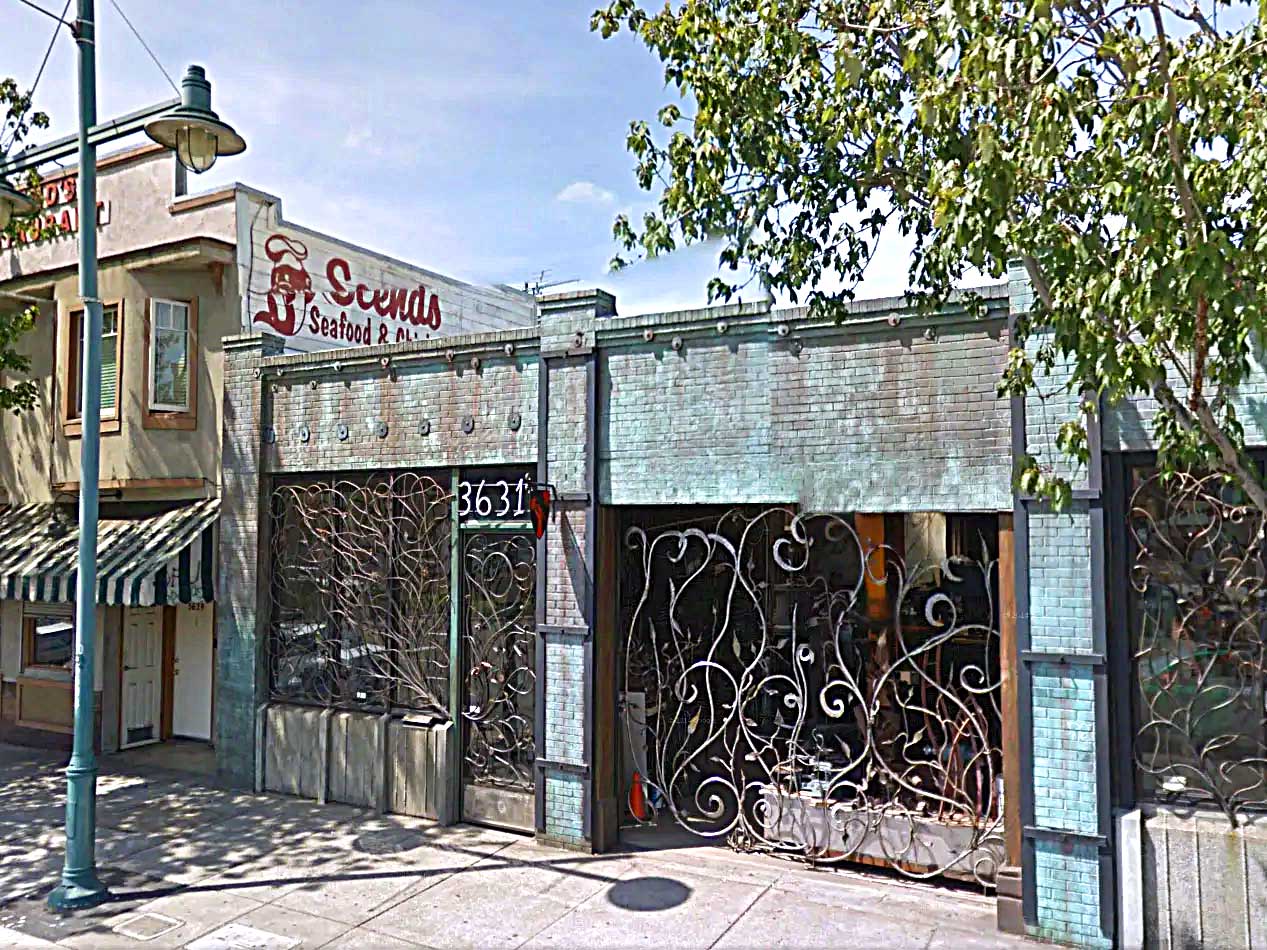
3627-3629 San Pablo Avenue
The next structure, 3627–3629 San Pablo Avenue, is currently home to Rob Ben’s Restaurant & Lounge, owned by retired professional football player Marshawn Lynch. Newspaper archives indicate that this address has always operated as a restaurant or bar in some form.
The earliest reference appears in 1946 as the Dan Rose Café, with Rose also operating a card room next door. Later incarnations included The Cow Bell and Eli’s Bar & Restaurant.
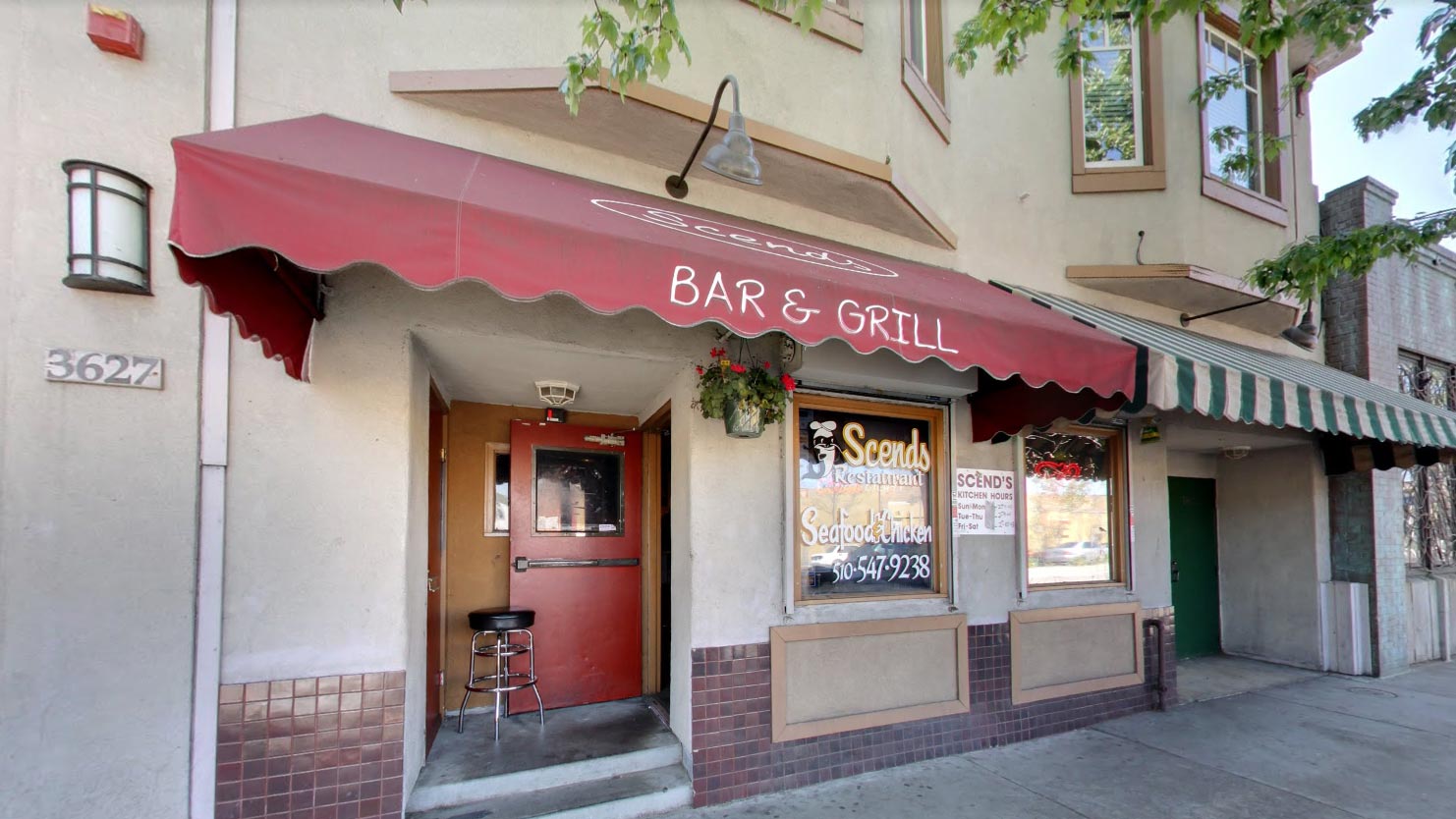
In 1967, the building became The Do Drop Inn, run by Eleanor Richards until her death in 1983. The business then passed briefly to her sister, Cassie Nickelson, who sold the property—only to reacquire it a decade later. In 1997, Nickelson opened the beloved soul food institution Scend’s, which operated until 2017, when Nickelson, then 80 years old, retired.
Lynch, who grew up in North Oakland and was a longtime Scend’s patron, took over the space in 2018, opening Rob Ben’s in tribute to a fallen mentor.
3625 San Pablo Avenue
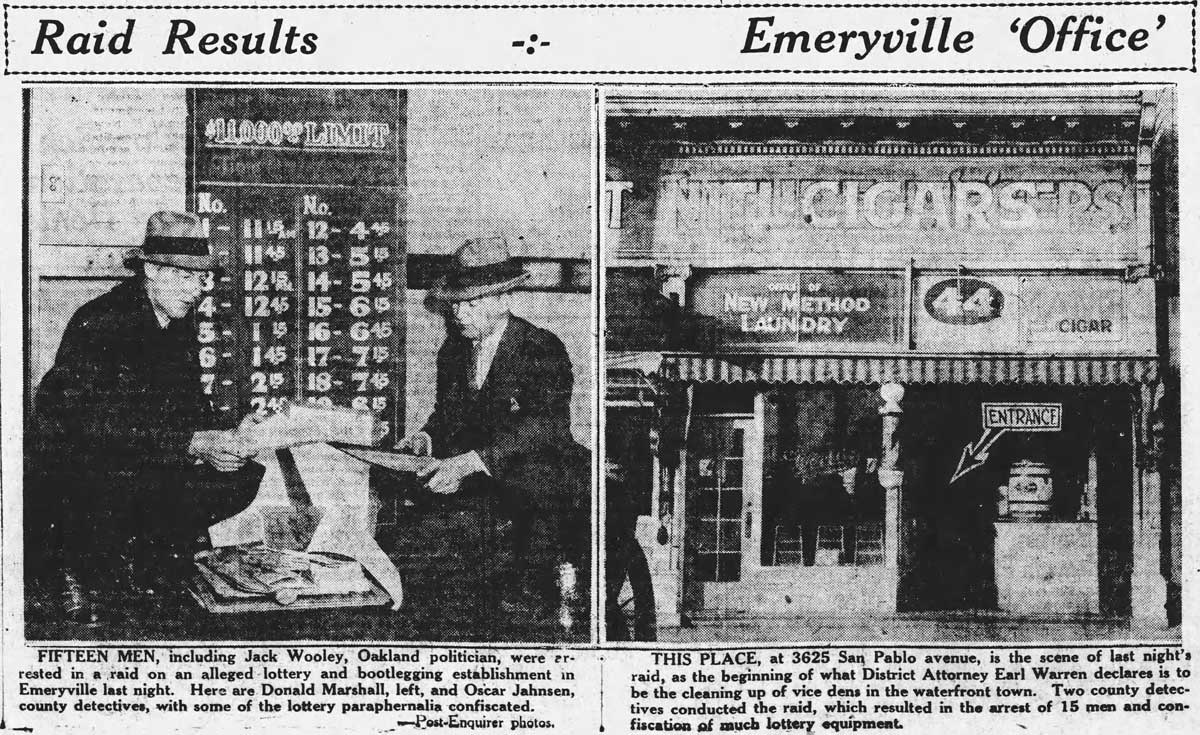
Next is 3625 San Pablo Avenue, now a small open lot serving adjacent businesses. Early records identify this site as a barber shop that also sold cigars. During Prohibition, newspaper accounts place it at the center of vice raids involving lottery games and bootlegging. At the time, it was owned by local Oakland politician named Jack Wooley.
Later listings describe it as a confectionery store, selling cigars, sweets, and household goods.
3615-19 San Pablo Avenue
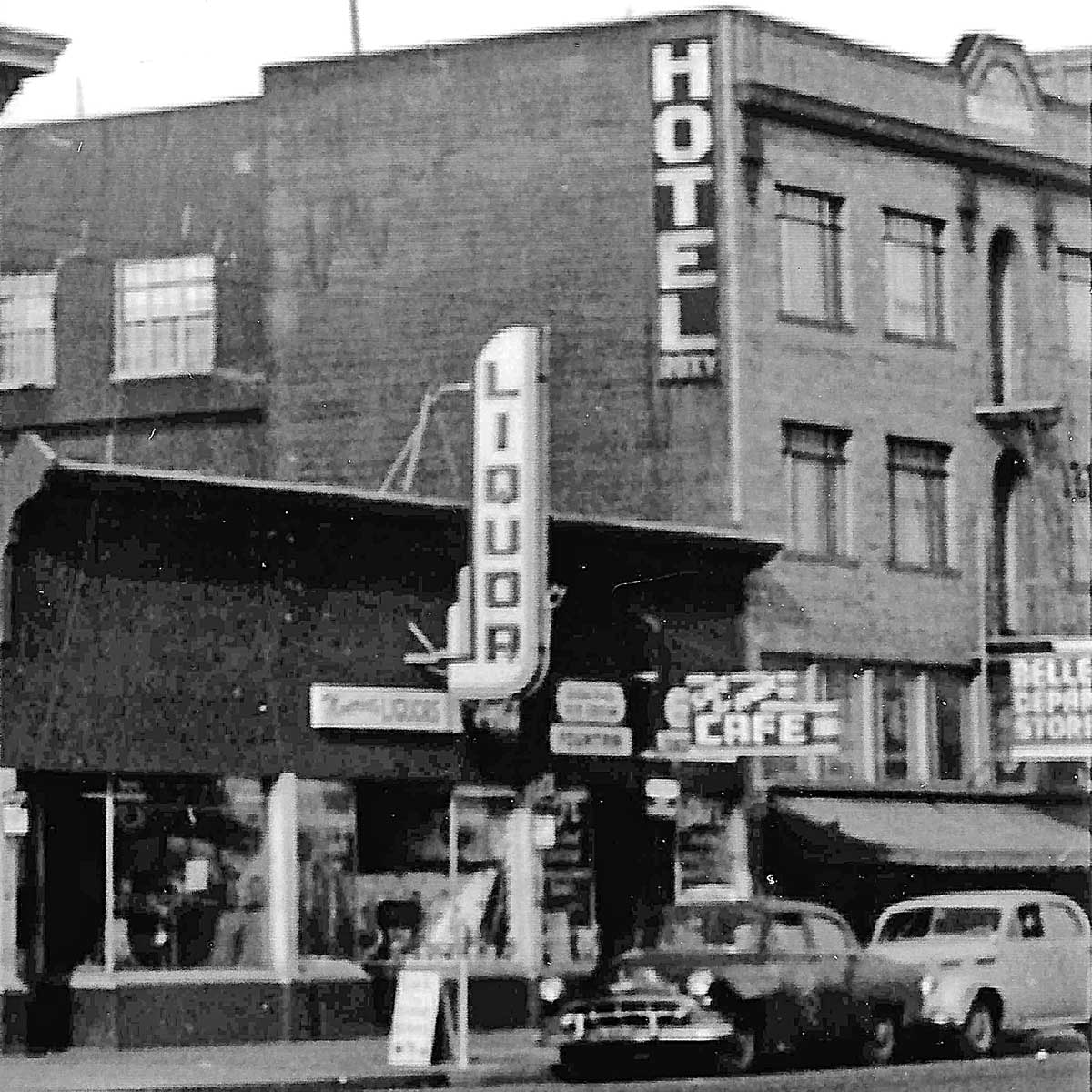
Continuing south, we arrive at 3615–3619 San Pablo Avenue, a still-standing building constructed in 1926 as the Laurel Hotel, offering 40 rooms. By the mid-1930s it was renamed the Roxy Hotel.
The ground-floor commercial space was leased to Bellegarde’s, a small department store opened by John Baptiste Bellegarde. The business was later taken over by his son, Edward Bellegarde, who ran it until his death in 1968.
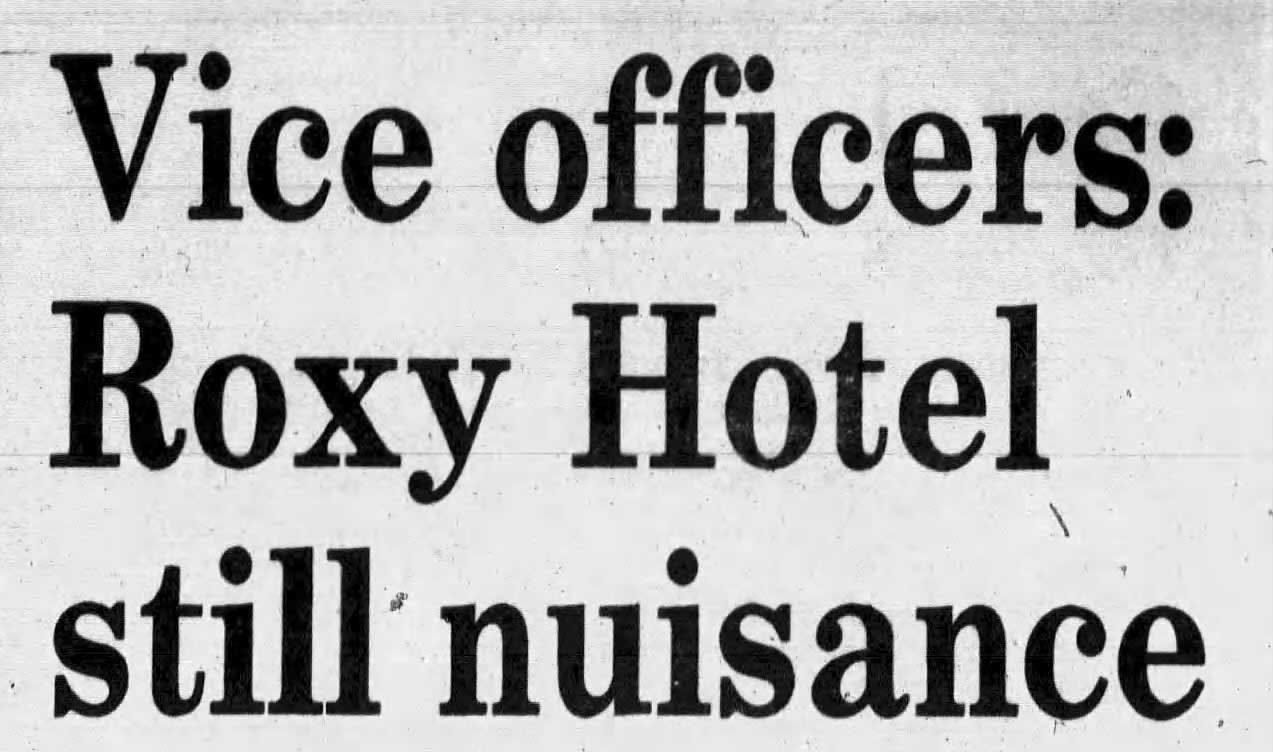
By the 1970s, the hotel had become associated with prostitution and narcotics and was the target of frequent police raids. Declared a public nuisance, the city moved to close it. The building was eventually sold and converted into apartments.
Today, the ground floor is occupied by Golden Gate Locksmith, a fourth-generation Black-owned business, which you’ll hear more about at Stop 13.
3609-3613 San Pablo Avenue
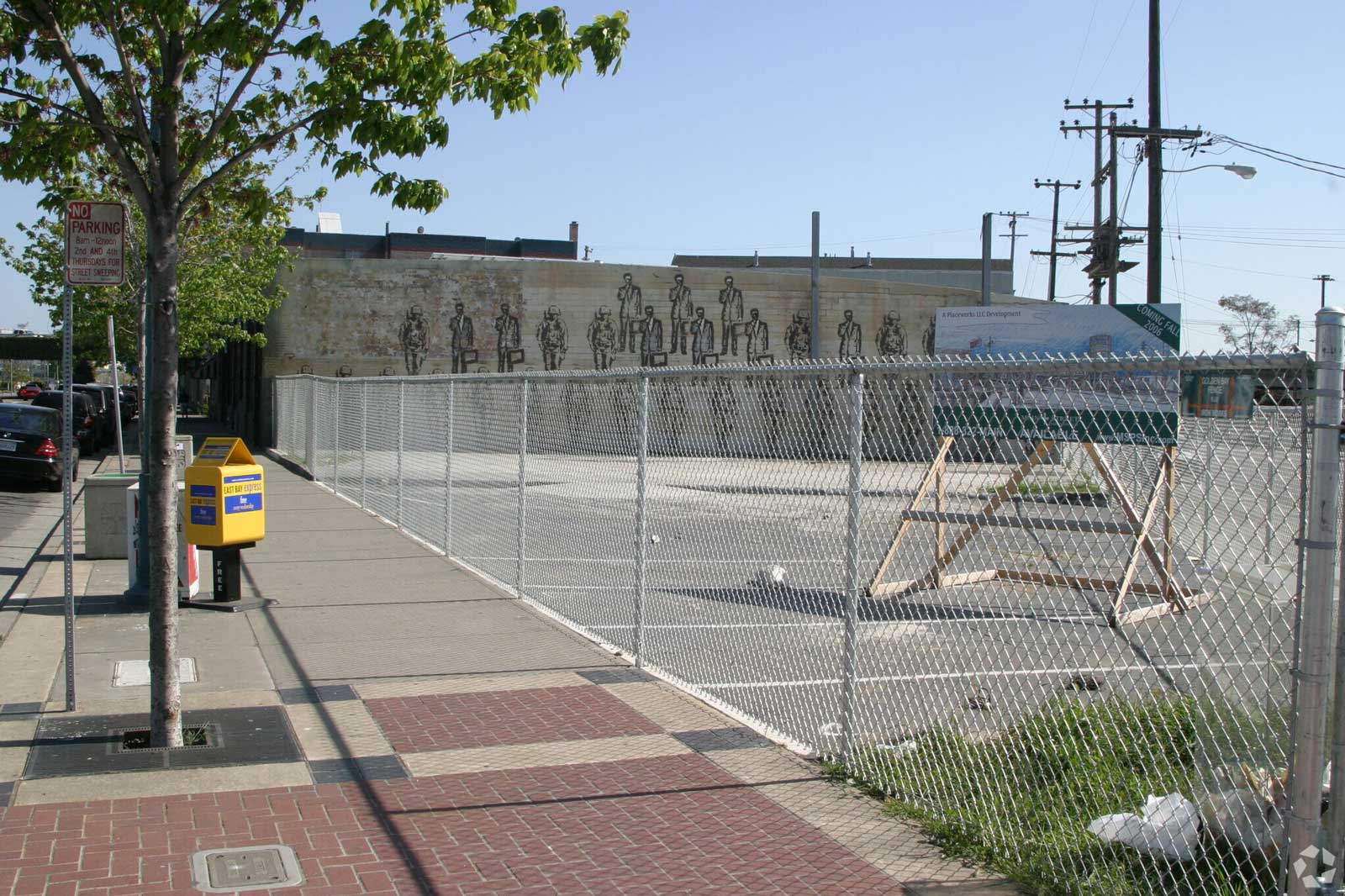
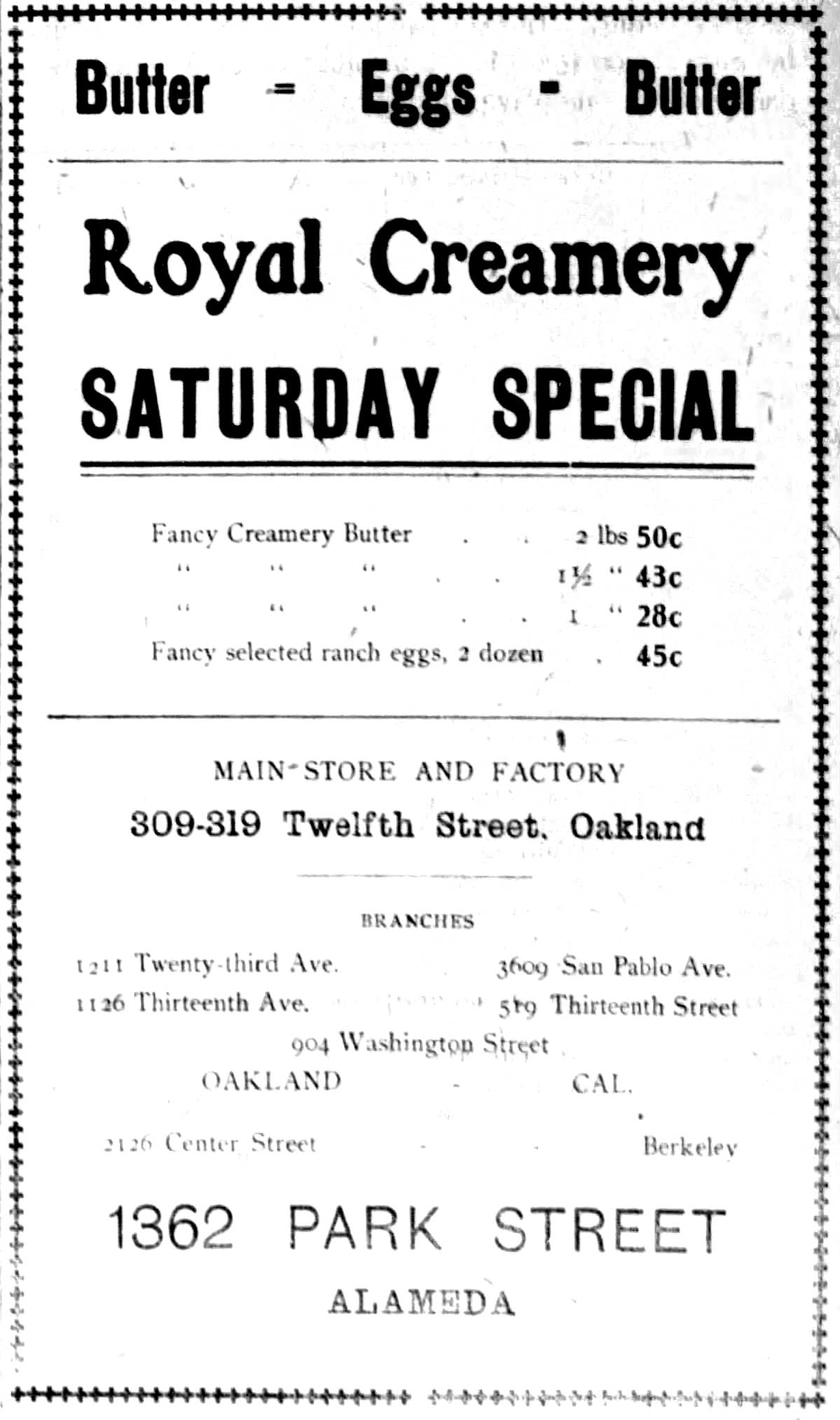
Between 3605 and 3615 San Pablo Avenue is another small vacant lot. Records dating back to 1908 show it was once a branch of Royal Creamery, which appears to have operated here until 1913. It was later listed as Colbert & Co., followed by Syd’s Barber in 1951.
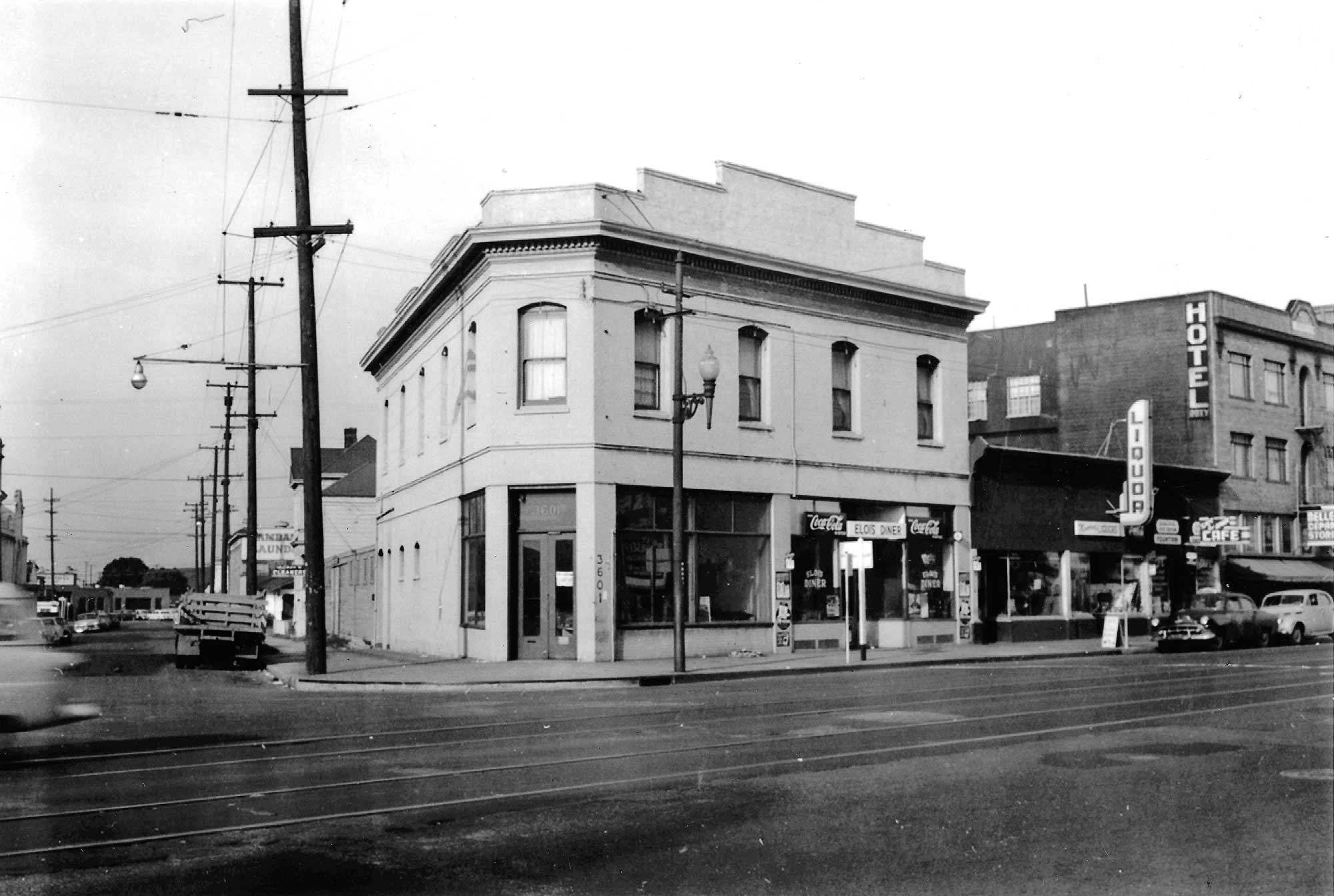
A 1955 photograph, used as the feature image for this stop, shows the site occupied by a liquor store and small café.
3601-3605 San Pablo Avenue
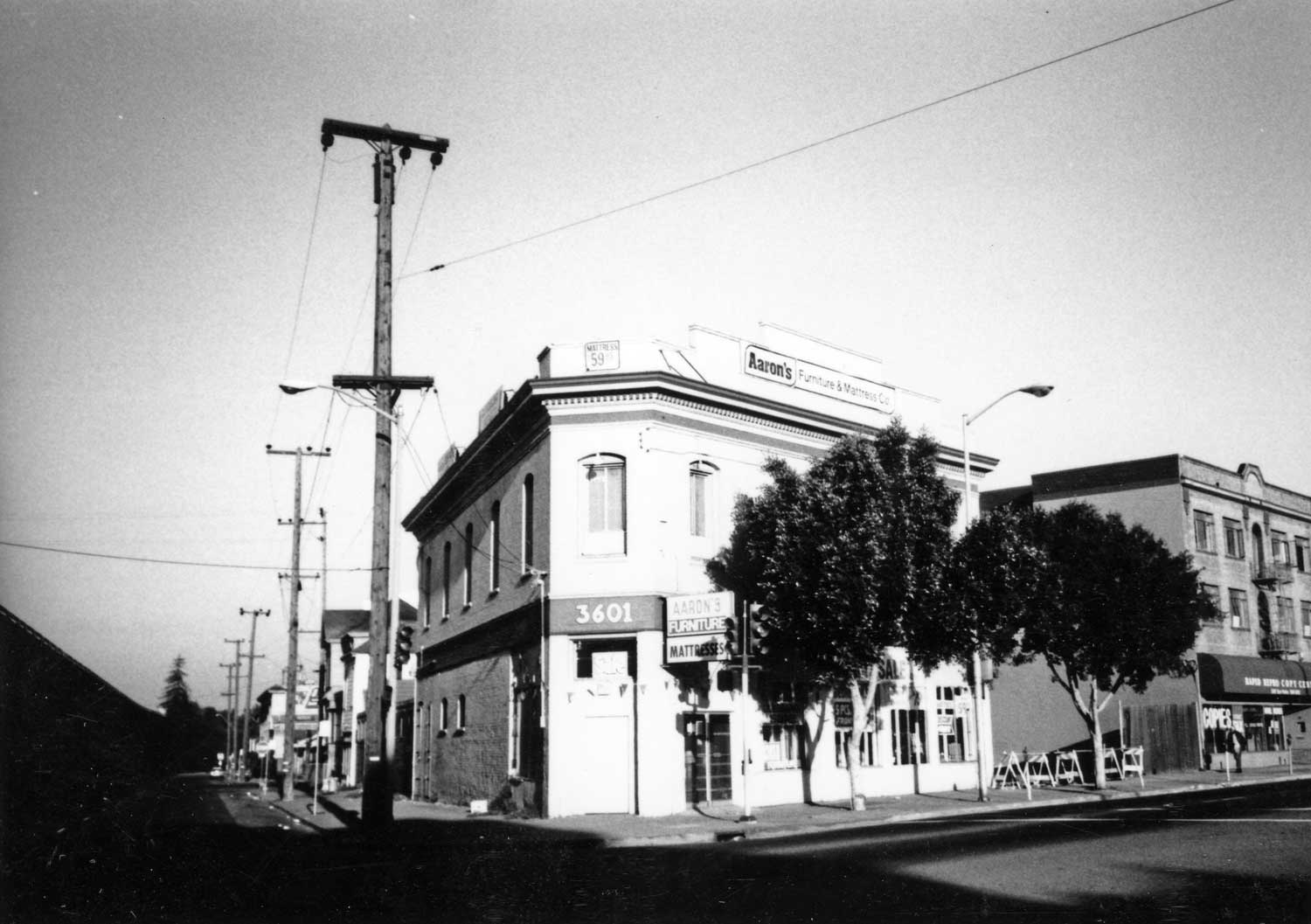
Finally, we reach the corner building at 3601–3605 San Pablo Avenue that is split by the Oakland-Emeryville border..
Construction on this building began in 1906 and was financed by George C. Young, a wholesale shoe merchant out of San Francisco. It was constructed with two storefronts and an upper hall to accommodate the many fraternal societies of the time.
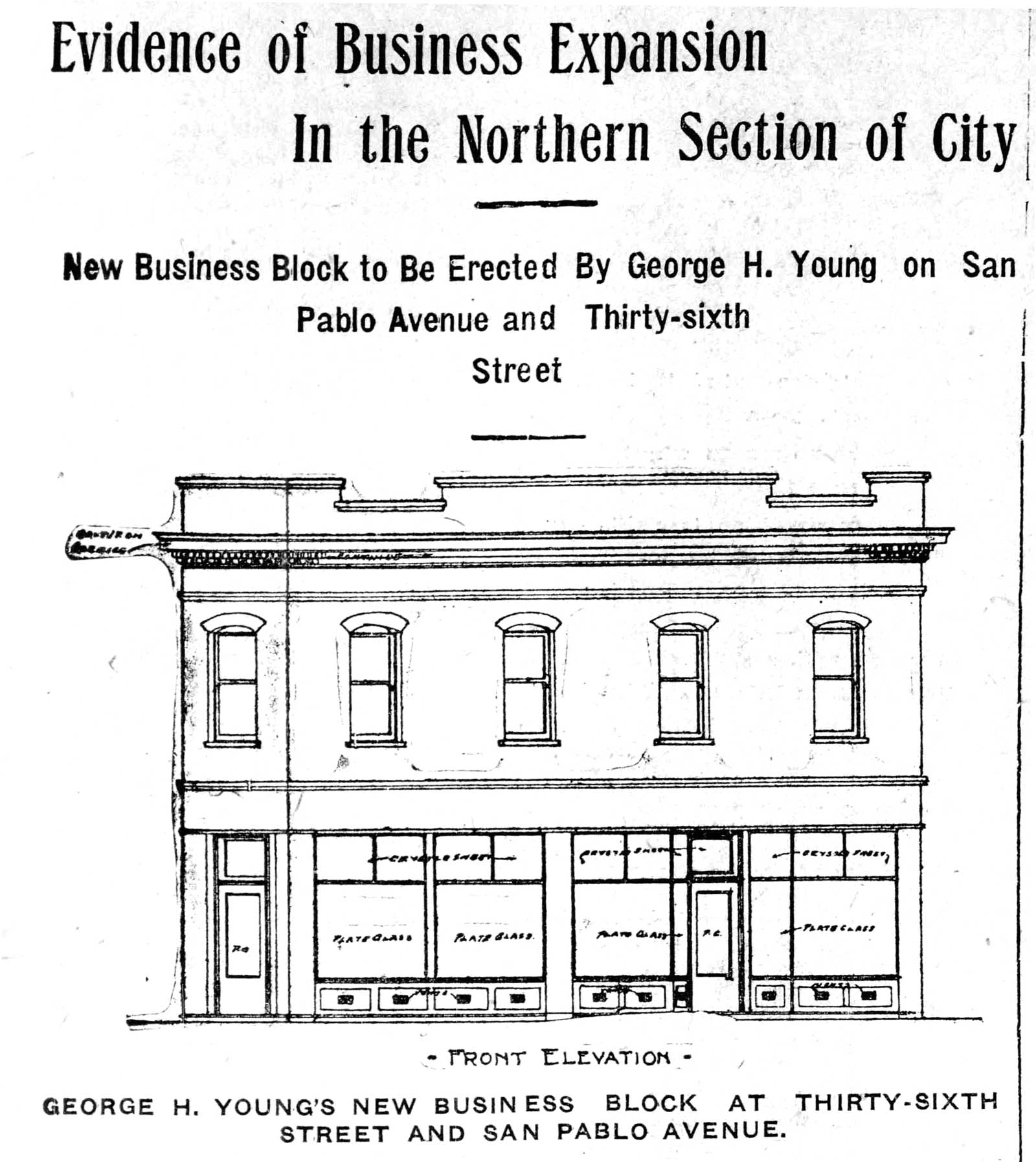
During construction, the building was damaged by the 1906 Earthquake requiring repair but construction was still completed that same year.
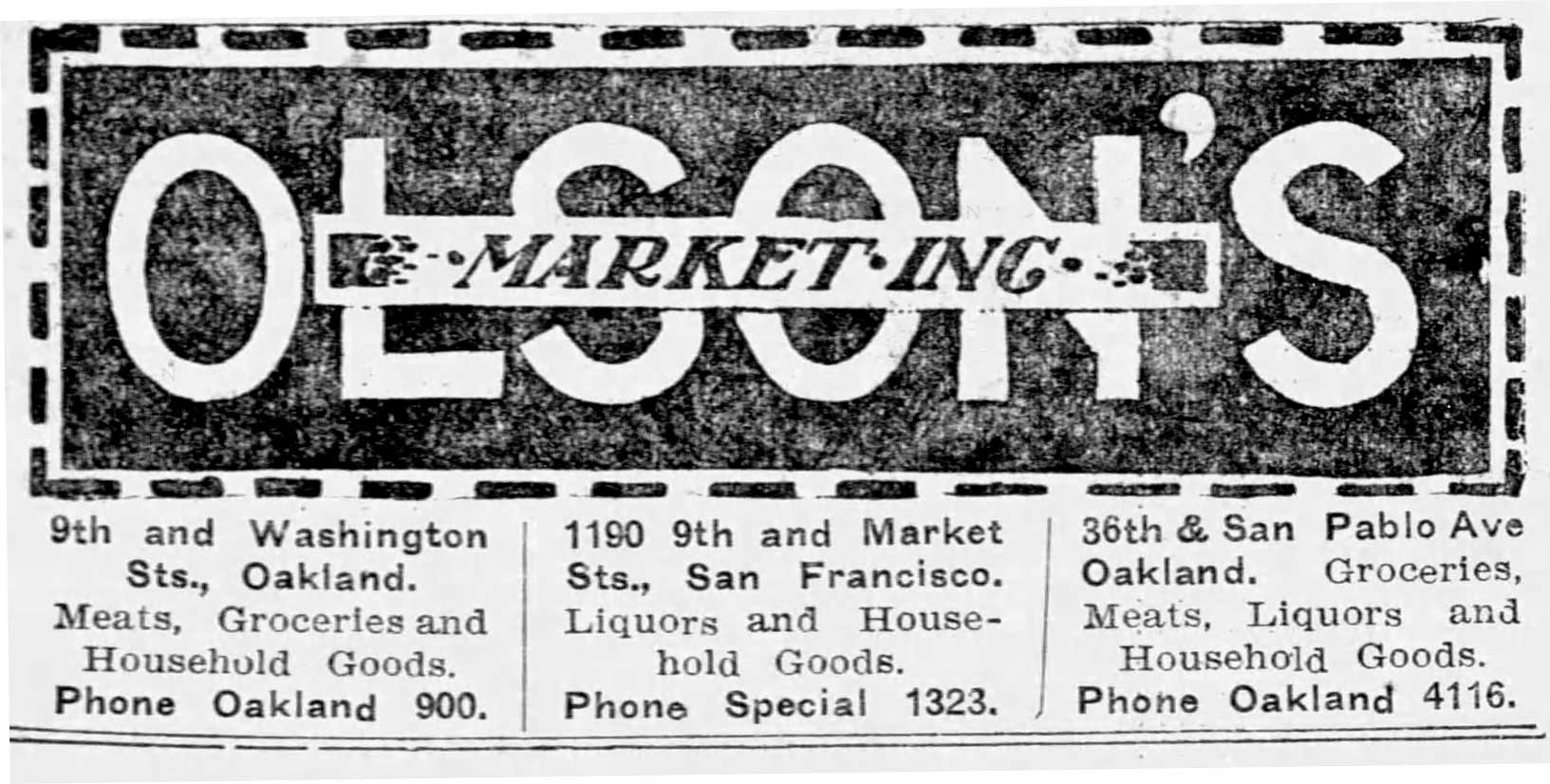
The first occupant was for a small grocer named Olson’s Market who operated two other locations including one in San Francisco and one in Oakland. After this, 3601 was briefly occupied by a “Toggery” (Clothing Store) in 1911.
By 1915, it was occupied by the Pacific Auto Tire & Tube Company, a distributor for B. F. Goodrich. By 1923, the space had transitioned into a Firestone tire dealership, reflecting San Pablo Avenue’s growing role as an early auto corridor.
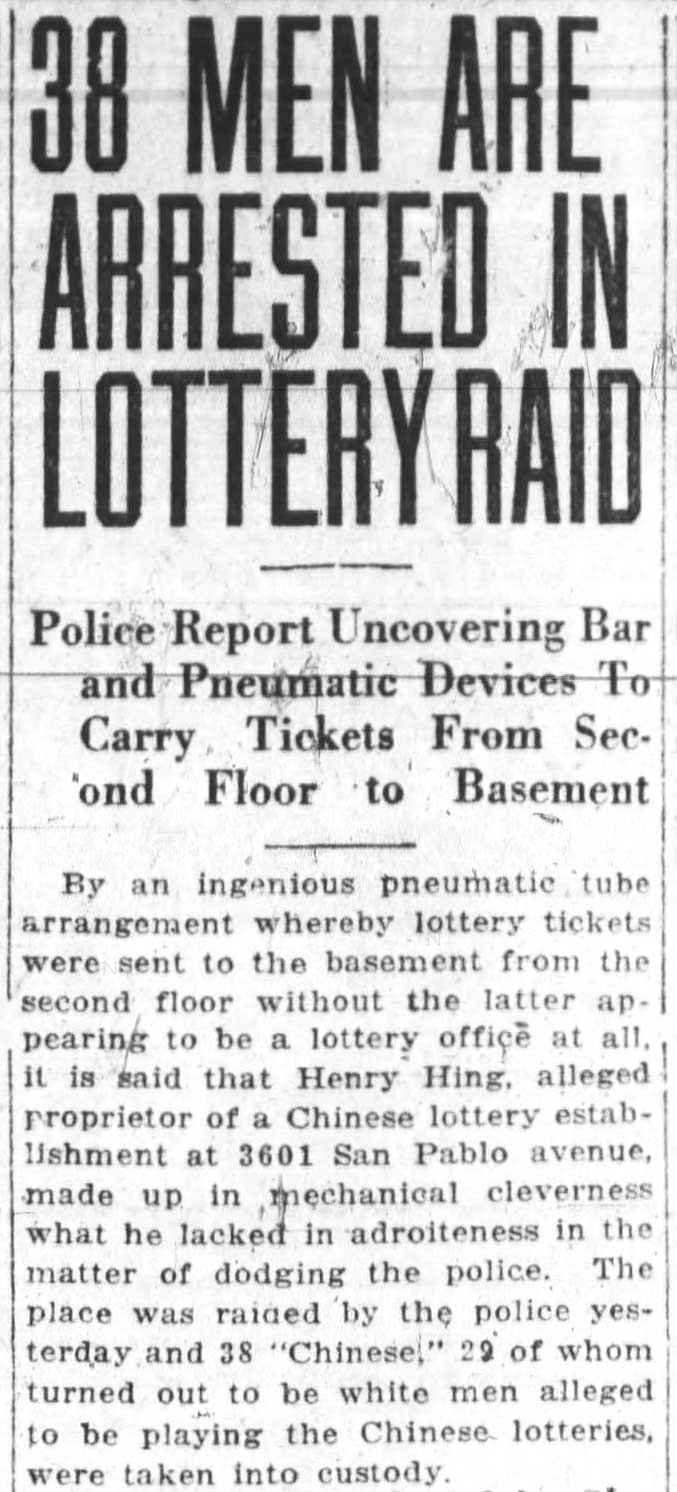
Consistent with both the era and the neighborhood, newspaper accounts from the Prohibition period note that the upstairs residential flat was raided for hosting a Chinese lottery operation, along with other illegal activities associated with bootlegging.
By the 1930s, 3601 was occupied by a Dry Cleaner and 3605 by a small neighborhood market known as Clay’s Store.
By the early 1950s, 3601 was occupied by Brown’s Builders Supply Company, while 3605 became the Hank Davis Café. By 1955, the use of the space had shifted again with 3605 operating as Elois Diner, which was known for serving Southern-style dishes.
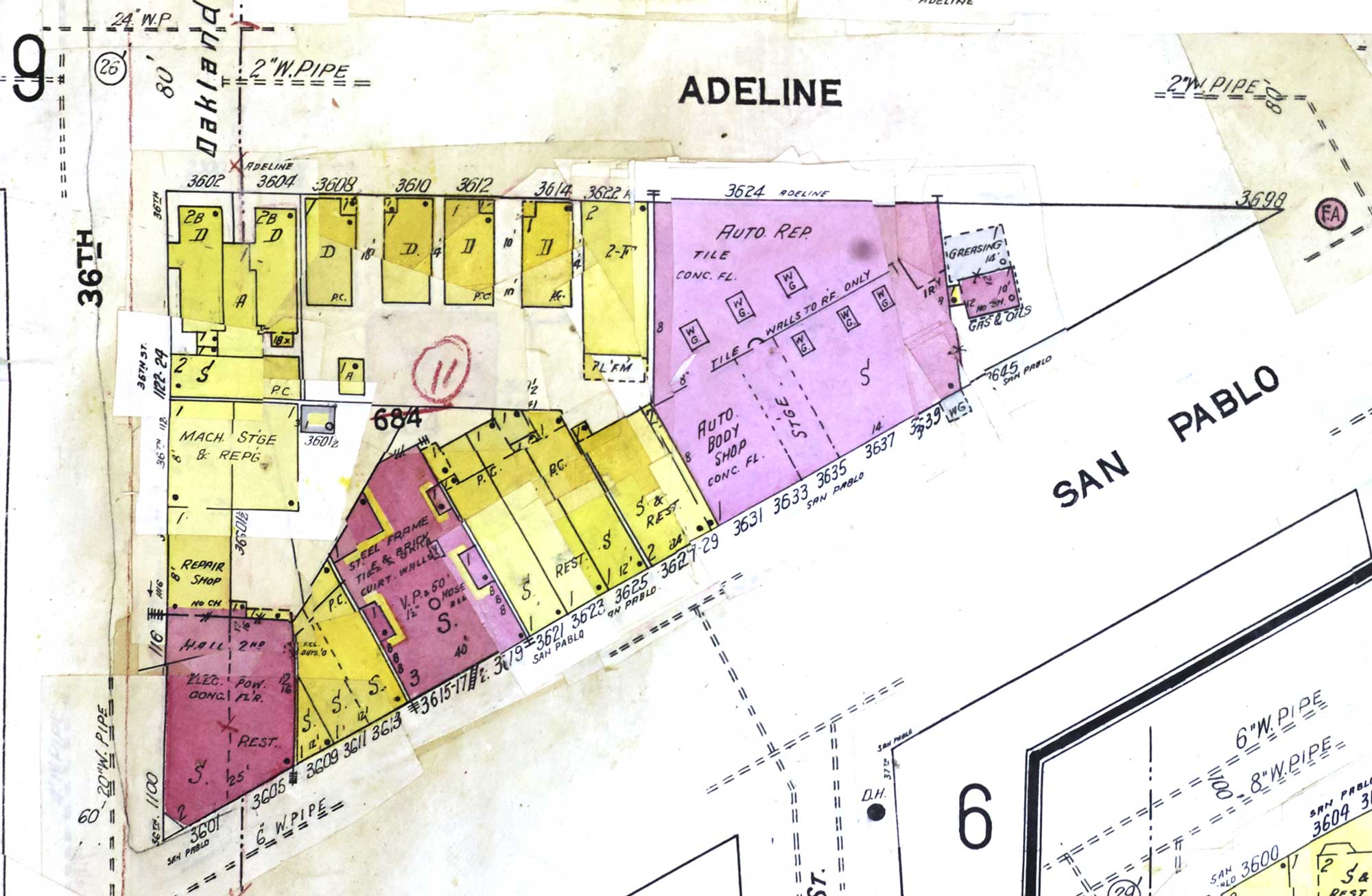
In 1942, the upstairs hall was occupied by the Oakland Motorcycle Club which was founded in 1907. The still active club is considered one of the country’s oldest motorcycle clubs. They occupied the space until 1983.
After the mid-1950s, the building largely disappears from newspaper coverage for roughly two decades.
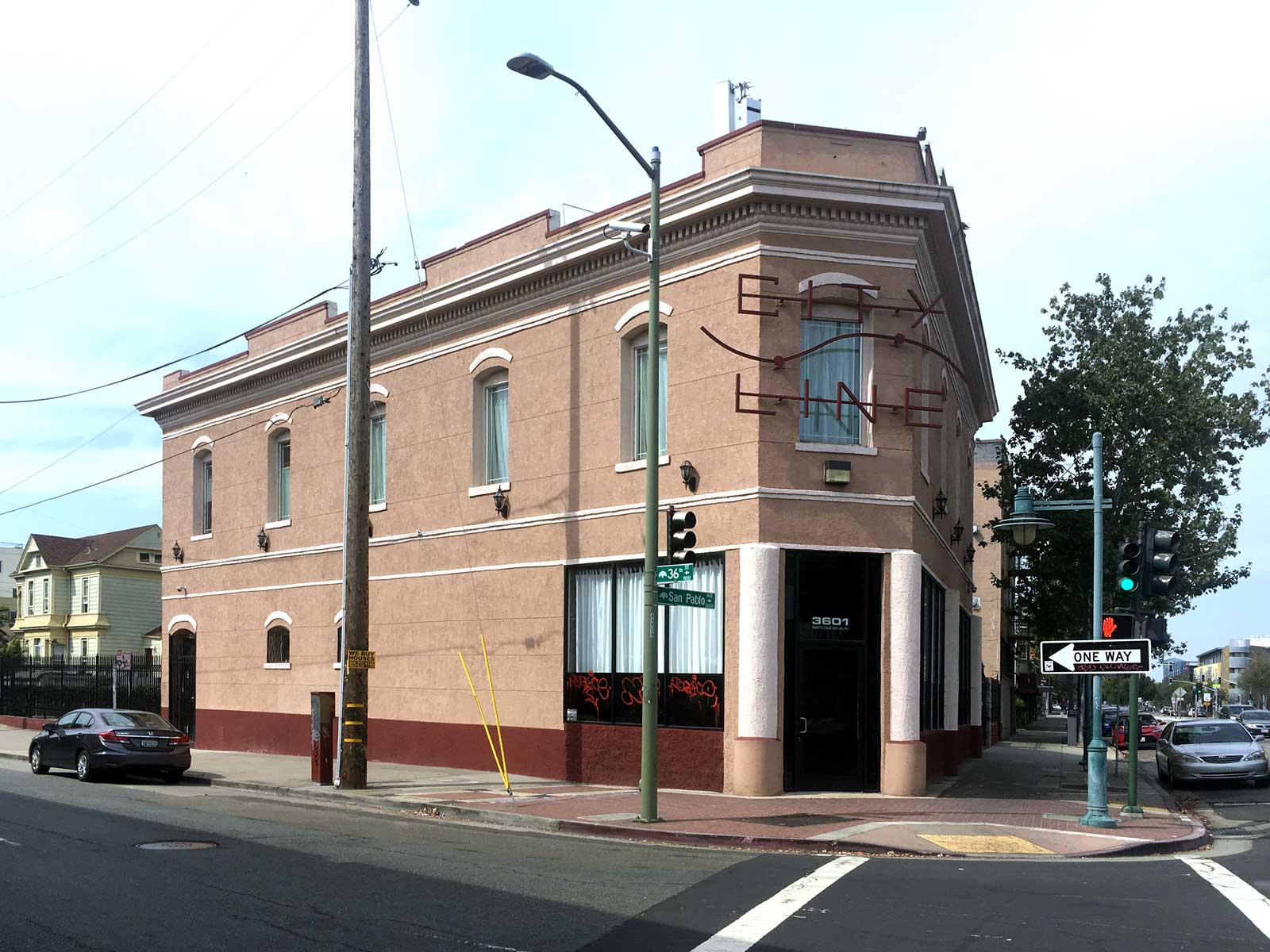
By 1983, the storefront area was occupied by Aaron’s Furniture & Mattress Company, which operated here until about 1990. The building then appears to have been used primarily for warehouse storage for nearly twenty years before reopening as a massage establishment in 2009, followed by an event venue known as Cityline.
Today, the building is home to the Rising Sun Opportunity Center, which provides job training and workforce development for youth, women, and formerly incarcerated individuals—continuing the site’s long tradition of adapting to the changing needs of the community.
