3900 Adeline Street
Like many of the buildings on this tour, the story of 3900 Adeline is filled with episodes of vice that helped give Emeryville its reputation as “The Rottenest City.”
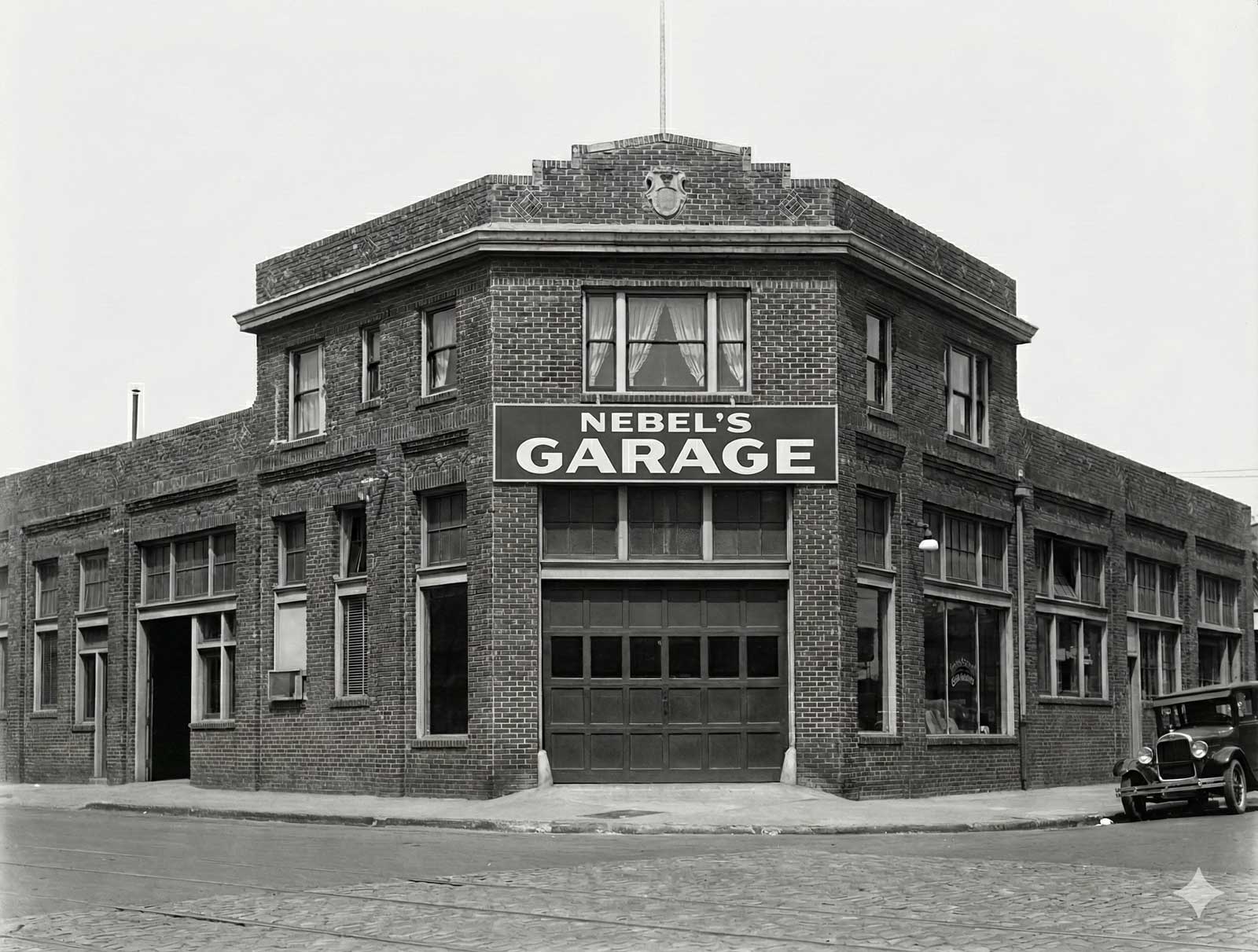
The first documented reference to 3900 Adeline dates to 1920, when it was Nebel’s Garage, owned by Joseph and Henry Nebel. The business operated as an automobile repair facility and sold used vehicles. This use appears to have lasted for roughly a decade.
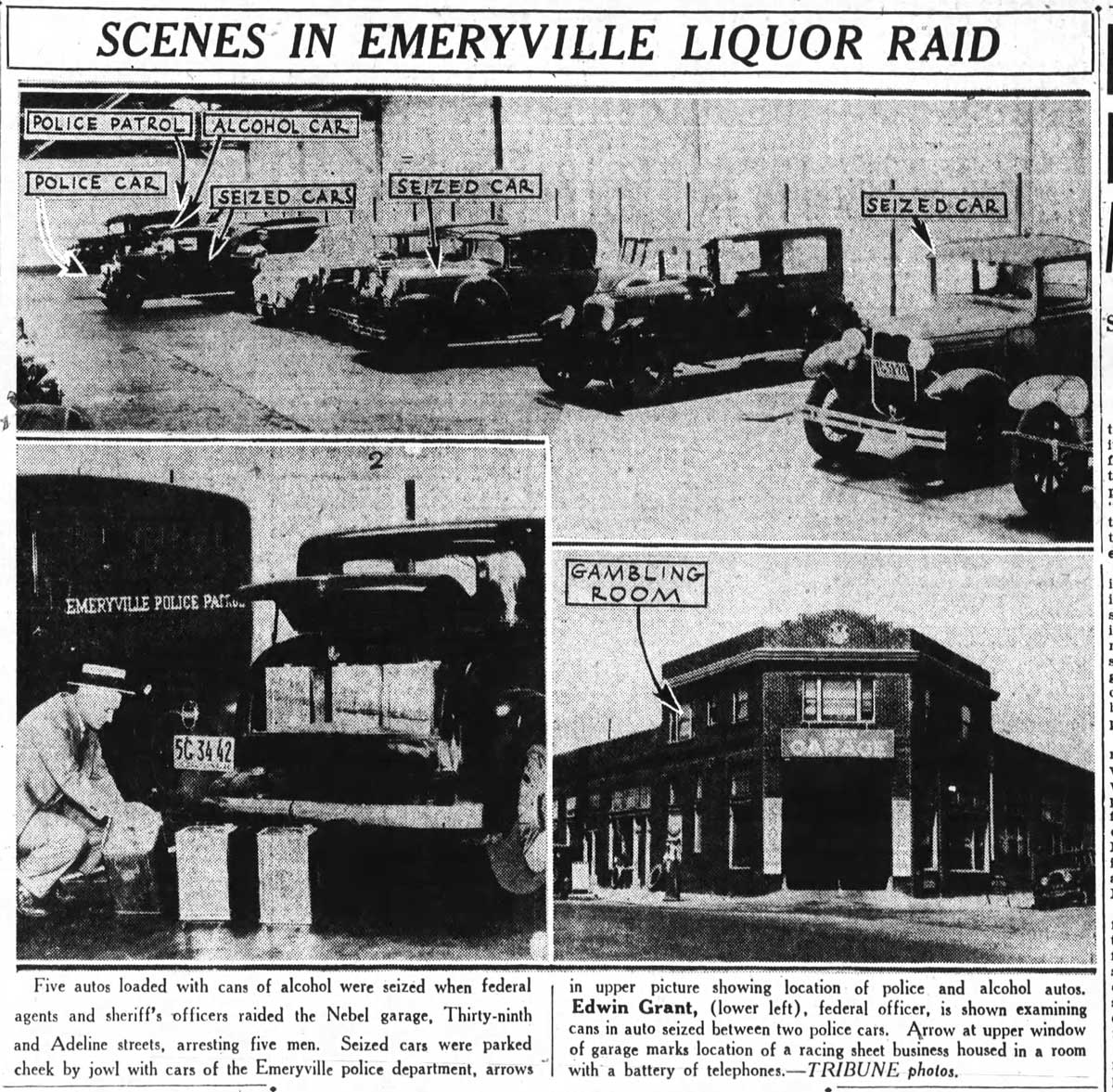
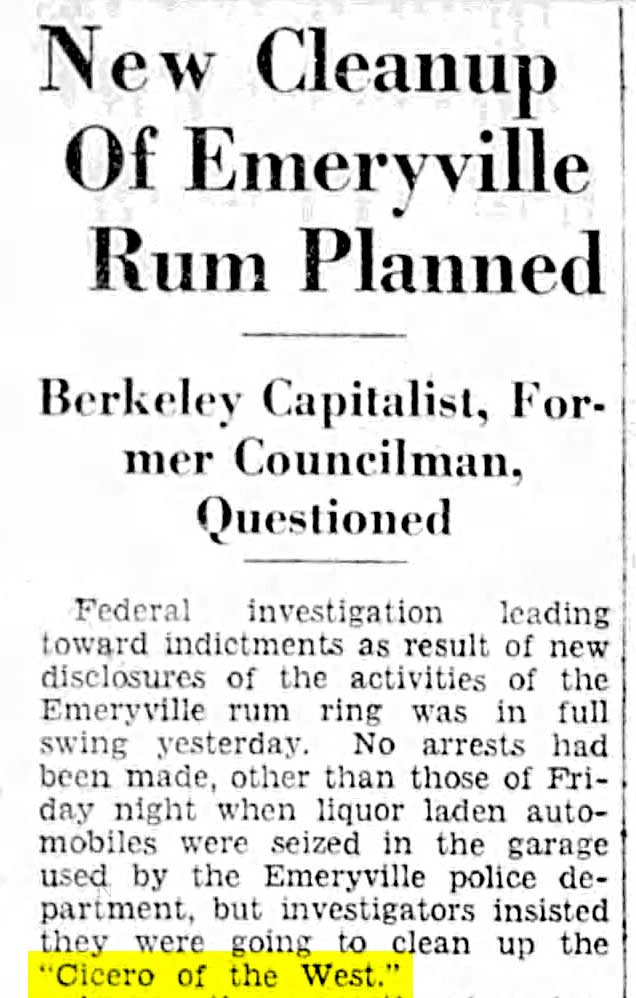
In 1932, amid Prohibition, the building became the site of a federal investigation while it was being used as a garage for Emeryville Police Department vehicles. Federal agents determined that the garage was also being used to store a “liquor fleet,” resulting in seven arrests, the seizure of 565 gallons of alcohol, and five vehicles. Agents also uncovered an upstairs room where gambling and bookmaking were being conducted.
Emeryville Police Chief Edward J. Carey publicly expressed astonishment and denied any involvement by his department.
Despite insinuations by county and federal authorities that local Emeryville officials were reluctant to cooperate — or possibly complicit — no Emeryville officials were ever formally charged.
In 1937, the property was renovated for Standard Beverages who produced bottled soft drinks. Soda consumption rose sharply during Prohibition and soda fountains often replaced saloons as social hubs.
Standard Beverages was established in San Francisco in 1930 by John E. Sousa and Gerald H. Mason. By the mid 1930s the company operated a bottling plant in Oakland located at 1050 39th Street producing three soft drink brands including Nehi, Par-T-Pak, and Royal Crown Cola.
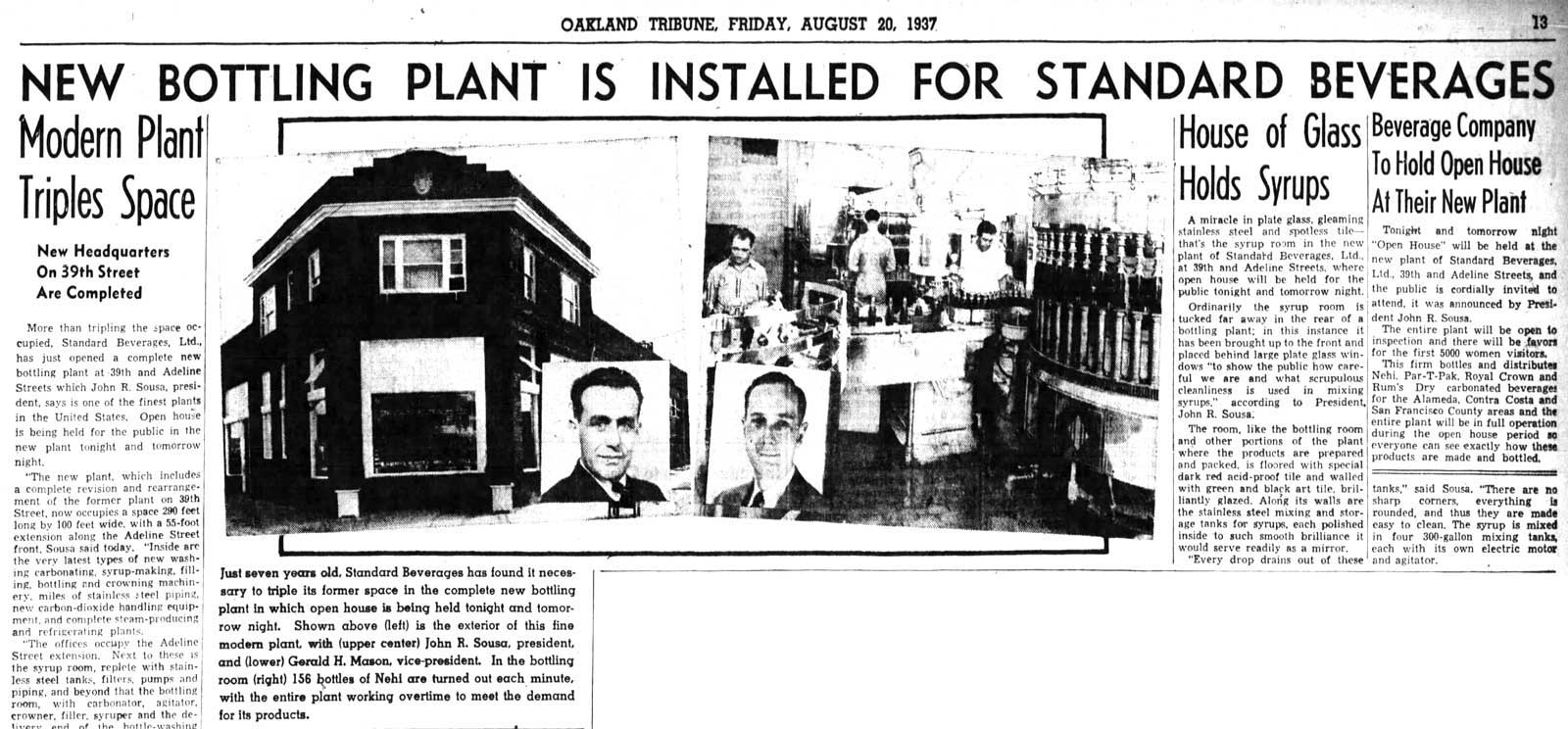
The renovated plant here in Emeryville was equipped with state-of-the-art machinery for washing, carbonating, syrup production, filling, bottling, and crowning, as well as extensive stainless-steel piping throughout the plant. The company had 47 employees and operated 26 distribution trucks.
The plant had a large plate glass window and abundant lighting to make it easy for the public to watch the machinery in operation. They held a two day open house on August 20th and 21st, 1937 to celebrate their grand opening.
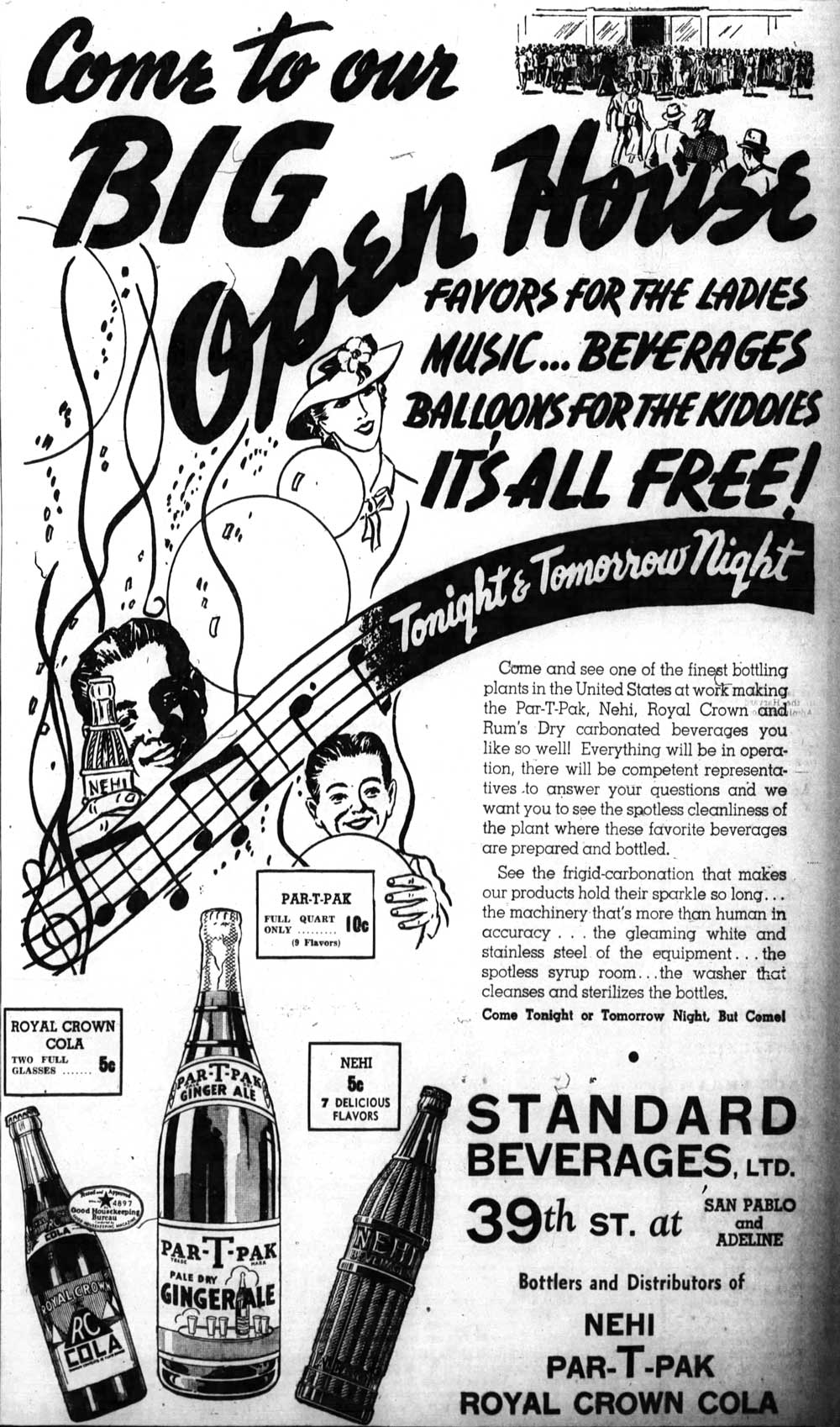
In the 1940s, the company changed its name to Par-T-Pak Beverage Company.
By 1958, operations moved to Hayward, and this facility was closed.
By the 1960s, Jessup Salvage Company occupied the building. The business operated until April 1982, when a large fire broke out, causing considerable damage and leading to a lawsuit related to improperly stored chemicals.

By 1991, the building was occupied by Acucare Oriental Massage. This establishment was later revealed to be a front that secretly operated as a brothel and was involved in sex trafficking and prostitution.
In a major 2005 sting operation dubbed “Operation Gilded Cage,” approximately 40 FBI agents raided the establishment, revealing its true use to a mostly surprised neighborhood.
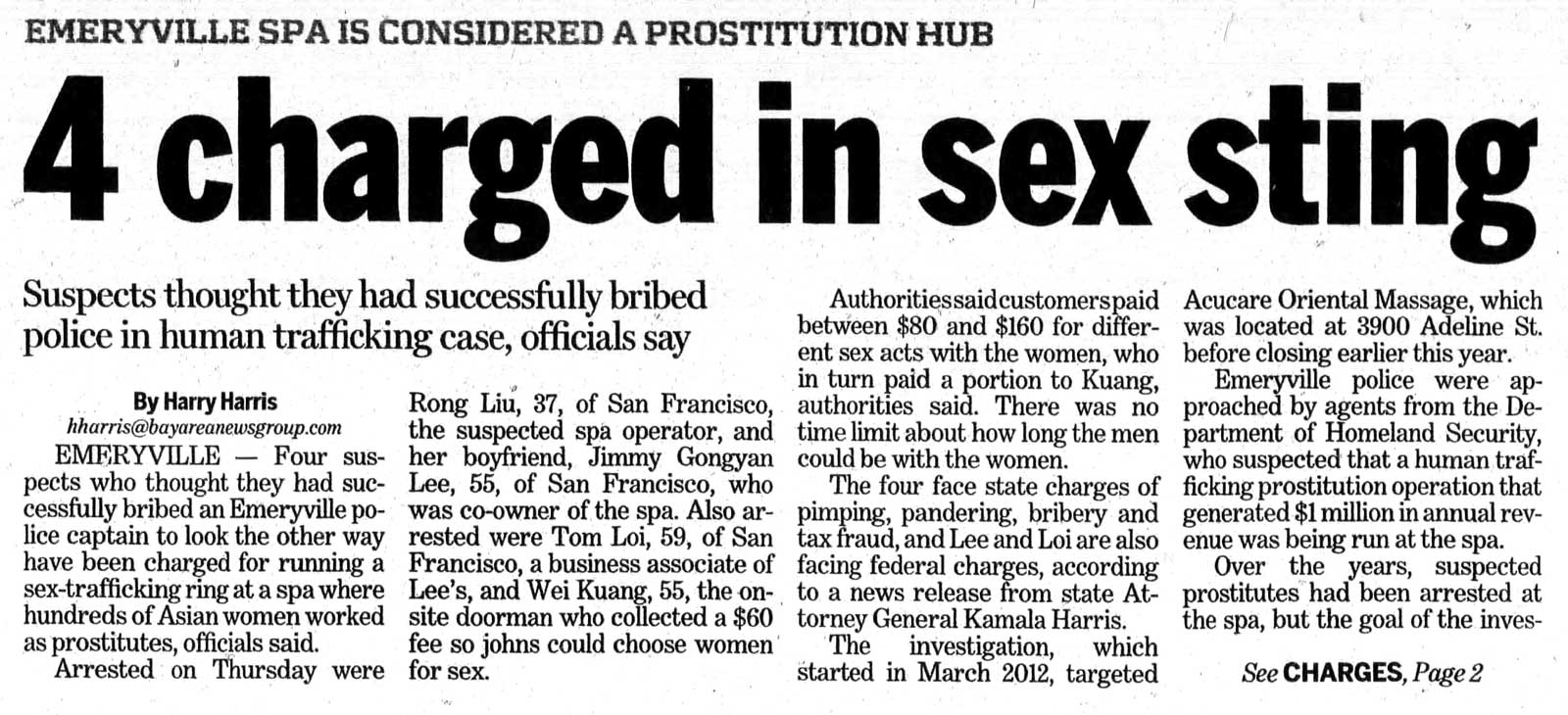
Despite this high-profile bust, Acucare continued to operate as a rebranded “Spa” for almost another decade.
They were busted again in 2014 after operators attempted to bribe an Emeryville police officer who was collaborating with state and federal agents. Acucare closed for good shortly thereafter
The building, despite being designated as “architecturally significant,” was approved for demolition by the city and was razed in 2014.
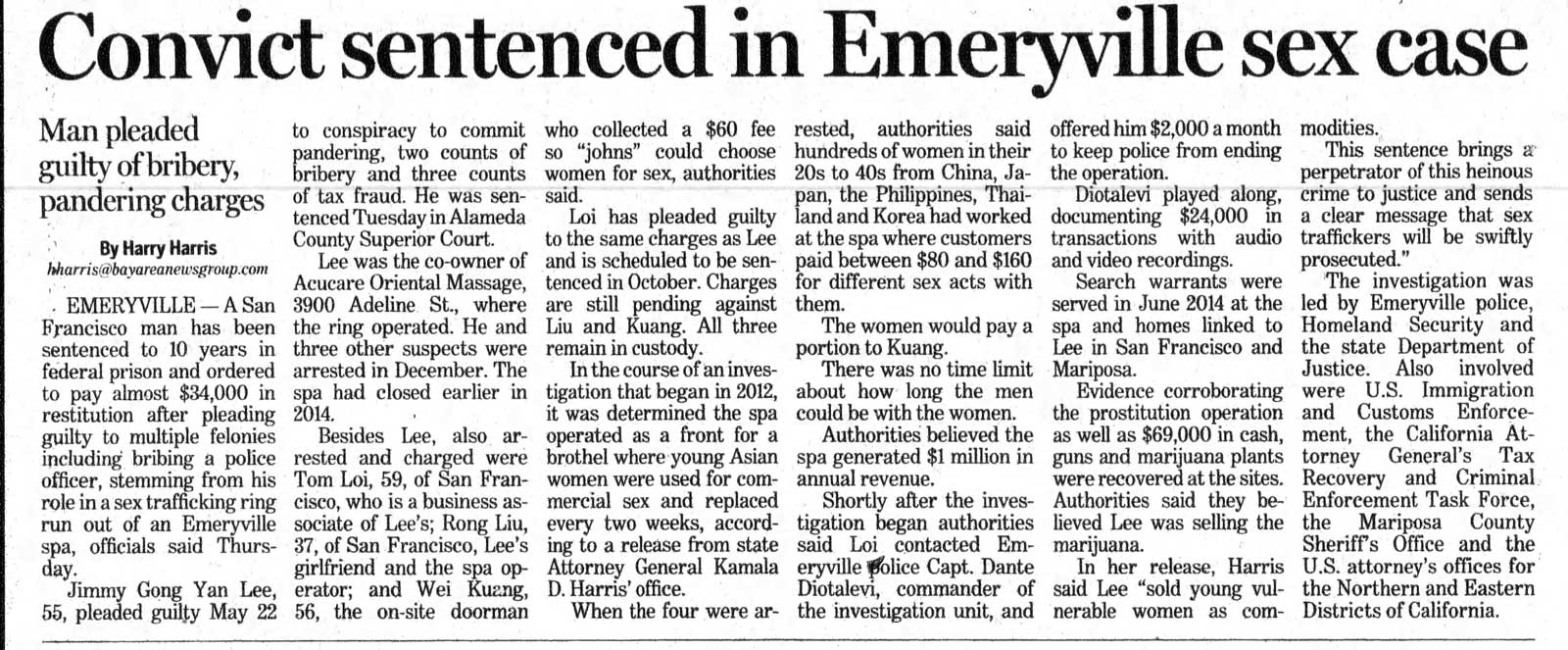
The ringleader of the operation was sentenced to ten years in prison in 2015.
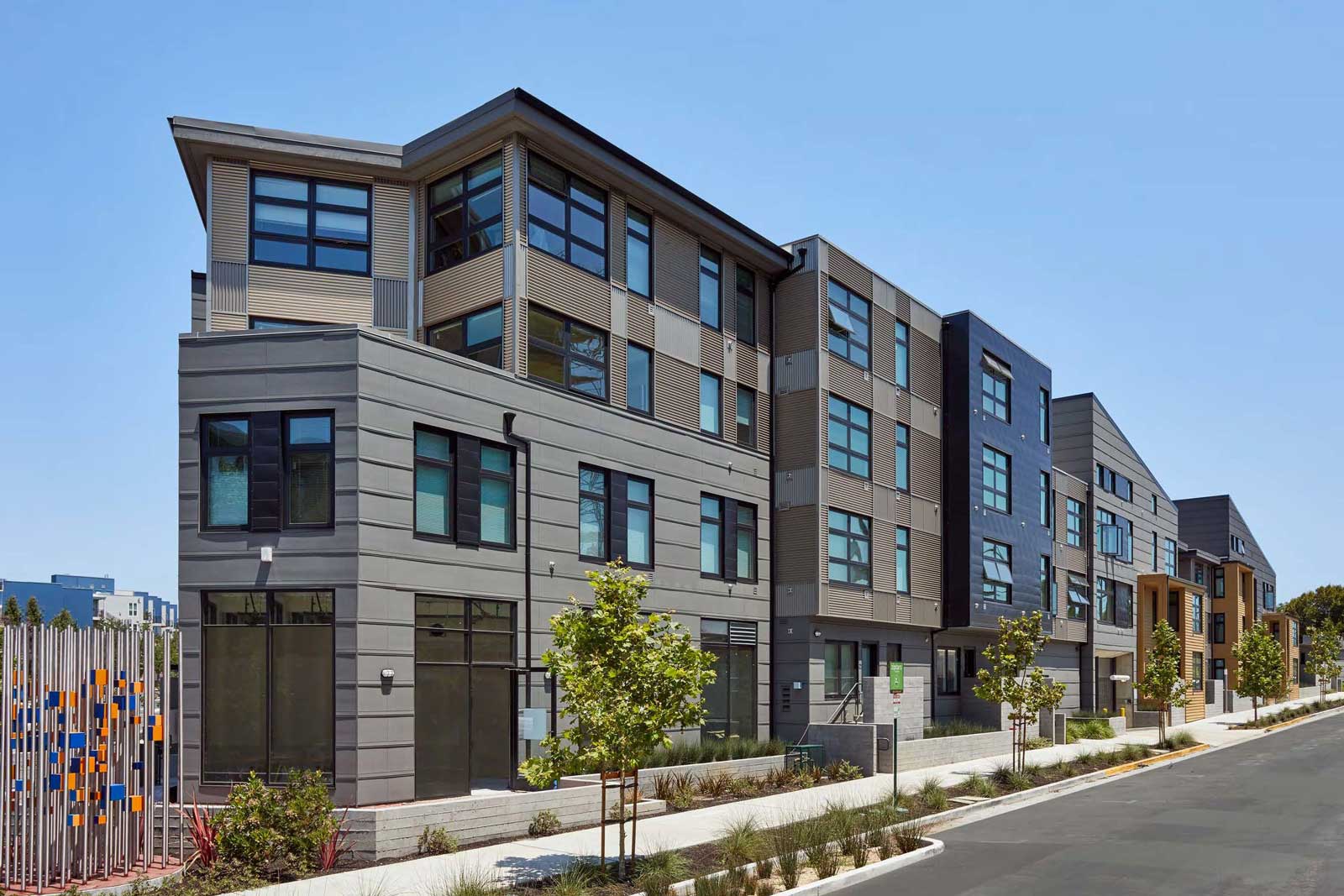
A 101-unit apartment complex developed by Oakland-based Madison Park was completed on the site in January 2016. The ground-floor commercial space was initially occupied by Banh Mi Joint, which soon rebranded as Monster Pho 2. Following its closure during the pandemic, the space reopened in 2023 as Touch of Soul.