



Del Monte Cannery Worker Cottages
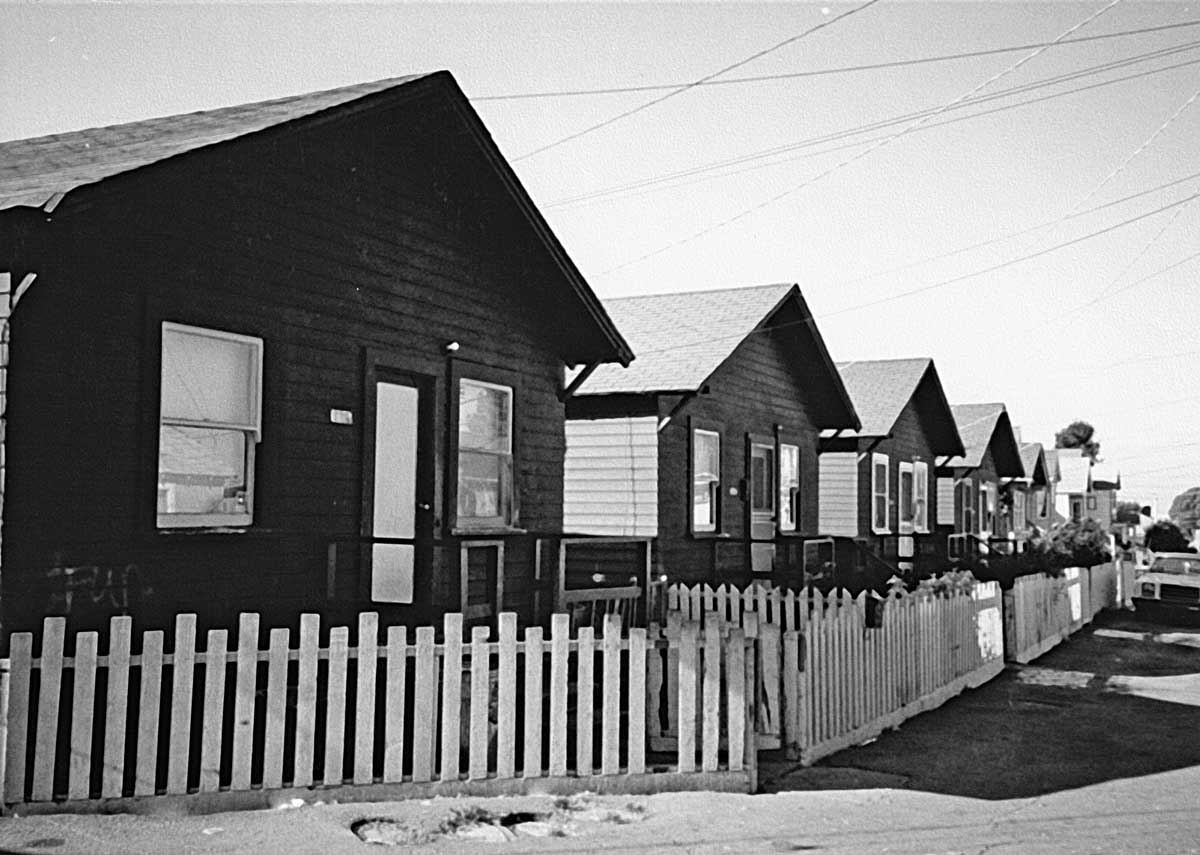
This row of humble wood-frame cottages with traditional white picket fences at 1034–1043 48th Street are among the last surviving artifacts of one of Emeryville’s largest and longest-running industries, which helped shape the city for more than seven decades.
The Western Canning Company that would later become Del Monte Plant #35, was built in 1919 just a short distance away on Park Avenue between Hollis and Watts (now Pixar Animation Studios). For a period, it was California’s largest cannery and their 10 acre campus was frequently expanded on throughout the decades.
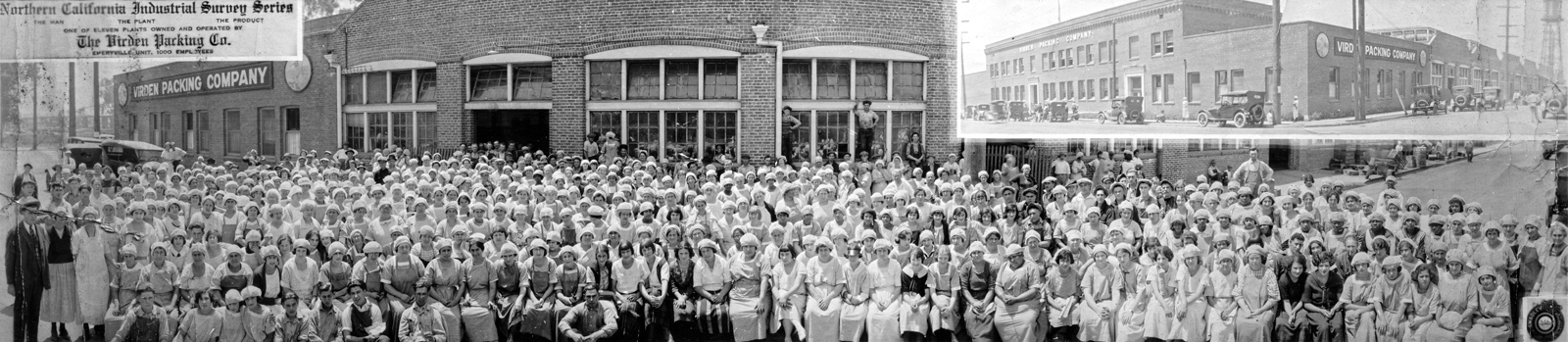
The plant employed a diverse workforce, including significant numbers of Black women, immigrants, and migrant laborers, reflecting broader patterns in West Coast cannery labor. To support employees, the facility offered amenities uncommon for the era, including a cafeteria, locker rooms, washrooms, a first-aid station, and—at various times—childcare services, a playground, and a kindergarten.
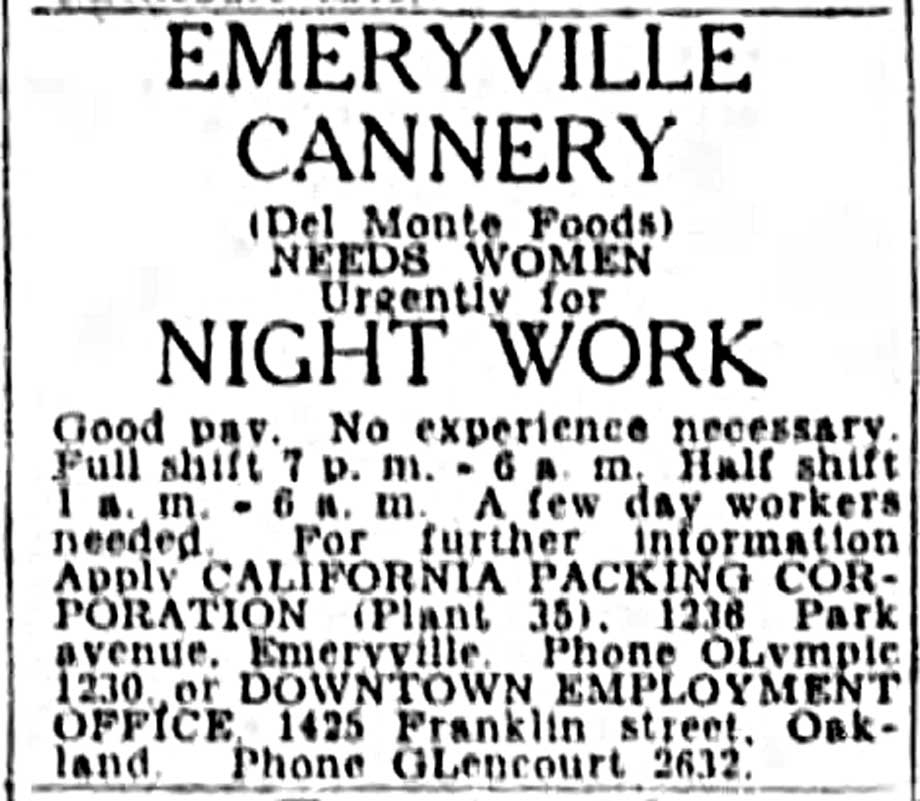
During peak canning seasons, the plant reportedly operated around the clock, employing hundreds to more than 1,000 workers on staggered shifts to process massive harvest volumes.
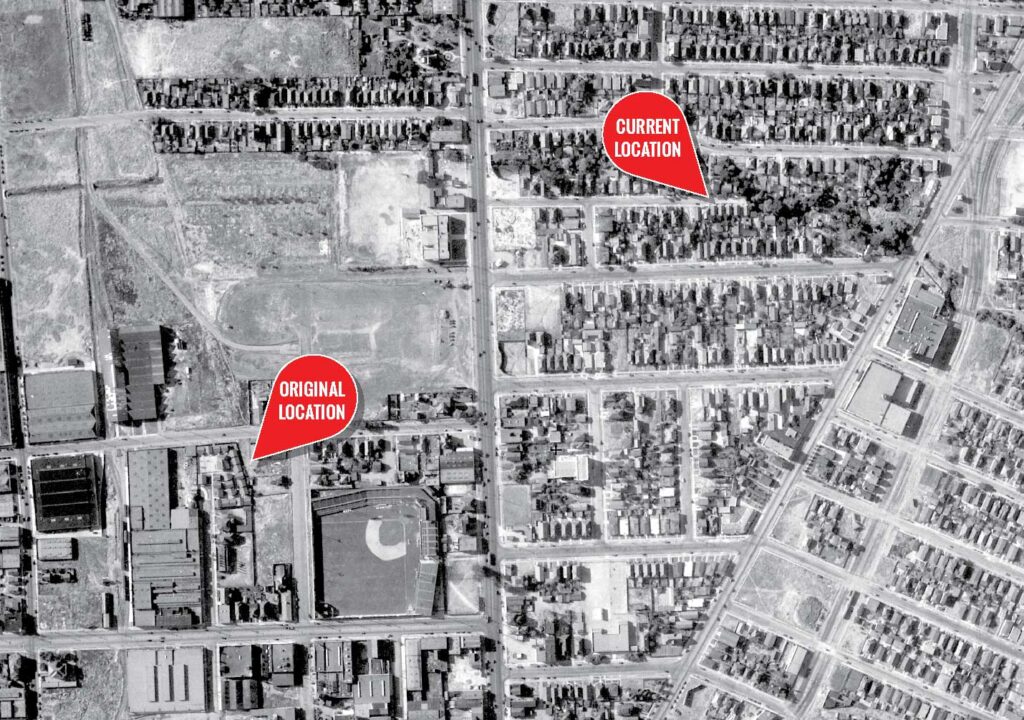
To house seasonal labor during these peak periods, the company developed a small housing enclave on the northeastern edge of the plant. This “village” consisted of approximately 25 modest cabins, located east of the main cannery between Harlan Street and the Oakland Oaks Ballpark. The wood-clad structures, roughly 500 square feet, were uniform in design and contained one or two bedrooms, providing basic but functional accommodations.
As the plant expanded, this tiny village was slowly displaced and sometime around 1930, five of these cottages were moved to the east end of 48th Street, forming the small cul-de-sac seen today beside what was once a free-flowing stretch of Temescal Creek, now buried in an underground culvert.
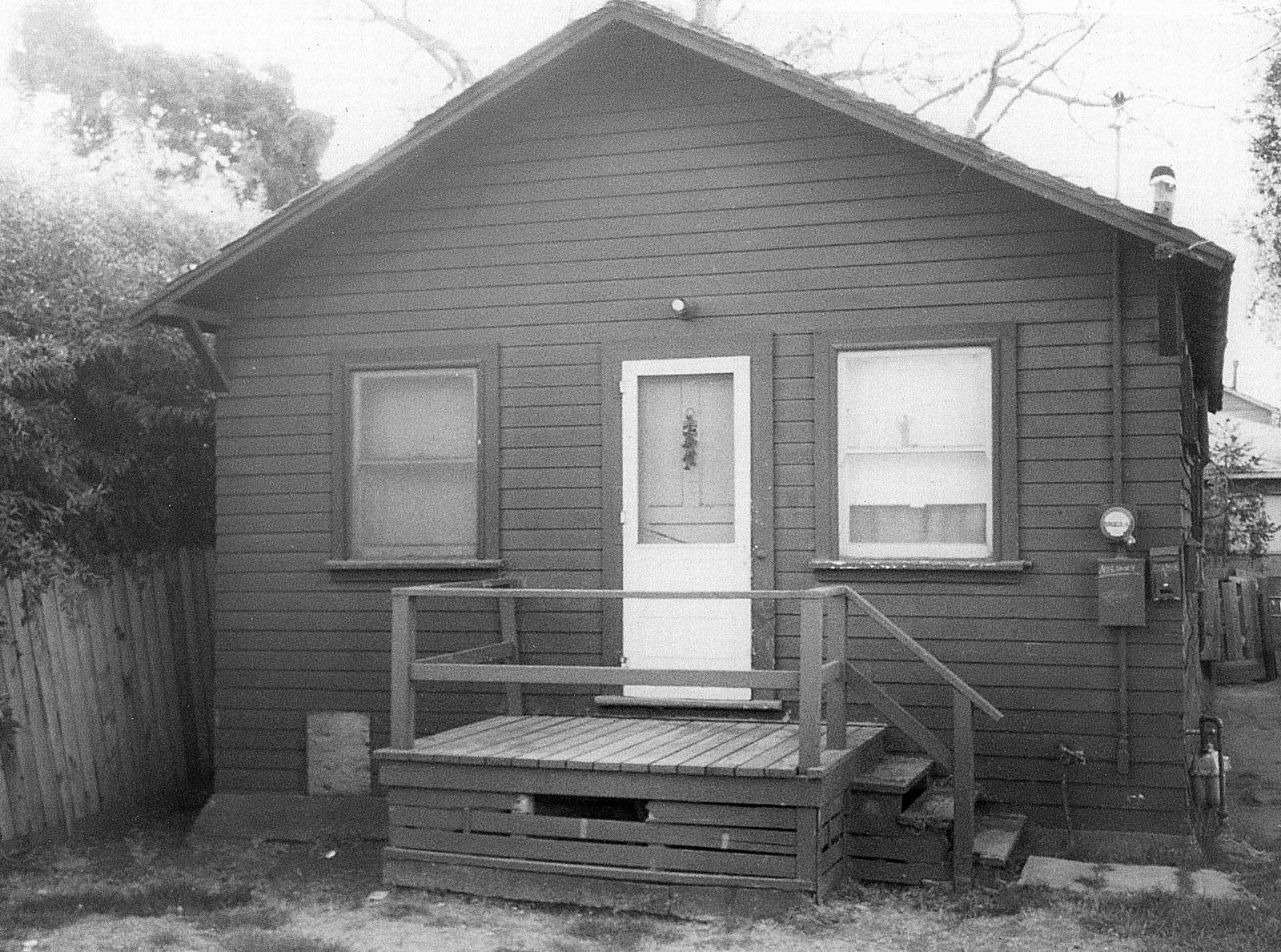
In the early to mid-1940s, labor surges were intensified by World War II, as the federal government promoted food production through campaigns such as “Food for Fighters.” With many workers serving in the military or defense industries, women, teenagers, and other temporary workers were increasingly recruited to sustain output.
After the war, demand stabilized as veterans returned to the workforce, and the need for employer-provided housing declined. By the 1950s, rising automobile ownership, suburban expansion, mechanization, improved refrigeration, and increasingly globalized food supply chains reduced reliance on large seasonal labor pools. The original cabin village was eventually removed to make way for plant expansion.
Today, these surviving cottages stand as quiet witnesses to Emeryville’s industrial past—a reminder of a time when canneries, railroads, and migrant labor shaped the city’s economy and identity, preserving the human story behind the factories that once defined this neighborhood.
