



Emery Unified School District
The Emeryville Center for Community Life (ECCL), completed in 2016, is an ambitious facility that consolidated Emeryville’s previously scattered schools under a single roof. The journey of Emeryville’s school system dates back to April 21, 1884, predating the city’s official founding.
Driven by a growing population and the need for a school closer than the two-mile distance to the Temescal District schools, city founder Joseph S. Emery presented a petition to county supervisors. Signed by 84 parents, the petition requested the formation of an Emery School District.
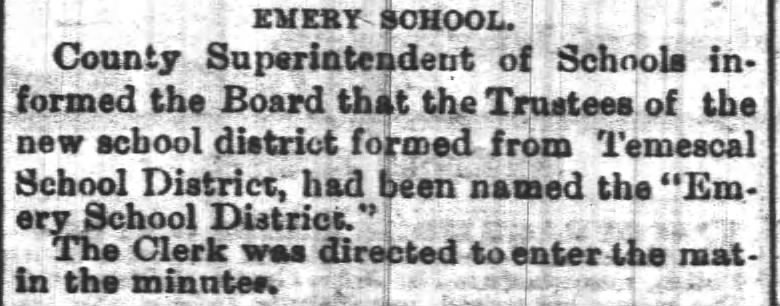
The petition was accepted, and the Emery School District was established shortly thereafter, with borders roughly matching present-day Emeryville.
Early Locations and Growth: 1884-1920
There are conflicting accounts of where Emeryville’s first grammar school was established. Longtime Superintendent John H. Napier wrote that it stood at the corner of Park Avenue and San Pablo Avenue in 1885, while lifelong PTA member Ethel Codington recalled its location as a house on Yerba Buena near Adeline Street.
Miss Honore Larkin served as the school’s first teacher, instructing students across all eight grades. When the building at Yerba Buena and Adeline was destroyed by fire, classes were temporarily relocated to the rear of a nearby Chinese laundry on the present-day site of the Bank Club Café.
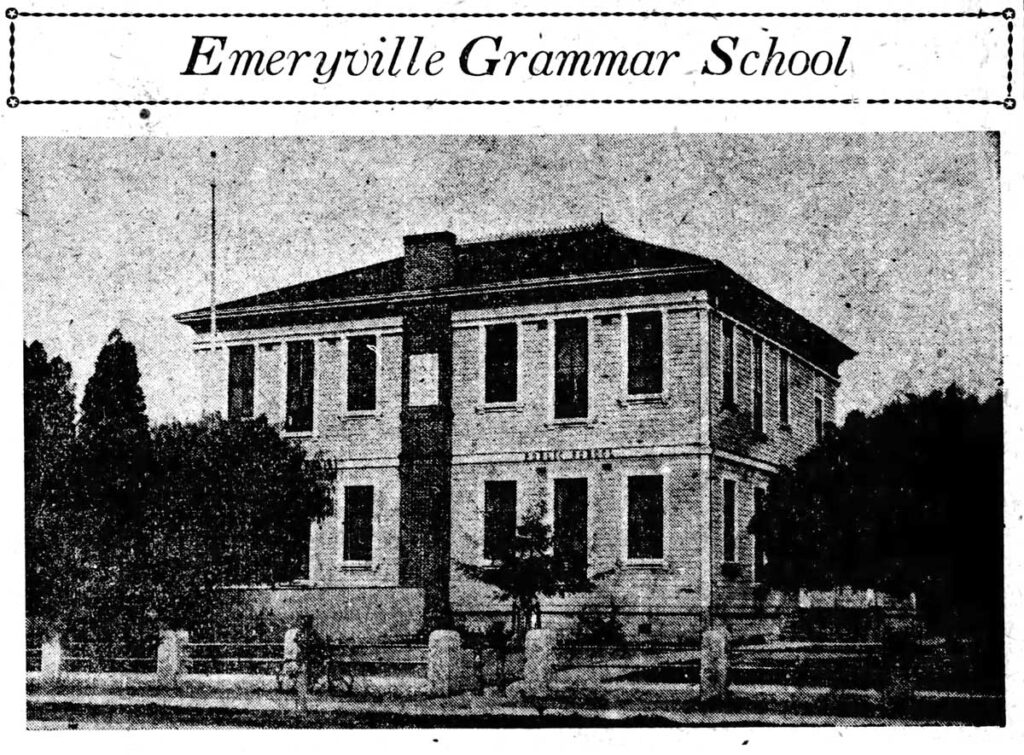
Land was purchased in 1886 for a permanent school and a two-story facility was constructed the following year at 1070 41st Street. This school was named Miller Elementary School, after the frontiersman and poet Joaquin Miller.
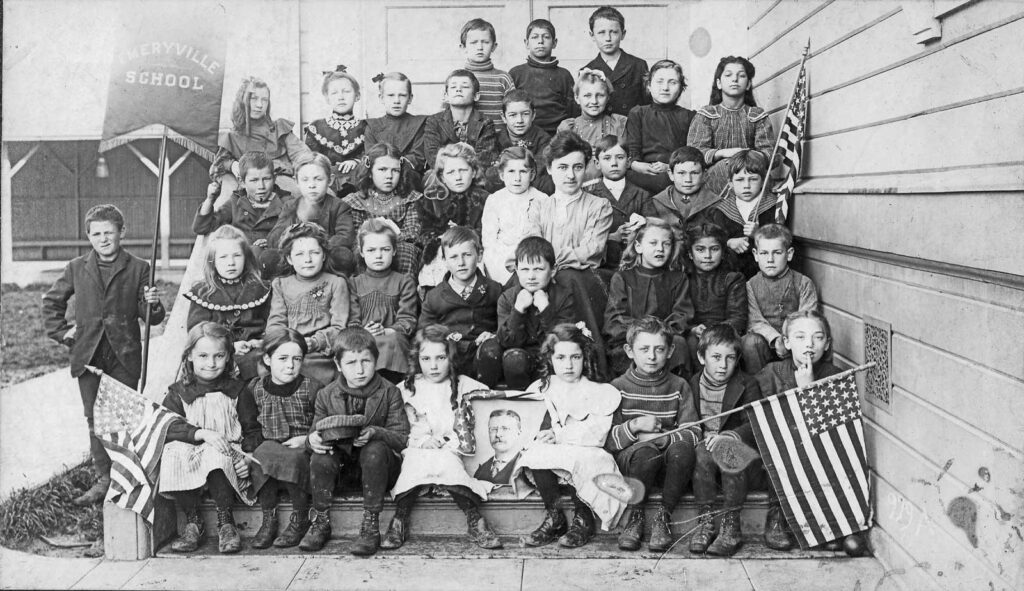
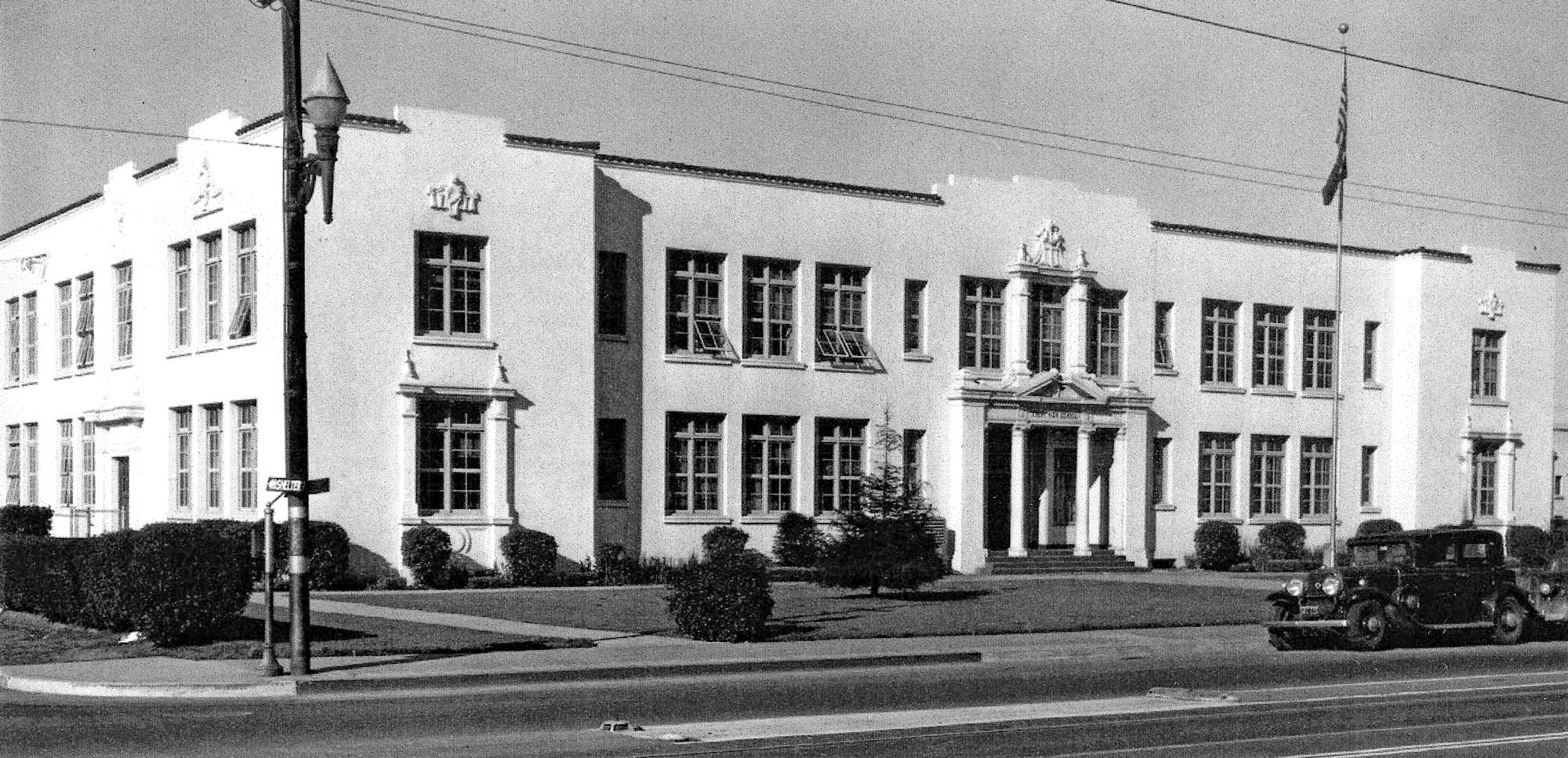
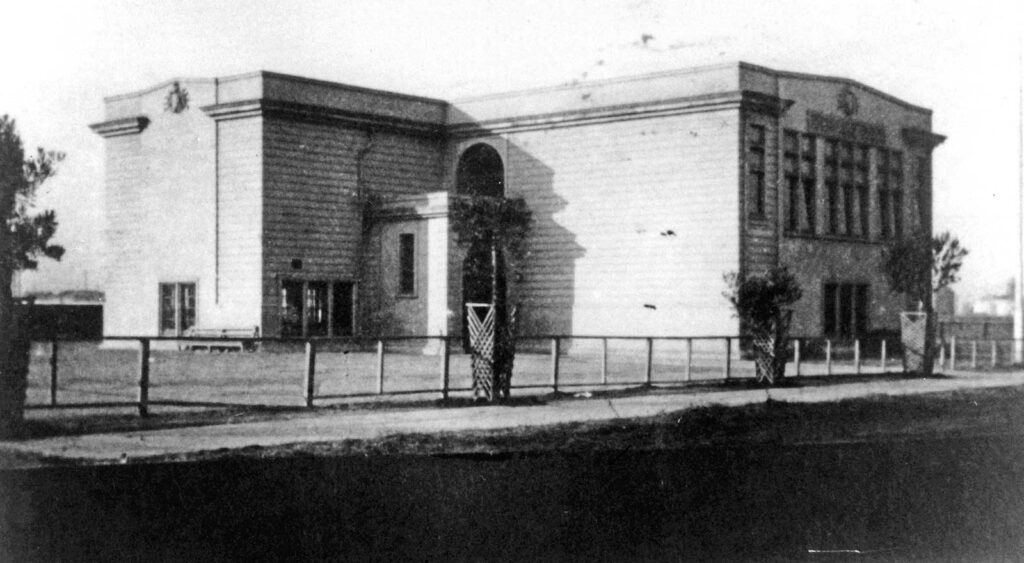
The northern part of town saw its first school constructed in 1910 at 61st and Doyle streets, named the Sutter School. By 1920, a new two-story concrete building had been completed on a two-acre parcel at the corner of 47th Street and San Pablo Avenue to accommodate junior high students.
Stability, Expansion and Annexation: 1920-1929
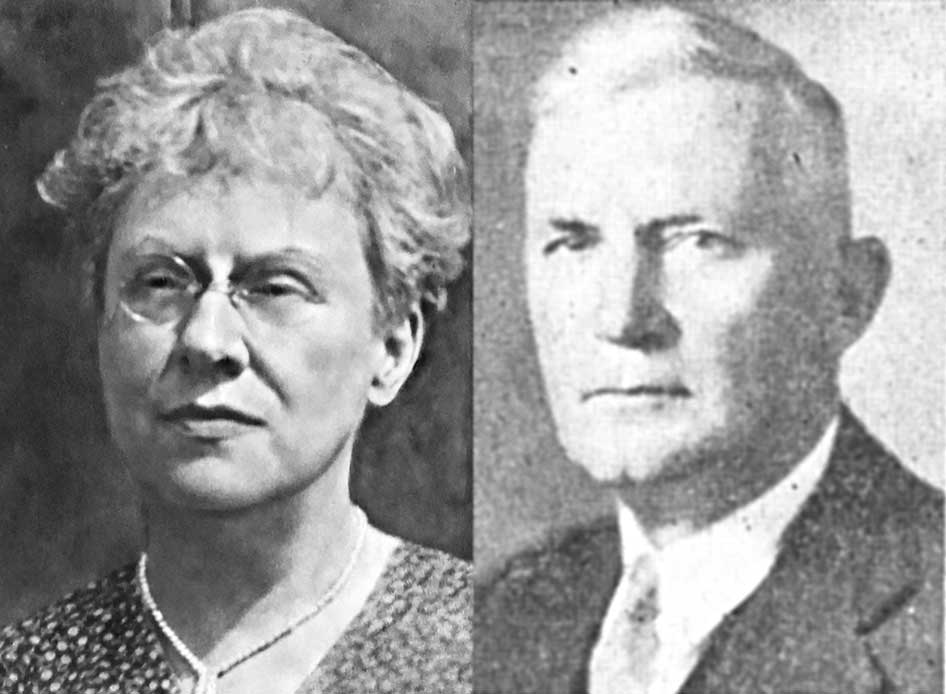
The district benefited from remarkable administrative continuity during this era. From 1887 to the mid-1930s, only three administrators led the system: James Mallock (1887–1905), D. B. Lacy (1905–1925), and John H. Napier, Jr. (1925 – 1936).
Despite pressure to consolidate with the Oakland District, Emeryville successfully resisted these annexation efforts, viewing its independent school district as a source of local pride. Another point of pride was that all school expansion to this point was paid for upfront without relying on bonded debt—a rare accomplishment.
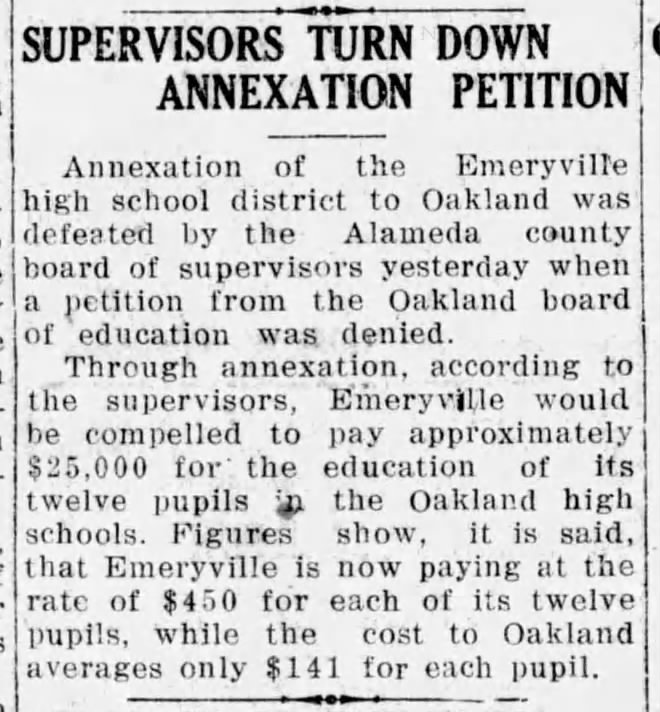
Following the defeat of annexation attempts, the Emeryville High School District Board was organized in 1925 with the goal of establishing a comprehensive K–12 system. Previously, Emeryville high school students attended Oakland schools.
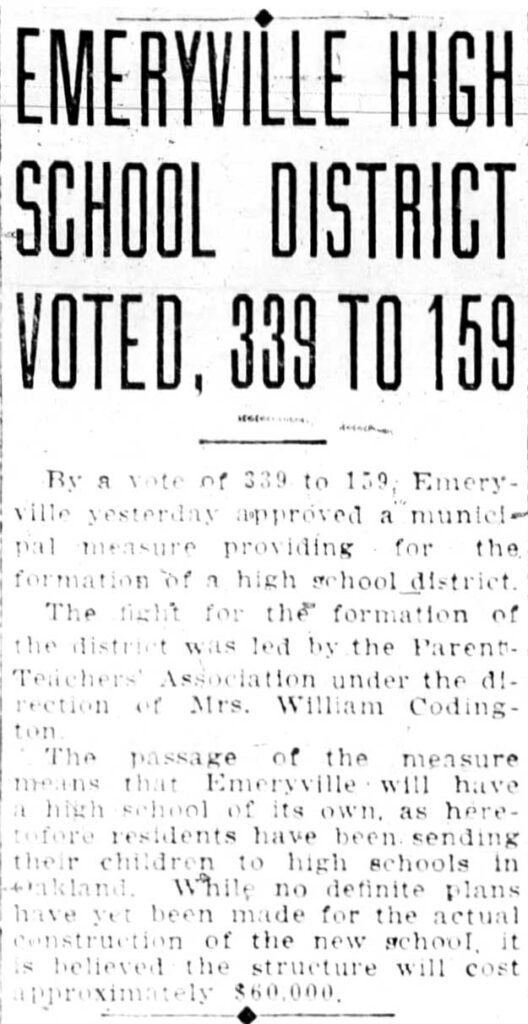
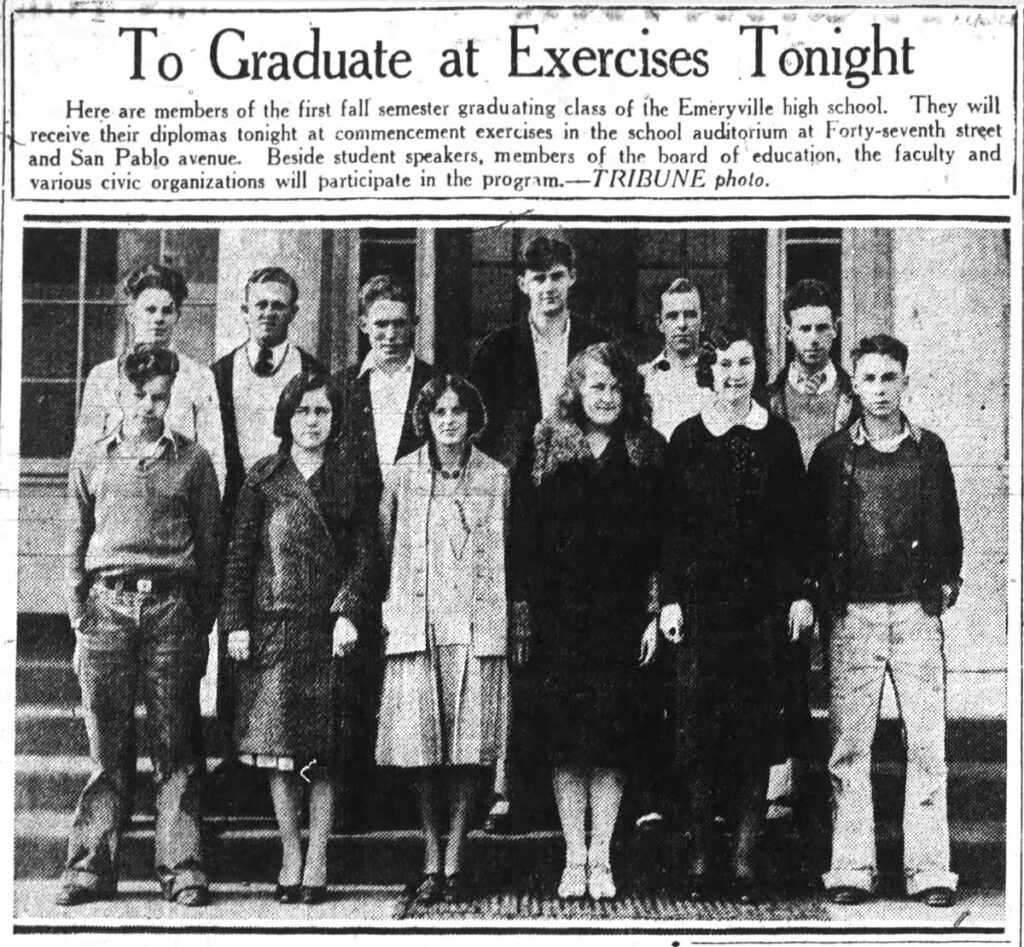
Expansion of the 47th & San Pablo Avenue school to include high school grades was completed in 1926. The first graduating class of Emery High, the “Class of 1930,” began their studies that year.
In 1928, the School Board purchased a site at the northwest corner of 61st and Doyle Street to build the North Emeryville Elementary School.
Renaming and Modernization: 1930-1963
The district was renamed Emery Unified School District (EUSD) in the mid-1930s, reflecting a statewide push to streamline administration with continuous K–12 systems. Also in the 1930s, Miller Elementary was renamed Anna Yates School, honoring a popular educator who taught in the district for 34 years. In 1940, Sutter Elementary, which was then serving as the city’s Junior High campus, was renamed Ralph S. Hawley School, after the City Engineer and former school trustee who served the district for 22 years.
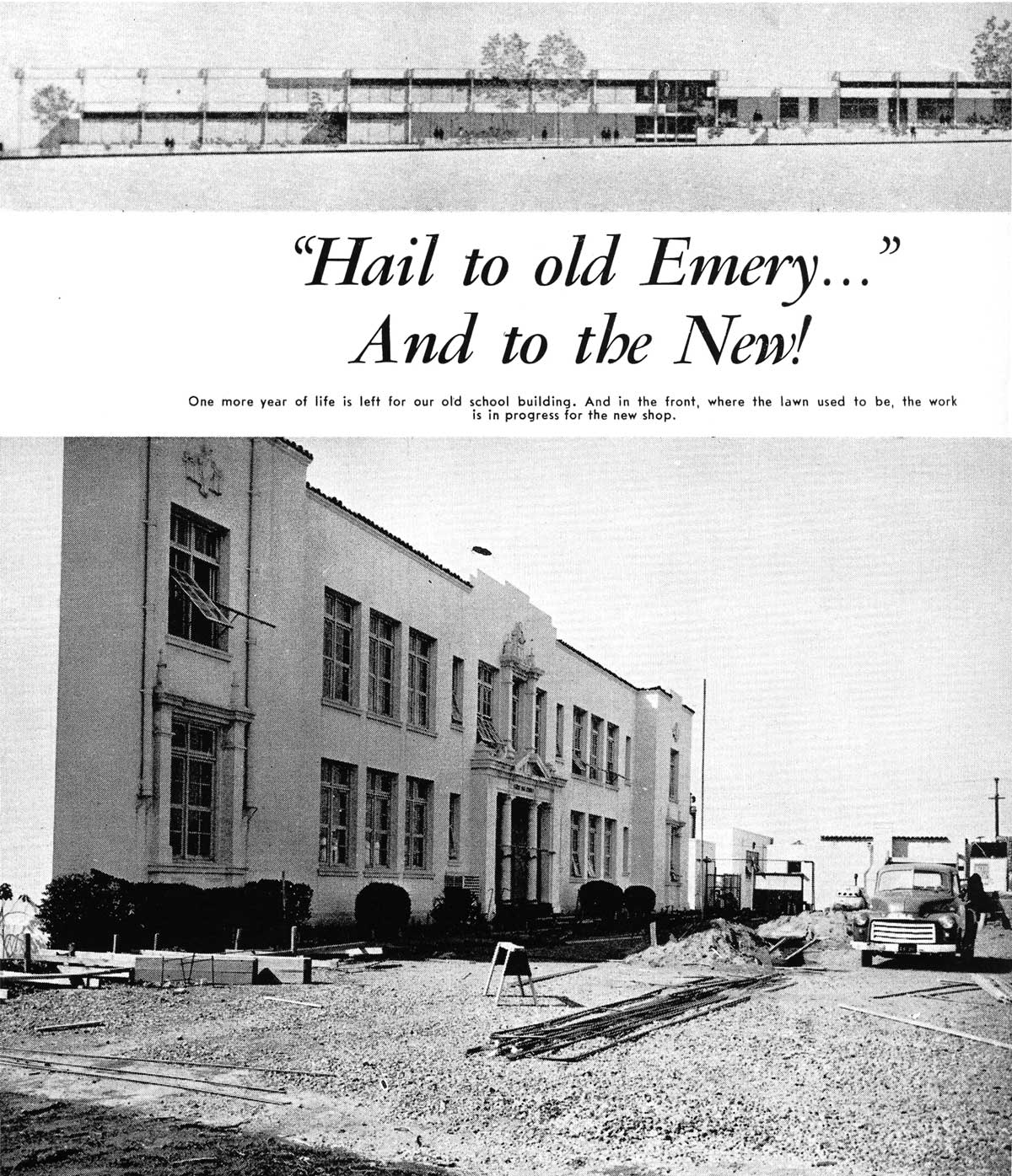
By 1963, the original 37-year-old high school was deemed obsolete and plans for a new, larger school began to take shape. Roughly one acre of the land on the west end of the campus was donated by Shell Development.
The new facility, financed by a 1.5 million Bond Measure, was completed in 1964 and included both metal and woodworking shops, a new gymnasium and a 4,500 square foot library that contained 10,000 volumes.
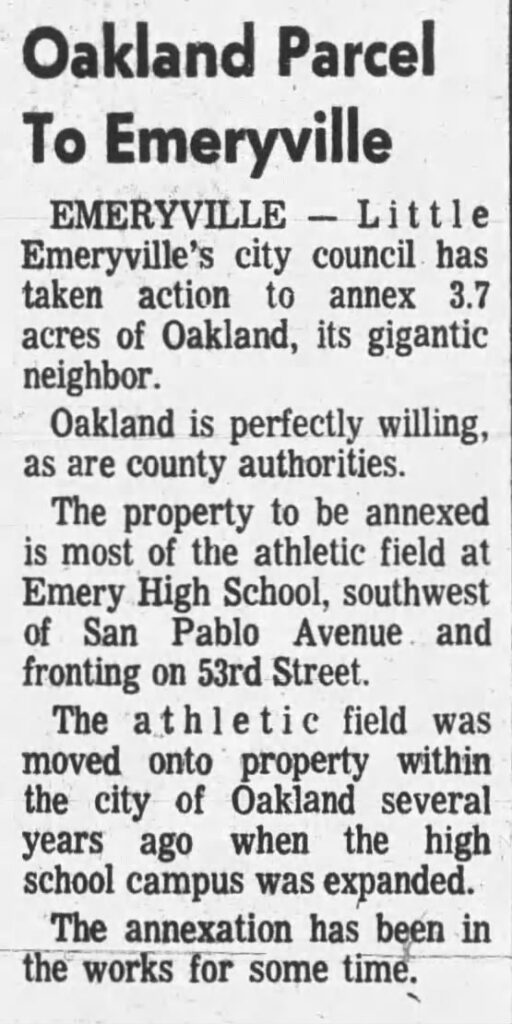
To accommodate the expanded athletic fields, a small sliver of land on the southern side of 53rd Street was annexed from Oakland in 1969. This marked the first and only change to Emeryville’s borders since the city’s founding in 1896.
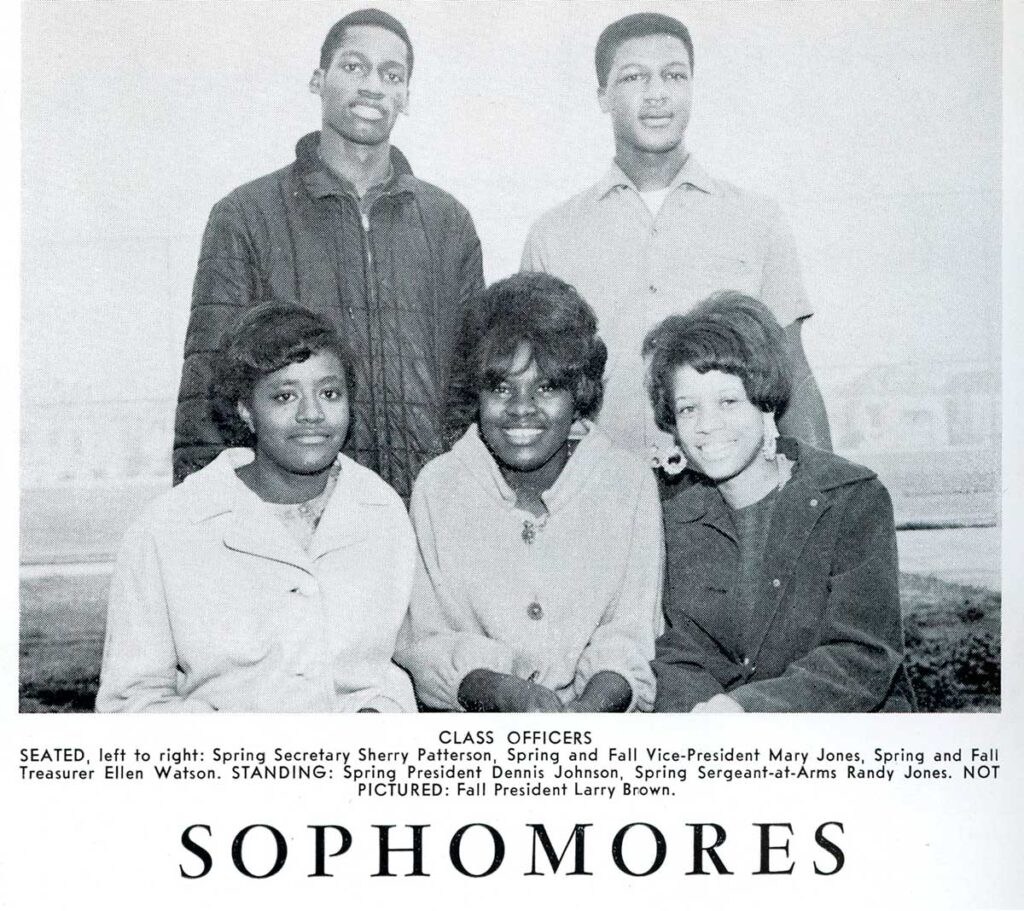
During the 1960s — amid broader regional shifts shaped by housing patterns and civil rights-era change — the district became majority Black by the end of the decade and remains so today.
Emeryville’s modern facilities and smaller class sizes attracted families from neighboring districts, and many students from Oakland Unified opted to transfer to Emery schools.
The Emeryville Center for Community Life: 2010 to Present
By 2010, the high school building was considered obsolete and seismically unsafe. In 2011, voters approved a $95 million bond to construct a new, consolidated facility that would integrate schools and community resources.
Completed in 2016, the Emeryville Center of Community Life (ECCL) provides the community with access to a community room, gym, and pool among other amenities. The former Anna Yates school on 41st Street is now leased to the East Bay German International School, and the Ralph S. Hawley School building currently serves as a YMCA aftercare and Head Start Center.
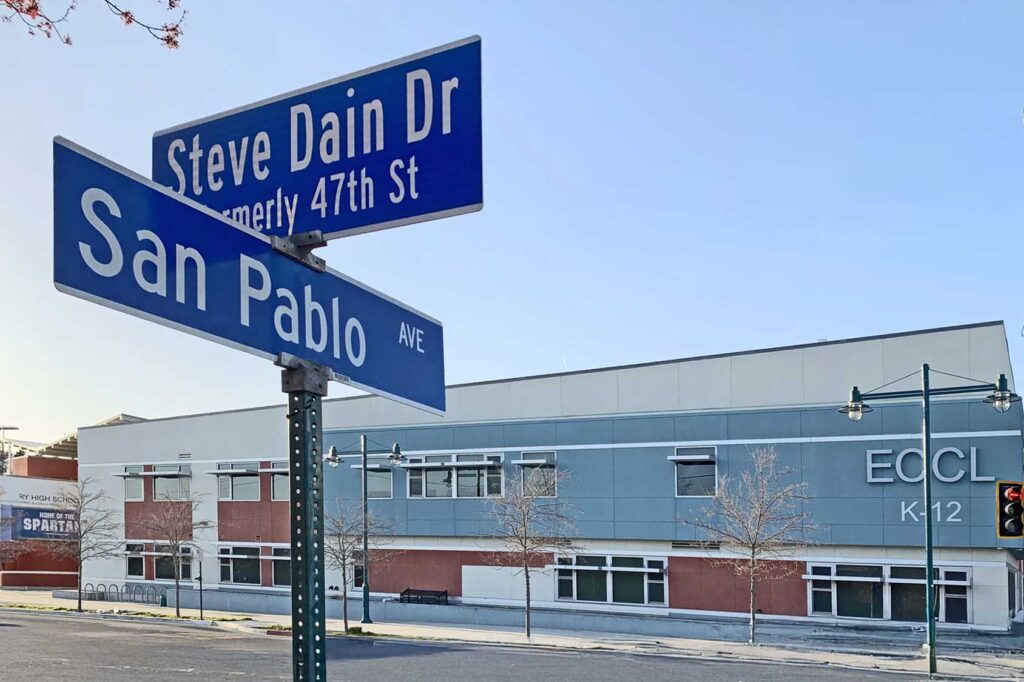
In 2021, the section of 47th Street fronting the ECCL was renamed Steve Dain Drive to honor a former Emery Unified teacher who was dismissed in the 1970s following his gender transition.
Today, the Emery School District typically serves between 600-700 students and reflects the diversity of the community it was created to educate. From its origins as a small industrial-era system to its present role as a unified district, Emery’s schools have continually adapted to changing civic and educational needs.
