



Emeryville Fire Station No. 1
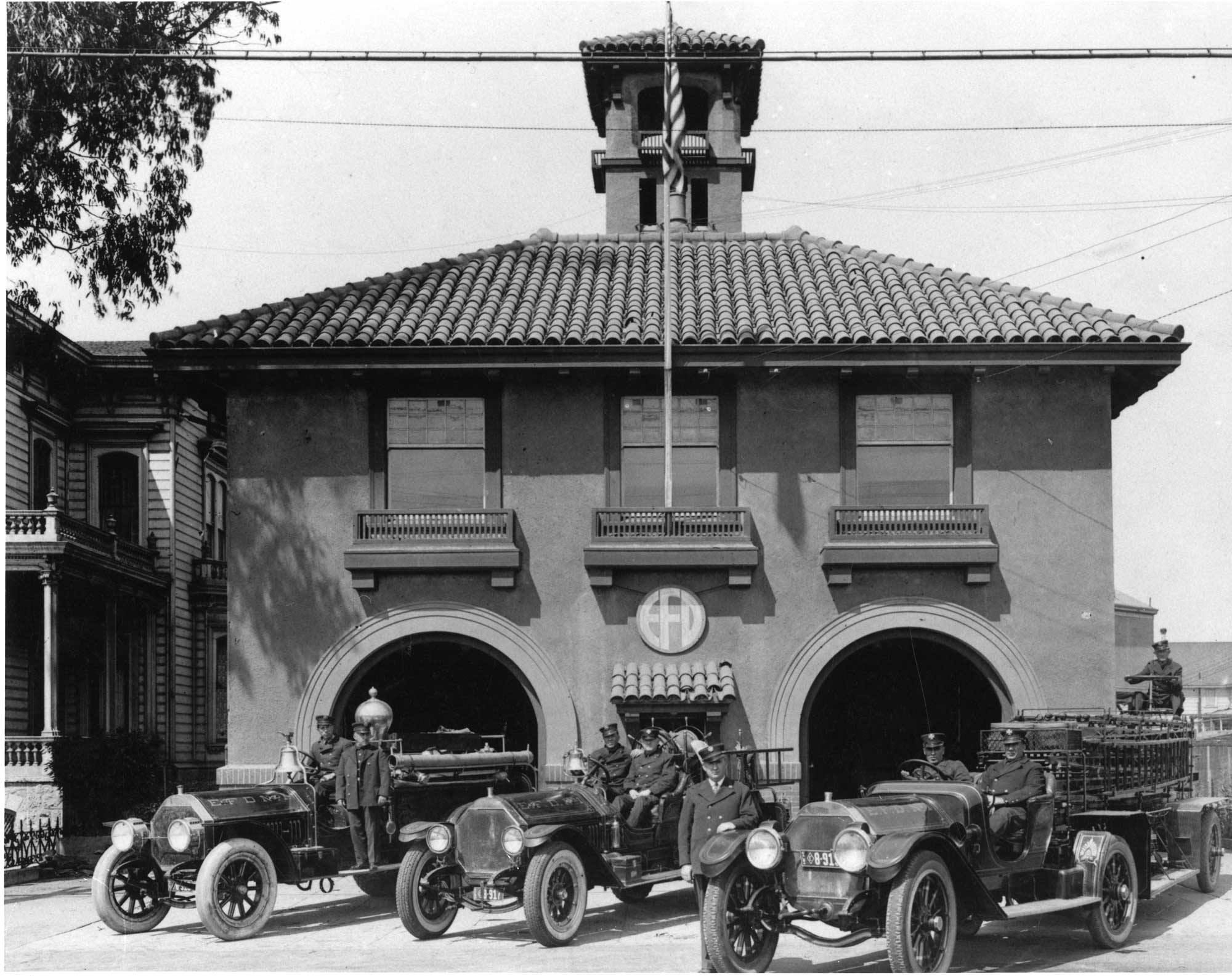
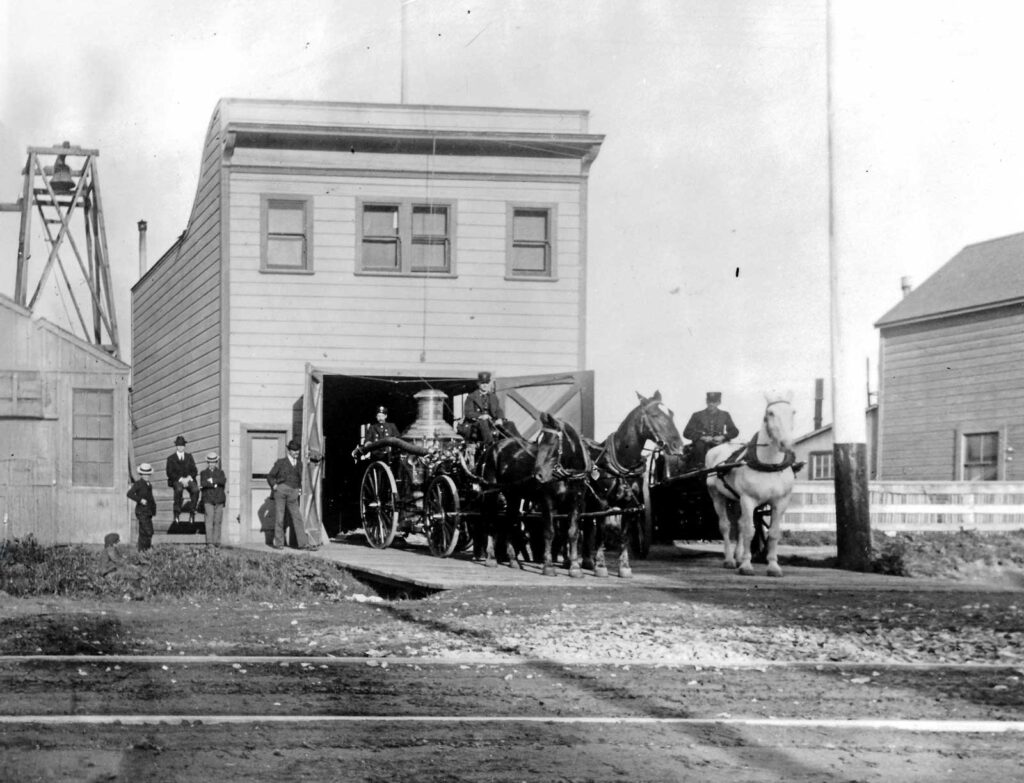
Where you’re standing is roughly the site of Emeryville’s first fire station, which served the community from 1910 until the early 1960s.
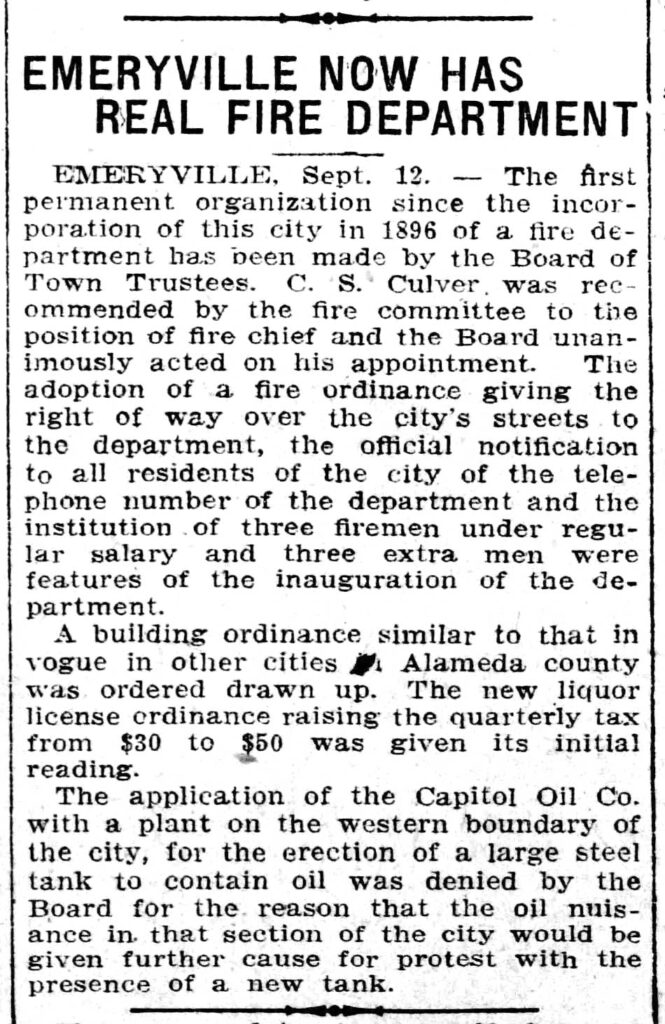
After Emeryville incorporated in 1896, the town had no fire station of its own, relying instead on nearby Oakland for protection. This arrangement worked at first: early Emeryville was largely rural, with a small population and relatively few structures.
That changed quickly after the turn of the twentieth century. Between 1900 and 1910, Emeryville experienced rapid population growth and industrial expansion. New factories rose across the town, many storing flammable materials that significantly increased the risk of fire.
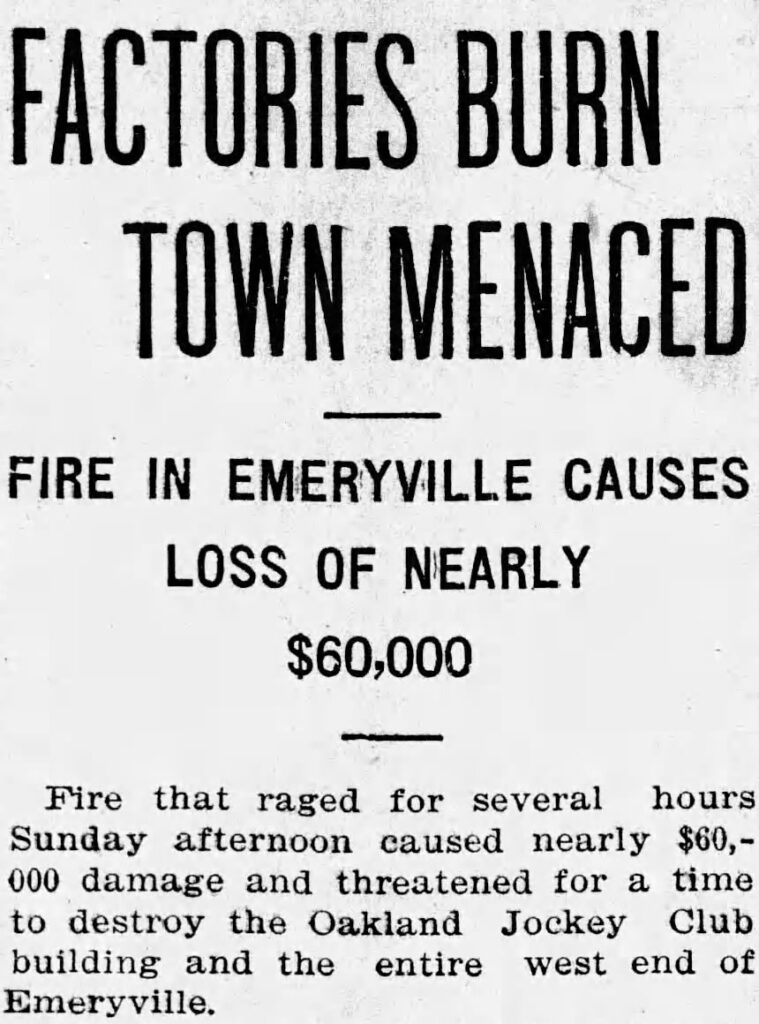
Those dangers became painfully clear on April 28, 1907, when a massive blaze destroyed the Umphred Furniture Warehouse at the foot of Park Avenue. The fire spread to neighboring buildings, and the Emery train station burned to the ground. Horse-drawn fire engines from Oakland arrived just in time to contain the conflagration. The disaster convinced Emeryville’s Board of Trustees that the city needed its own fire department.
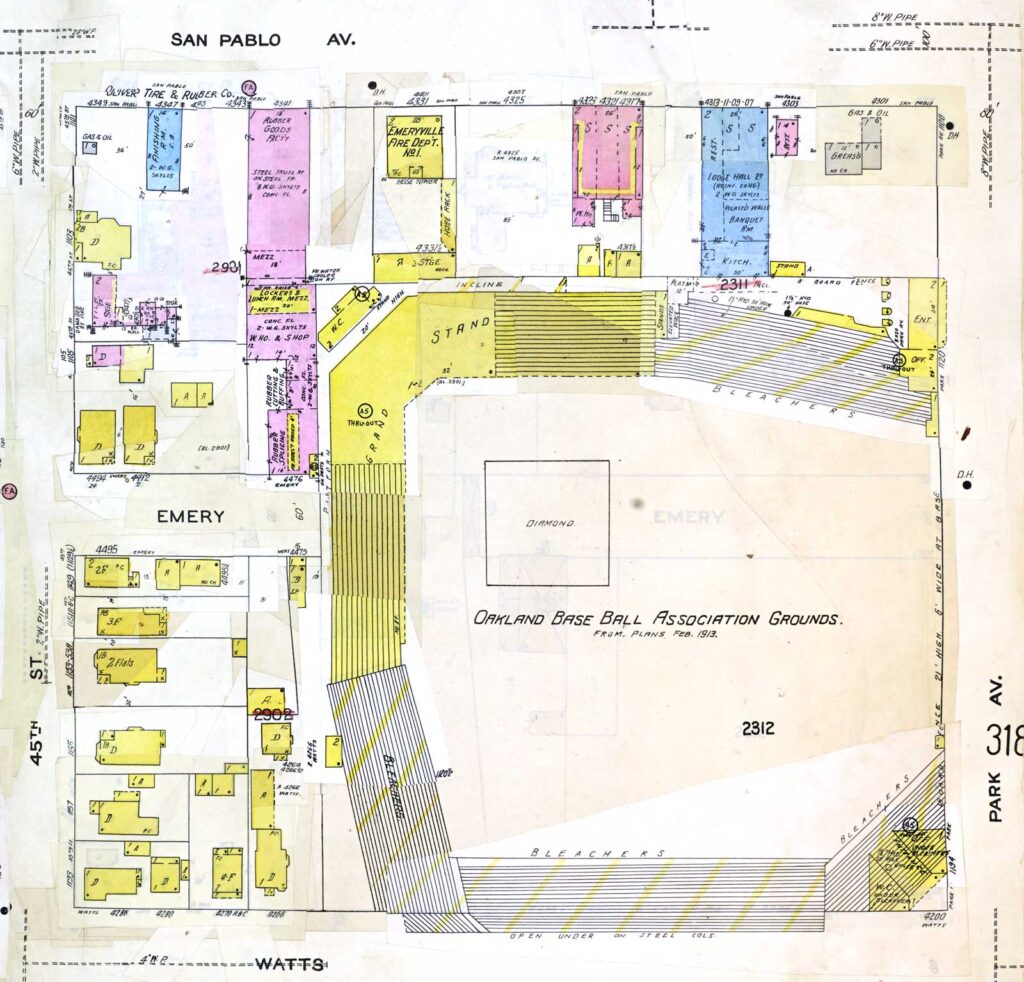
In 1908, Emeryville purchased this lot on the west side of San Pablo Avenue, between Park Avenue and 45th Street. The first firehouse was constructed here in 1910 at a cost of less than $10,000.
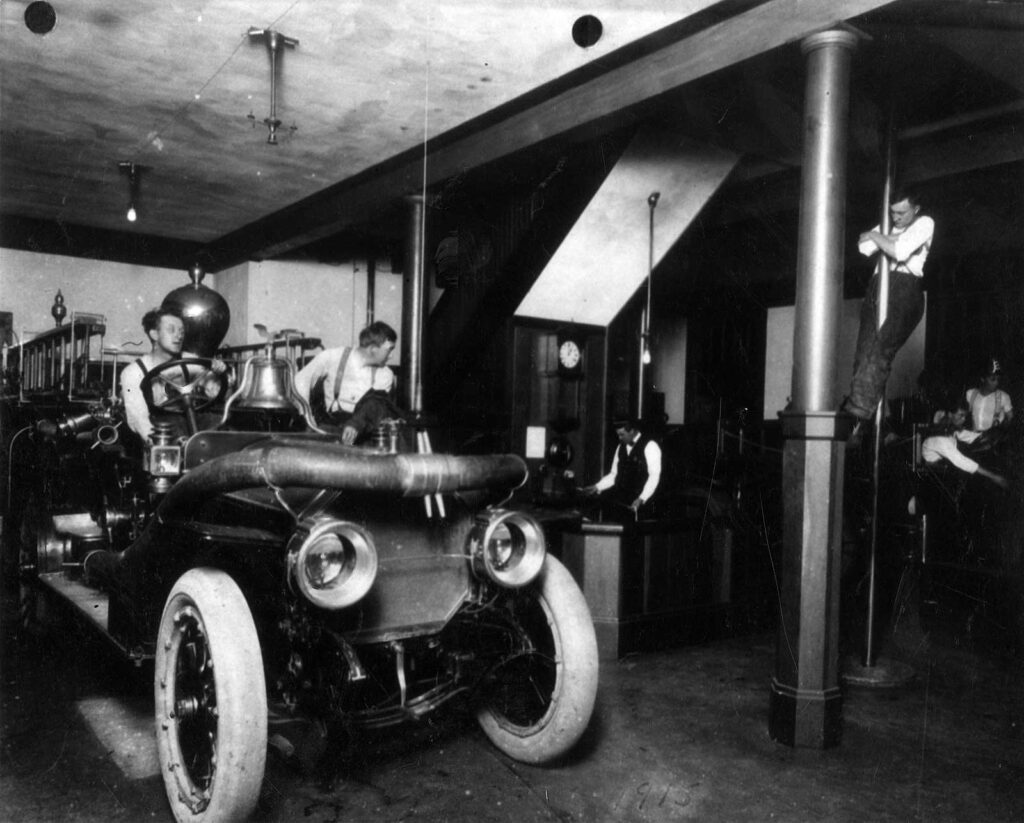
The two-story Mission-style building featured arched garage doors, a tile roof, and a hose tower used to dry cotton hoses and prevent mildew. Inside, two brass descent poles—better known as fire poles—allowed firefighters to quickly slide from the upstairs dormitory and offices to the apparatus floor below.
The Emeryville Fire Department officially began operations in 1912. That same year, it purchased a motorized Webb pumper fire engine, making Emeryville the first city west of the Mississippi to own one. Because most streets were still unpaved, the engine required tire chains during wet weather.
Also in 1912, the historic Emery Estate was relocated to 4325 San Pablo Avenue, adjacent to the fire station, to make room for the construction of Oaks Ballpark.
The station proved to be a sound investment, as the department went on to battle several major fires over the following decades. In 1952, as the city continued to grow, Fire Station No. 2—still standing today—was built at 63rd Street and Hollis Street.
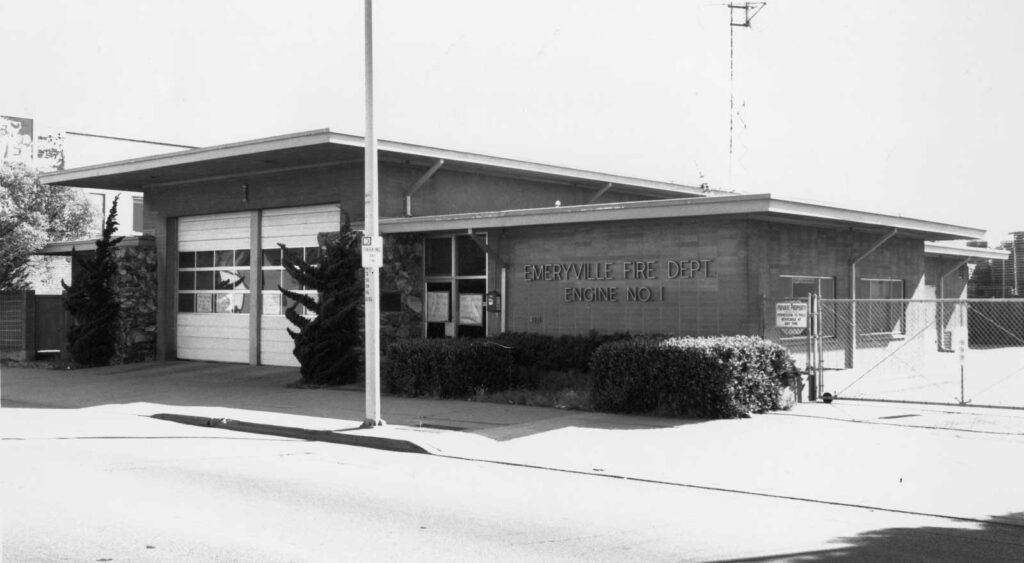
By the early 1960s, after more than 50 years of service, the original San Pablo Avenue station had become outdated. It was demolished in 1963 and replaced with a single-story firehouse featuring masonry block walls typical of the era and space for four engines.
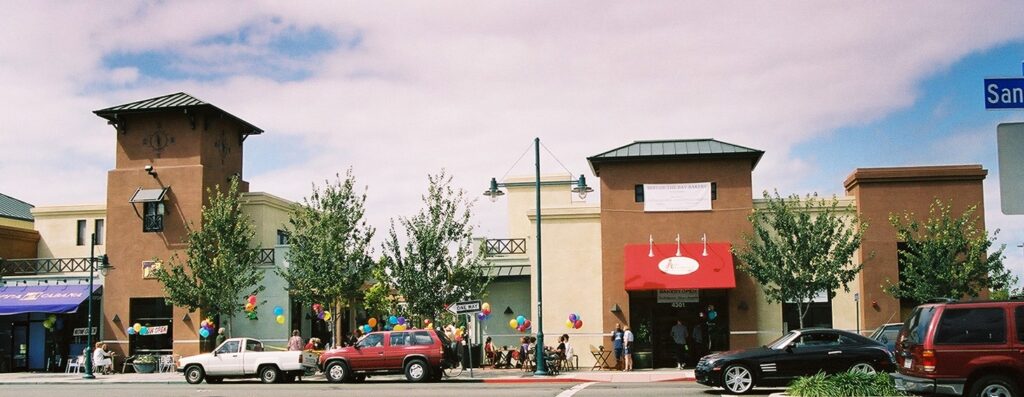
In 1990, the modern Station No. 1 opened at 2333 Powell Street on the Emeryville Peninsula, and the San Pablo Avenue station was closed. Two years later, the former Station No. 1 was occupied by ECAP, which used the building for five years before the city’s redevelopment agency cleared the site for a proposed shopping center.
The Promenade Shopping Center opened in 2003, anchored by Arizmendi Bakery and a Longs Drug Store which later became a CVS Pharmacy and was recently converted to a Planet Fitness Gym. The adjacent Joseph Emery Skatepark was completed in 2016.
A more comprehensive history of this structure that was first published in the city’s centennial edition can be read here.
