



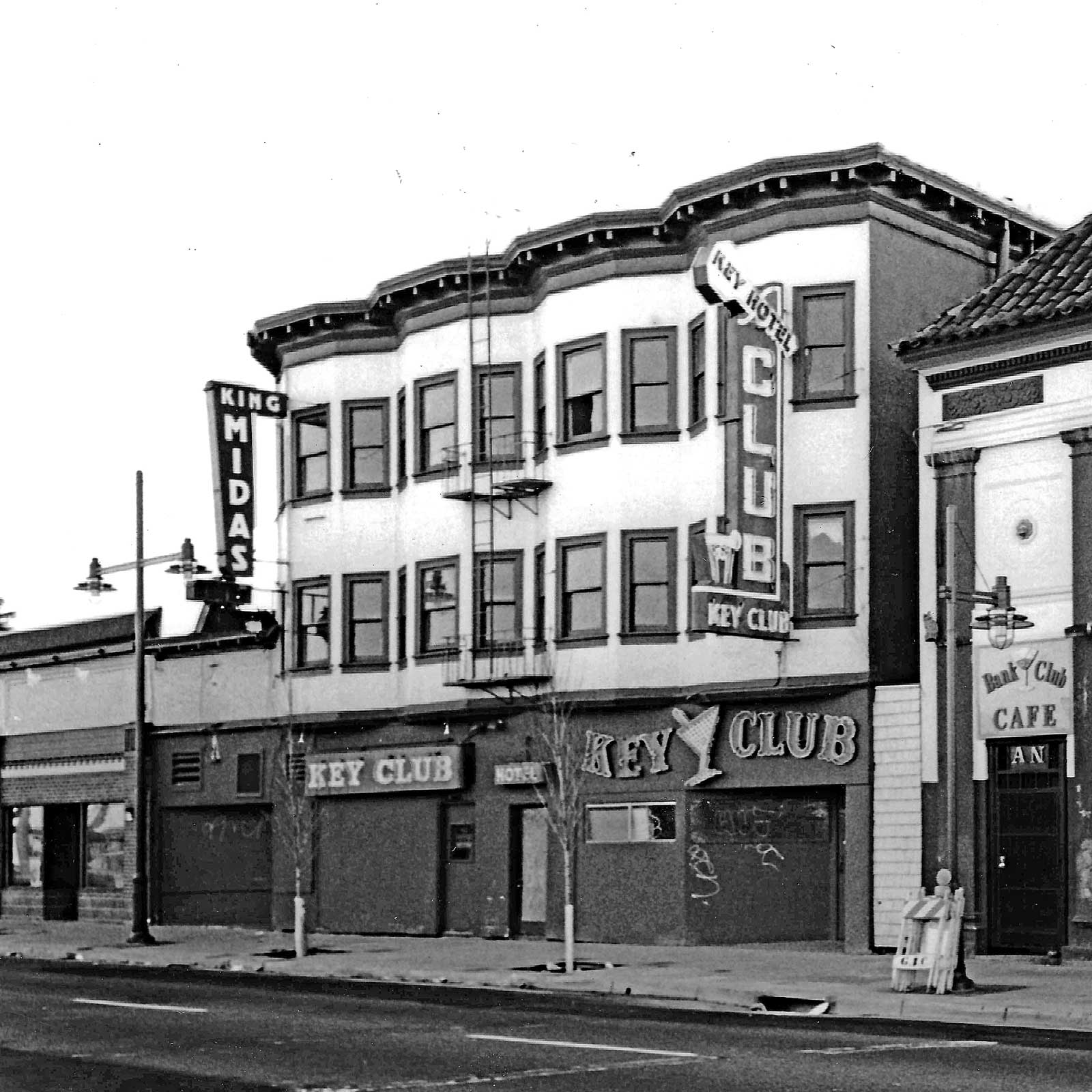
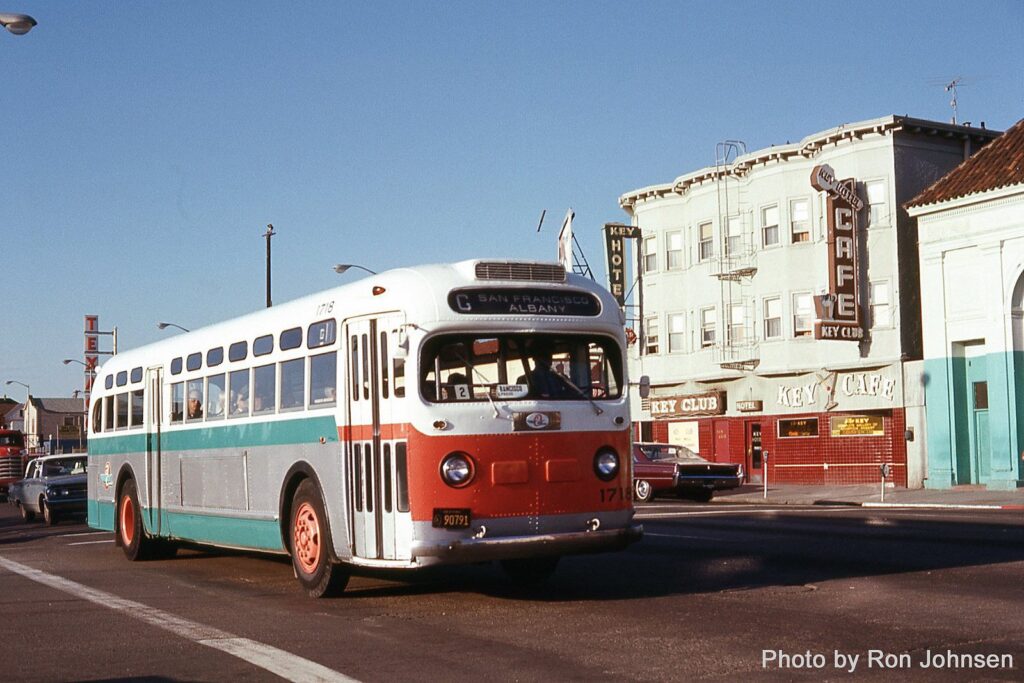
Key Club & Hotel (Now The Andante Condos)
Development along this stretch of San Pablo Avenue began to intensify shortly after passenger rail service reached the nearby Santa Fe Depot, spurring commercial activity in the surrounding area.
In 1906, the three-story Santa Fe Hotel was constructed by proprietor George Lehner at 3906–3910 San Pablo Avenue. Like many wood-frame buildings of the era, it featured a rooftop water tank—a common safety measure used to maintain water pressure and provide emergency reserves in the event of fire.
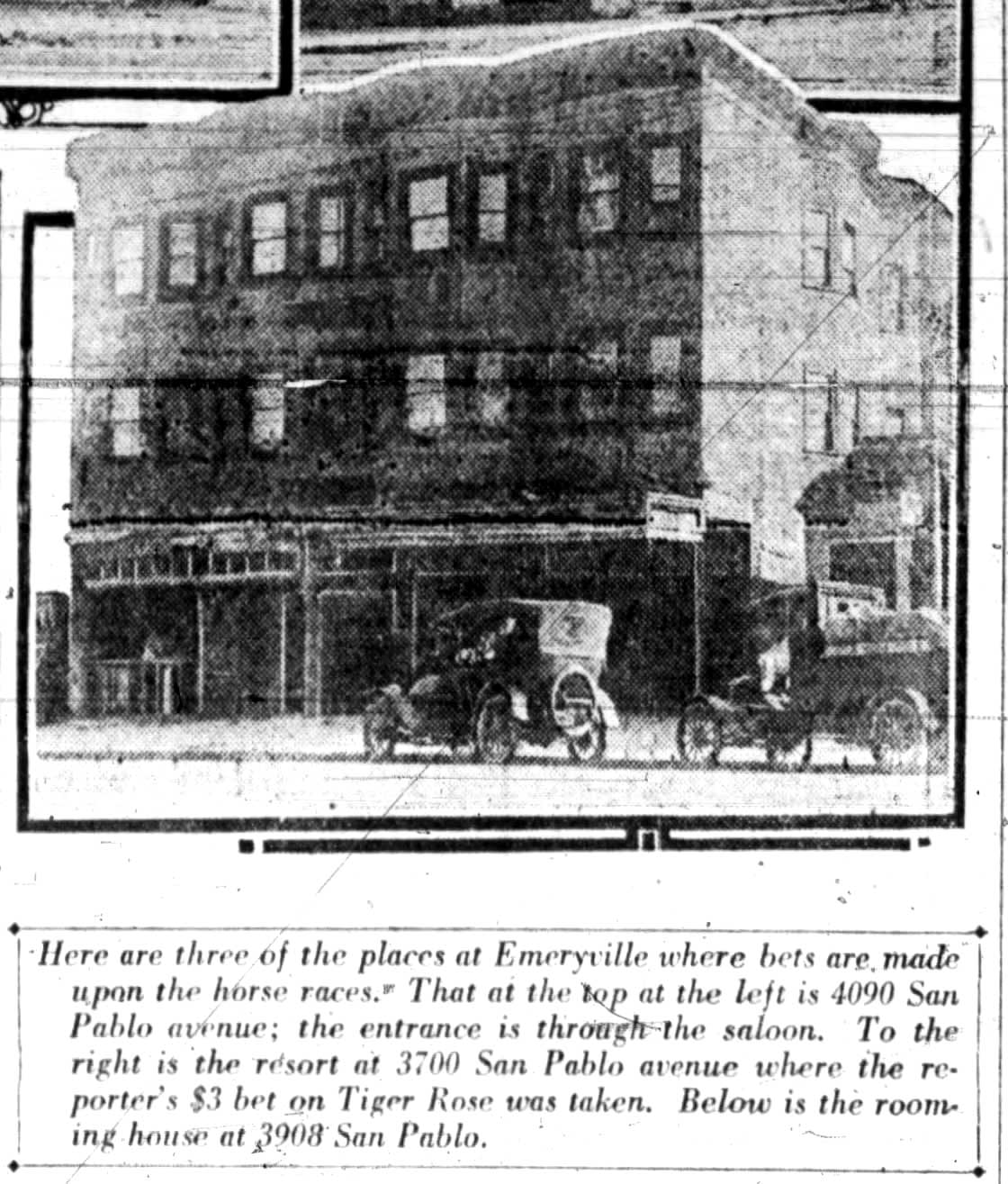
The hotel lobby included a bar that was reportedly known for taking horse-racing bets after passage of California’s Walker-Young Act in 1911, which outlawed most forms of wagering. Such activity was not uncommon in hotels and saloons, where illegal betting often continued discreetly despite state prohibitions.
Also located in the lobby was a restaurant known as the Palm Café, which operated around the clock, along with an adjoining cigar store serving both hotel guests and nearby rail passengers.
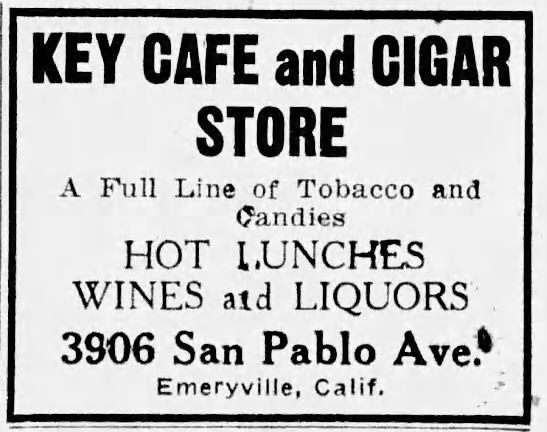
In 1938, the Santa Fe Hotel was renamed the Key Hotel, a reference to the nearby Key System transit line that ran west along Yerba Buena Avenue toward the San Francisco ferry terminals. By 1940, the lobby restaurant and cigar store had consolidated into a single business known as The Key Café and Cigar Store.
Driven by Oakland’s crackdown on gambling and Emeryville’s desire to capture the resulting revenue, card clubs proliferated in Emeryville during the 1940s. One of the first city-licensed card rooms on this stretch of San Pablo Avenue was the Key Club, which opened in the lobby of the Key Hotel in the early 1940s.
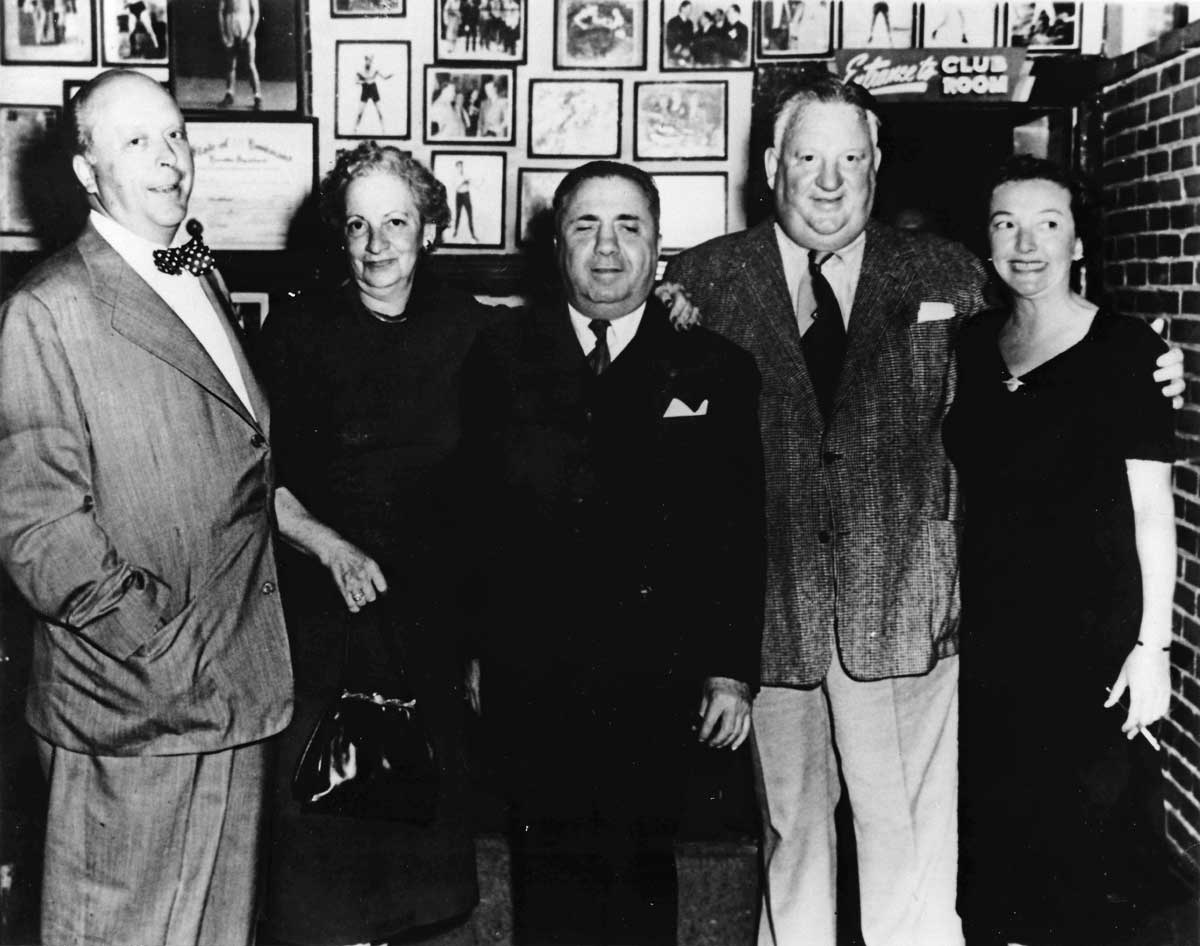
At its peak, Emeryville was home to as many as nine card clubs, with their epicenter along this section of San Pablo Avenue. As the number of card rooms expanded, so too did concerns over corruption and the growing influence of organized crime.
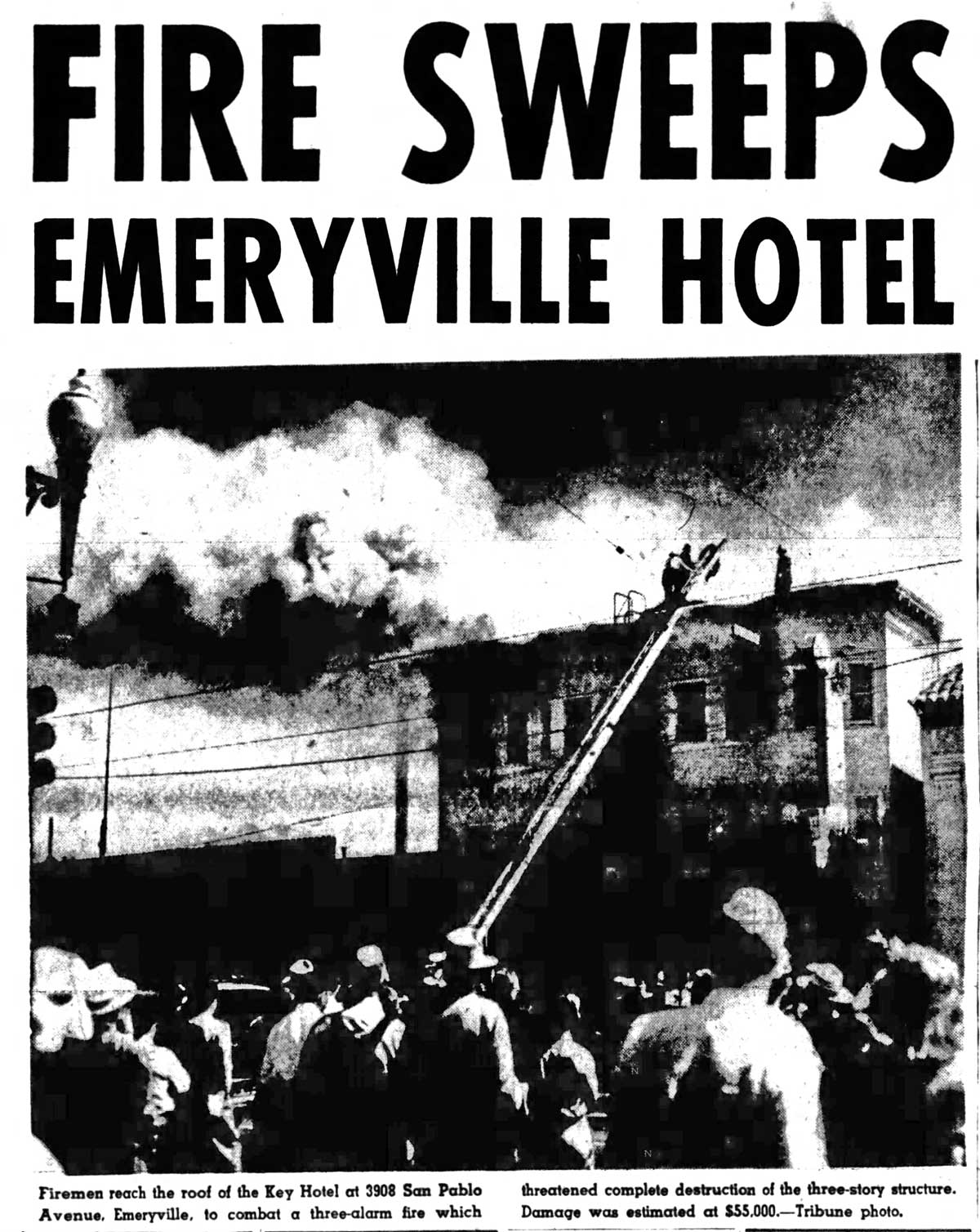
In 1950, the Key Hotel suffered a major fire believed to have been caused by a short circuit in a ventilating fan. Damage estimates at the time placed losses at approximately $60,000, though the building was ultimately repaired and returned to operation.
Over the following decades, newspaper coverage of the hotel was frequently unflattering, often linking the property to criminal activity and police incidents. According to contemporary accounts and later recollections, the Key Club gradually fell into disrepair and earned a reputation for rowdiness. Men reportedly played craps in the bathrooms, rumors circulated of slot machines on the premises, and spittoons lined the floors to accommodate tobacco chewers.
For much of its history, the club operated as a men-only establishment, and contemporary accounts indicate it was racially segregated. Women were not permitted to enter the club until the 1970s.
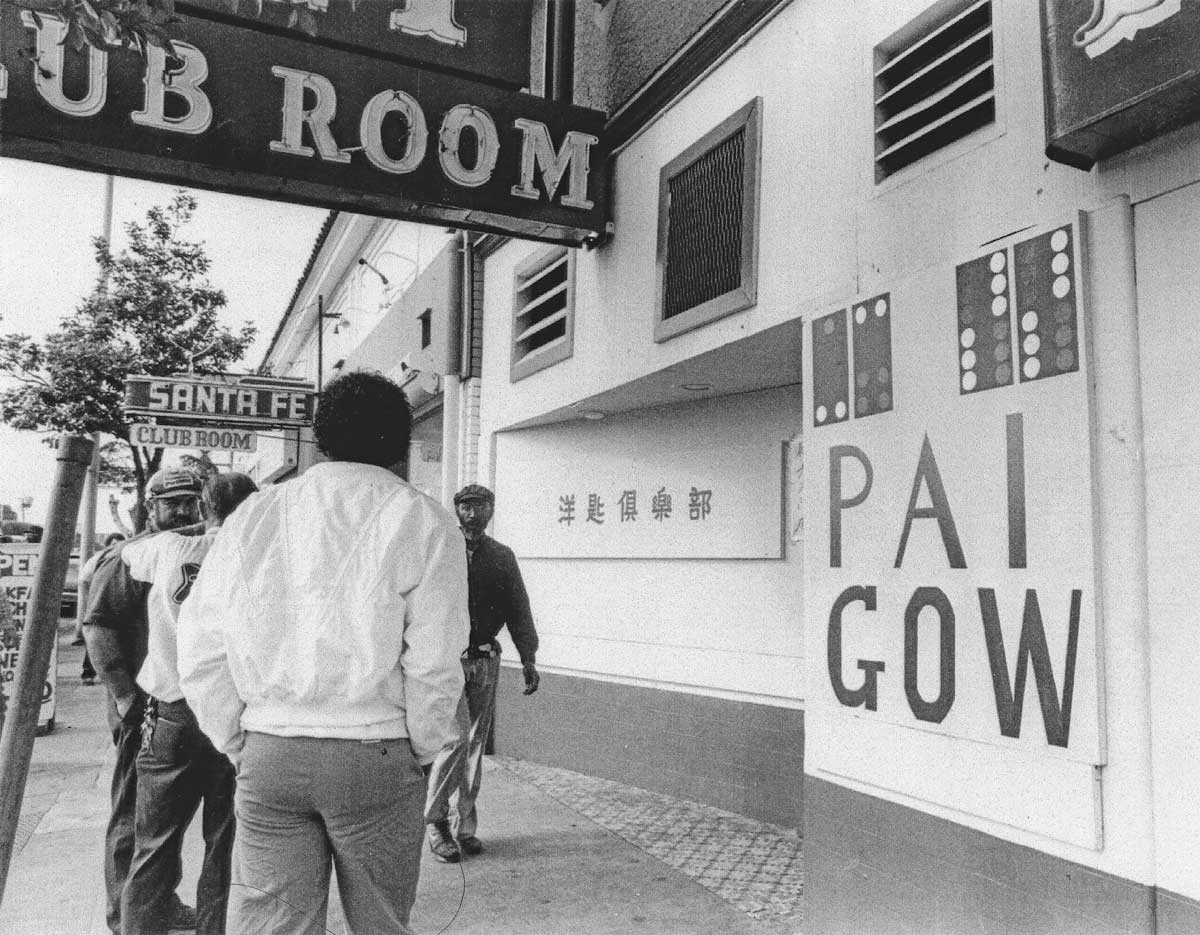
In 1985, Emeryville card clubs began introducing the Chinese game of Pai Gow, which provided a temporary boost to the city’s struggling gambling industry. The game attracted new customers, particularly among immigrant communities from China and the Philippines.
By this time, however, the city’s card-room ordinance was antiquated, and gambling revenues—largely cash-based—were difficult to track or audit. This lack of financial transparency made the industry particularly vulnerable to corruption, including alleged influence from Asian organized crime groups such as the notorious and often violent Wah Ching and Joe Boys gangs.
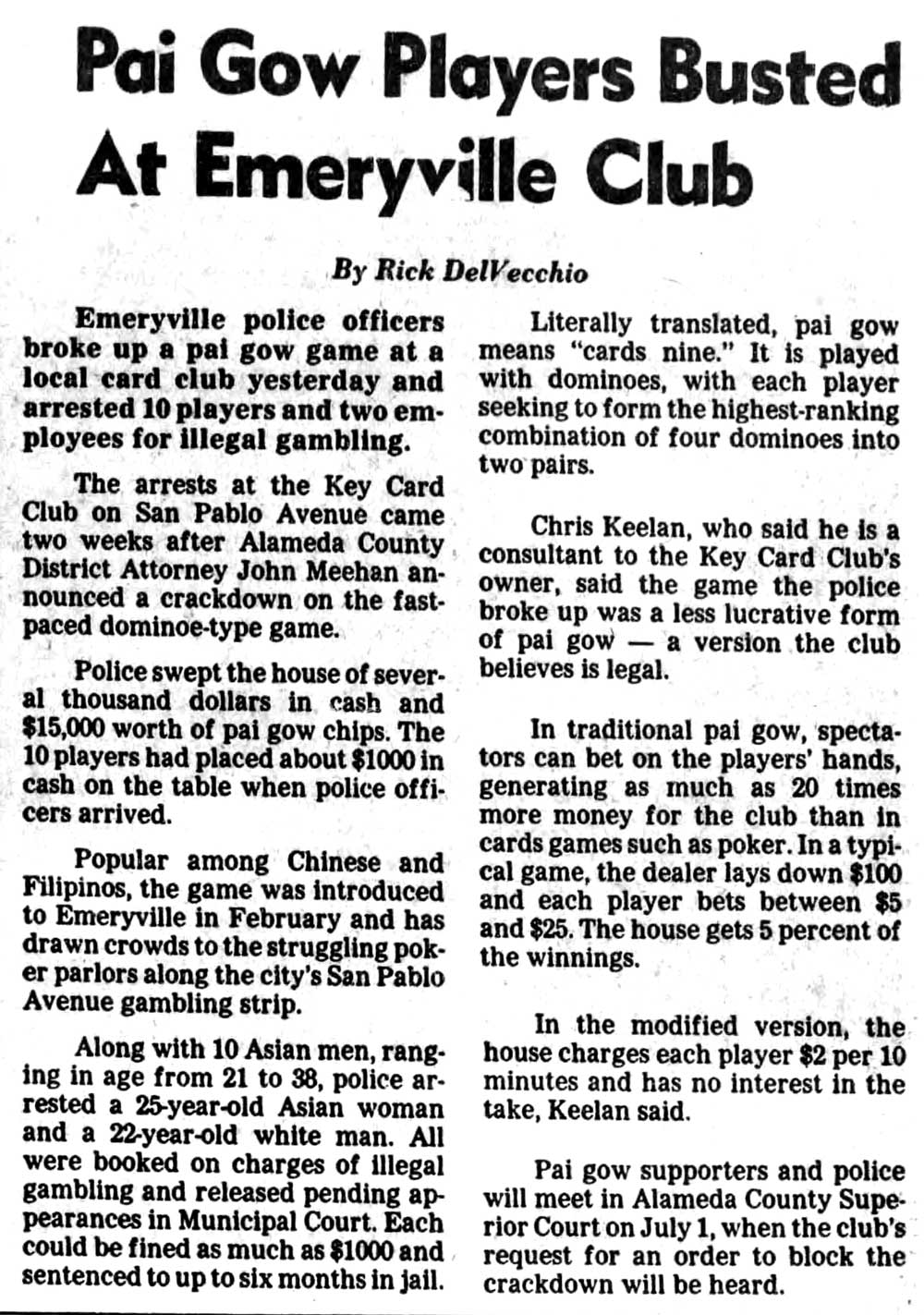
Local authorities soon intervened, attempting to suppress Pai Gow, which existed in a legal gray area as a “house-banked” game. The resulting loss of revenue proved detrimental to card rooms throughout Emeryville, including the Key Club. In an effort to survive, the club introduced a modified version of the game, but the establishment was raided by police, resulting in the arrest of multiple employees and patrons.
Although Pai Gow was reinstated later that year under revised regulations, the damage had been done. The Key Club closed permanently in 1987.
The property was subsequently acquired by the owner of the adjacent King Midas club, who soon encountered legal and financial difficulties of his own. Ultimately, the site was sold to the City of Emeryville through bankruptcy proceedings.
The Key Hotel was later demolished along with the neighboring King Midas property to make way for the Andante mixed-use development, a 130-unit project completed in 2005.
