



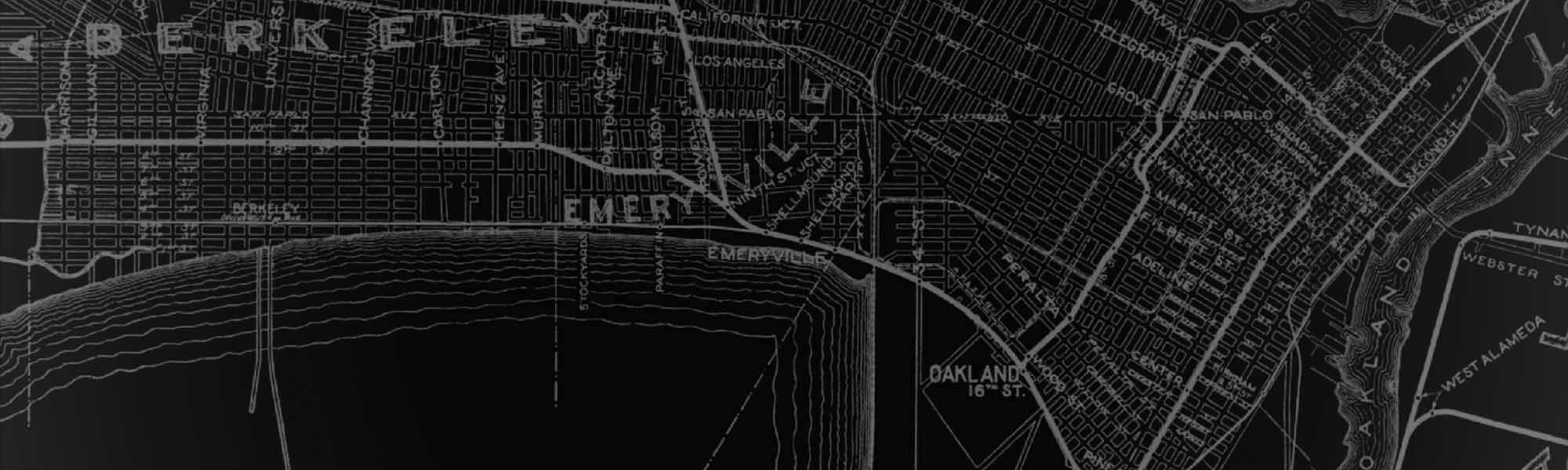

Key System Tower 3 / Moon’s Chinese Kitchen
Here, facing the aptly named Key Route Lofts at Adeline and Yerba Buena, was once one of the most important junctions in the fabled Key System electric streetcar network that shaped daily life in the East Bay during the early to mid-20th century.
Interlocking Tower 3 was a control tower that helped direct trains traveling from the yard to their destinations. An operator stationed in the small tower controlled switches and signals, guiding streetcars onto the proper routes.

From this junction, trains headed north into Berkeley via the Linden Street corridor or east toward downtown Oakland. Nearly every train traveling between Oakland and Berkeley passed through this point.
A Key System flagman was stationed here and at other busy street crossings to warn pedestrians and vehicles of approaching trains using hand flags or lanterns. The work was often dangerous, requiring close proximity to moving trains and growing automobile traffic, frequently at night and in poor visibility, long before modern crossing signals existed.

Key System commuter train service ended in 1958, and the overall system was sold and absorbed into AC Transit in 1960. In the decades that followed, much of the infrastructure—including towers, tracks, and related facilities—was dismantled, removed, or repurposed as the East Bay redeveloped, leaving few visible remnants by the 21st century.
Moon’s Chinese Kitchen
Just a few steps up Adeline, at 3986 Adeline Street, is the ground-floor space of this modest two-story stucco building, currently occupied by The Sunday, a Korean-American brunch spot.

The address appears to have been residential before being converted to restaurant use.
The first of what would be many restaurants at 3986 Adeline Street was Moon’s Chinese Kitchen, which opened in 1948. Its proprietor, 28-year-old Bong Kin Chin, was a Class of 1939 Emery High School graduate and lived either upstairs or next door at 3990 Adeline Street.

Moon’s exterior featured a neon sign, and its rear fence was painted with an advertisement visible to passing Key System trains and their passengers. Inside, the restaurant was cozy, with just six tables, operating largely as a delivery and takeout business.
Moon’s became known for affordable, blue-collar Chinese dishes, including shrimp fried rice for 75 cents, fried prawns for 80 cents, and even a 40-cent ham sandwich.
By the 1980s, Bong Chin had retired, and the restaurant was taken over by married couple Alexander and Winnie Lee. In the early 1990s, Kwun Lee was listed as the owner. Moon’s Chinese Kitchen closed around 1993, after roughly 45 years in operation.
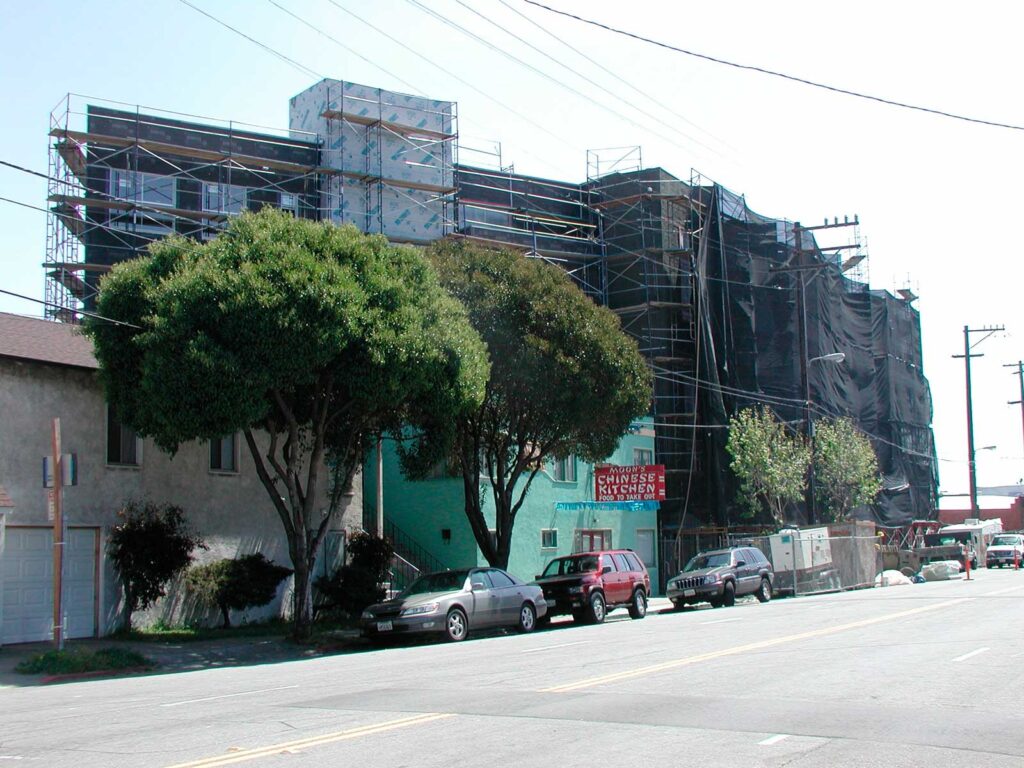
After Moon’s closed, the space sat vacant for several years before being renovated in 2006 for Furenzu—Japanese for “friends”—by tech professional Cynthia Fung. Conceived as an Asian tapas restaurant with wine pairings, Furenzu aimed to capitalize on a rapidly changing, increasingly residential neighborhood. The gamble proved short-lived, however, and the restaurant closed by 2008.

Both Moon’s and Furenzu were later recalled in a retrospective by famed journalist Ben Fong-Torres, who worked at Moon’s as a 14-year-old boy. Fong-Torres reflected on a tip left by a customer equal to about what he made in an entire shift.
The space later became Café Bier (2008–2014), followed by Commonwealth Micropub (2015), and Patatas Neighborhood Kitchen (2017–2023), before reopening as The Sunday in 2025.

