



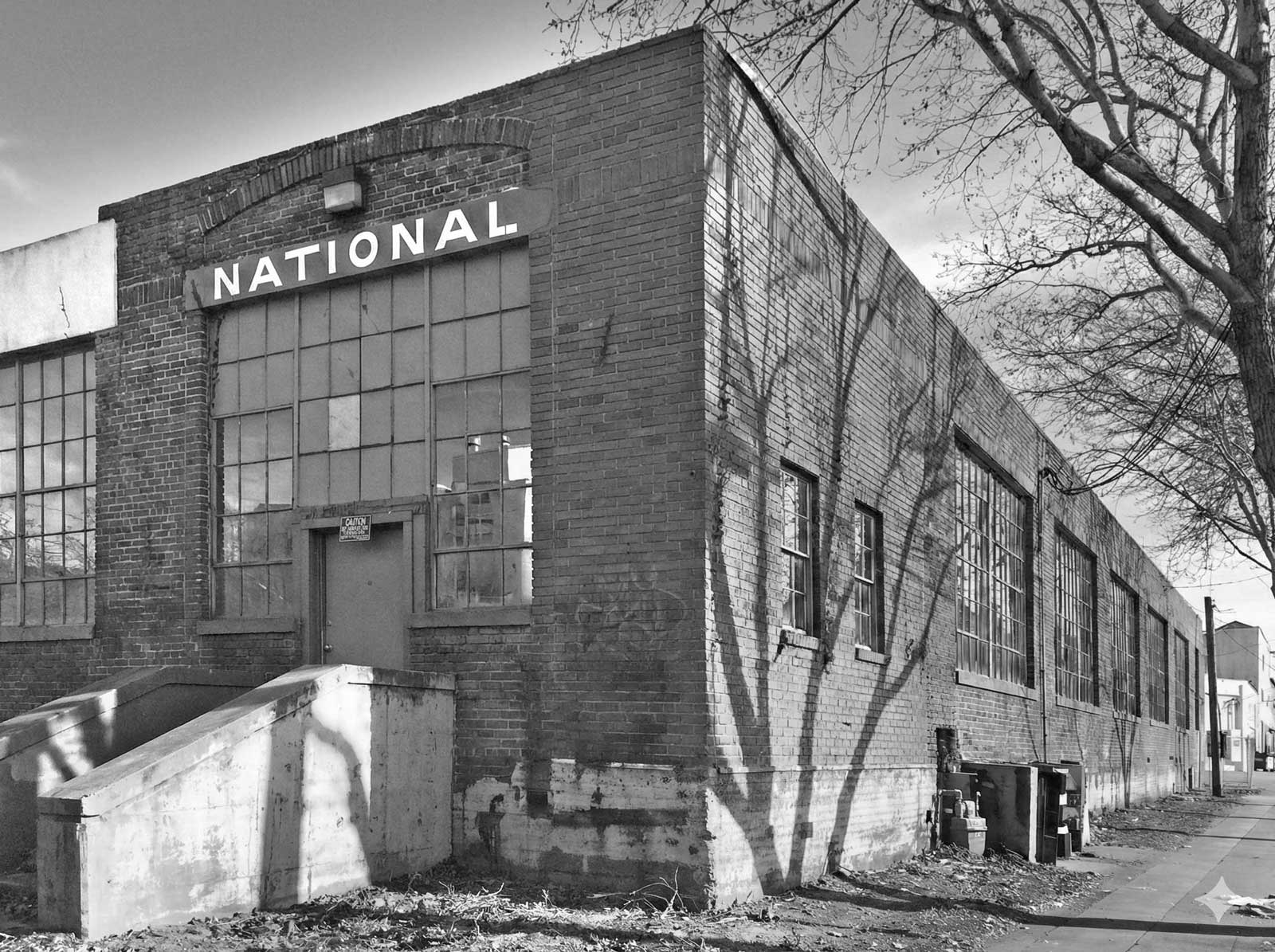
National Upholstering Company Building
This brick warehouse, straddling the Emeryville–Oakland border and now home to City Storage, was originally built in 1920 for the Johnson Washer Company.
Founded in 1902 by Chris P. Johnson, the company’s electric washing machines were ahead of their time. They featured a built-in electric motor that could be safely used indoors—an innovation that helped drive rapid growth and created the need for a larger factory.
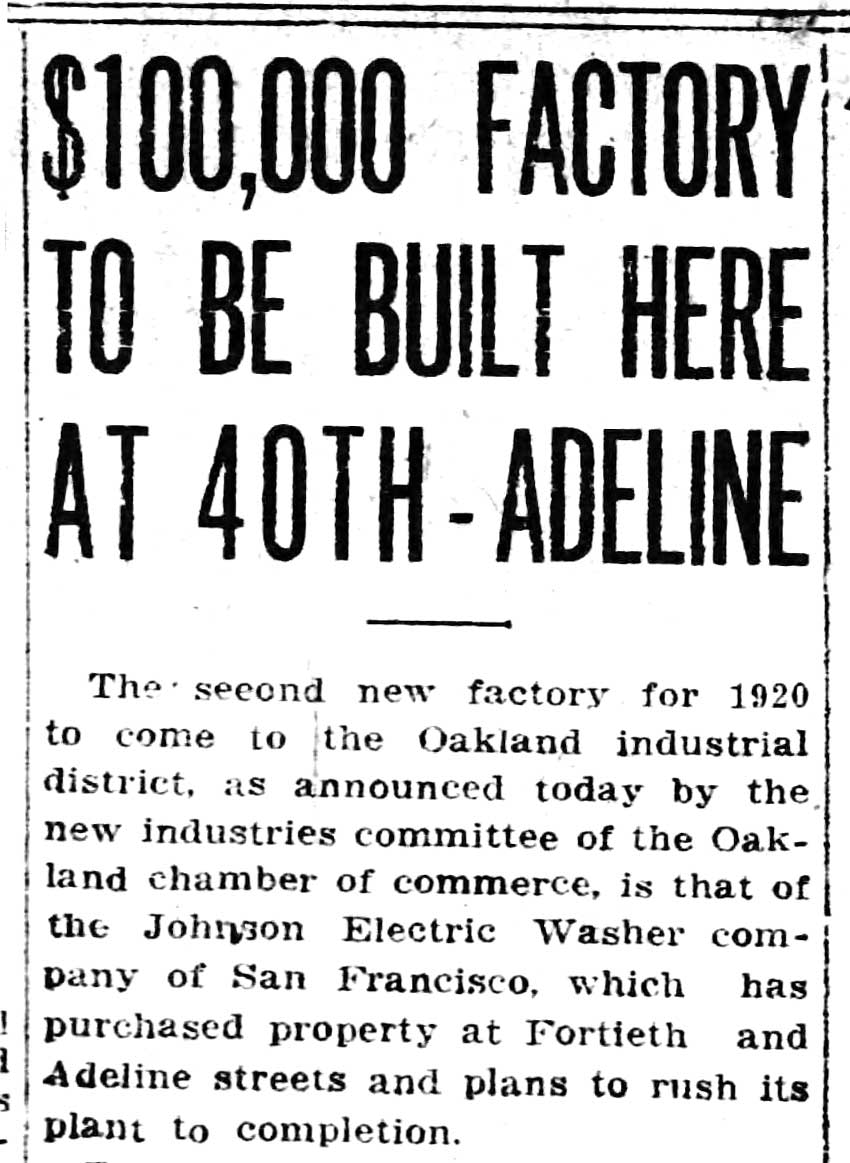
In 1923, Johnson introduced the “Johnson Impeller Washer,” further cementing the company’s reputation for innovation.
In 1929, the firm was acquired by Ohio-based Apex Electrical Manufacturing. Washers were sold under the “Johnson-Apex” brand for several years, with the Johnson name disappearing entirely by 1933.
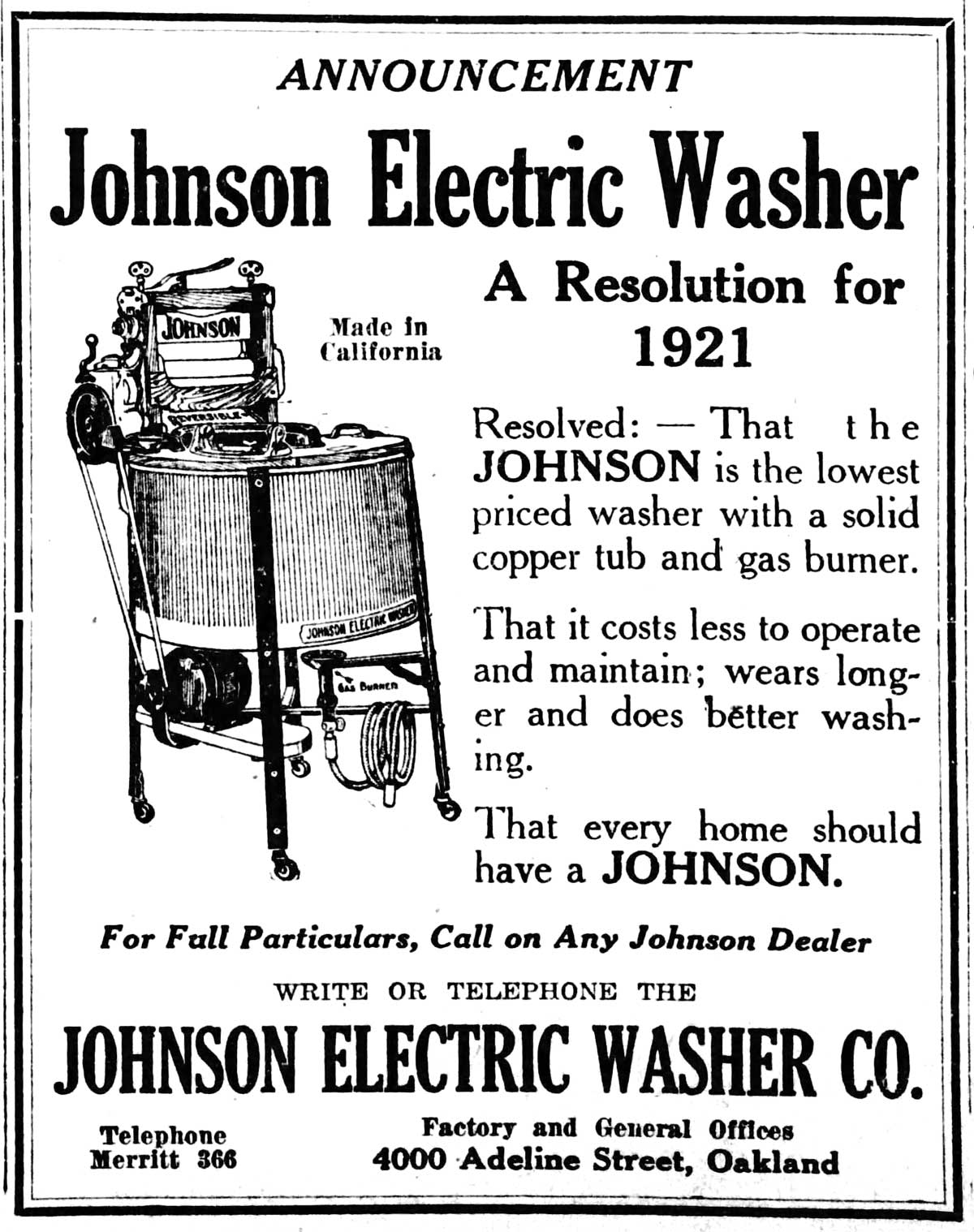
Apex vacated the building in 1934, relocating to a larger factory previously occupied by the Kirsch Company.
The National Upholstering Company next occupied the building, manufacturing high-quality furniture including sofas, chairs, mattresses, and couches.
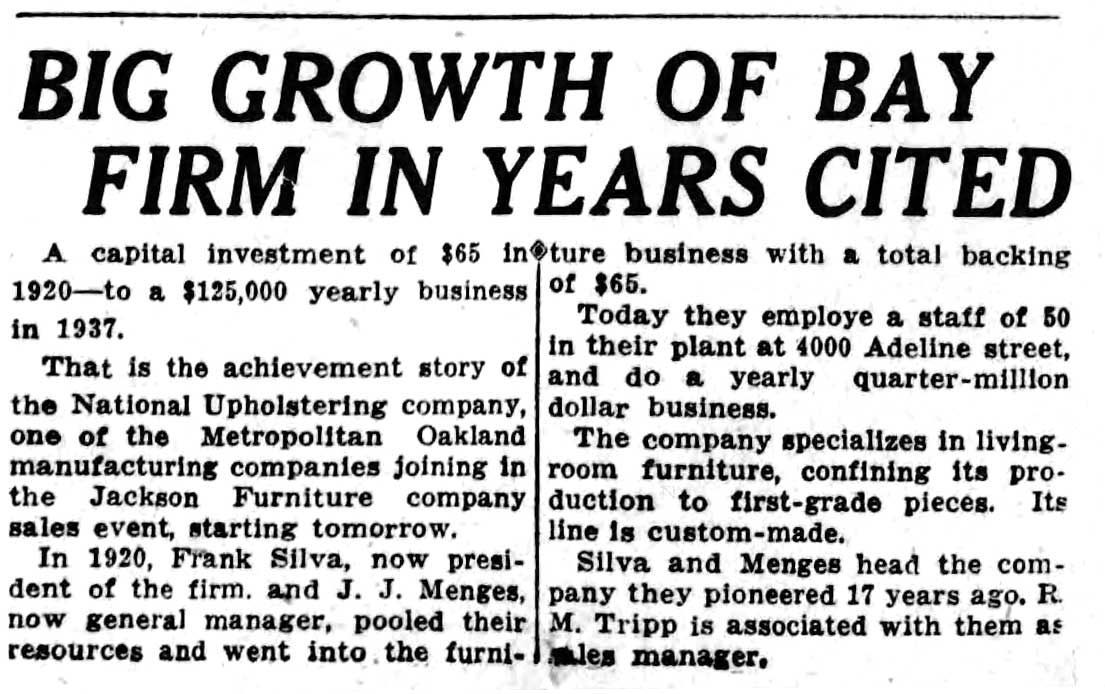
Founded in nearby North Oakland in 1920 by Frank E. Silva and John J. Menges, National Upholstering developed a reputation for elegance and durability. Its products were sold through prominent Oakland retailers such as Kahn’s and Jackson’s.
Frank E. Silva served as president of the company for 45 years, until his death in 1965 at age 75.
Management then passed to his son, Franklyn M. Silva, who led the business until his retirement. A third-generation family member, Lance Silva, later assumed operations, though the precise timing is unclear.
After 95 years in business, National Upholstering closed in 2010. Franklyn Silva died in 2017 at the age of 98.
In 2011, the building was gutted and remodeled by Kava Massih Architects, transforming it into City Storage, including climate-controlled wine storage.
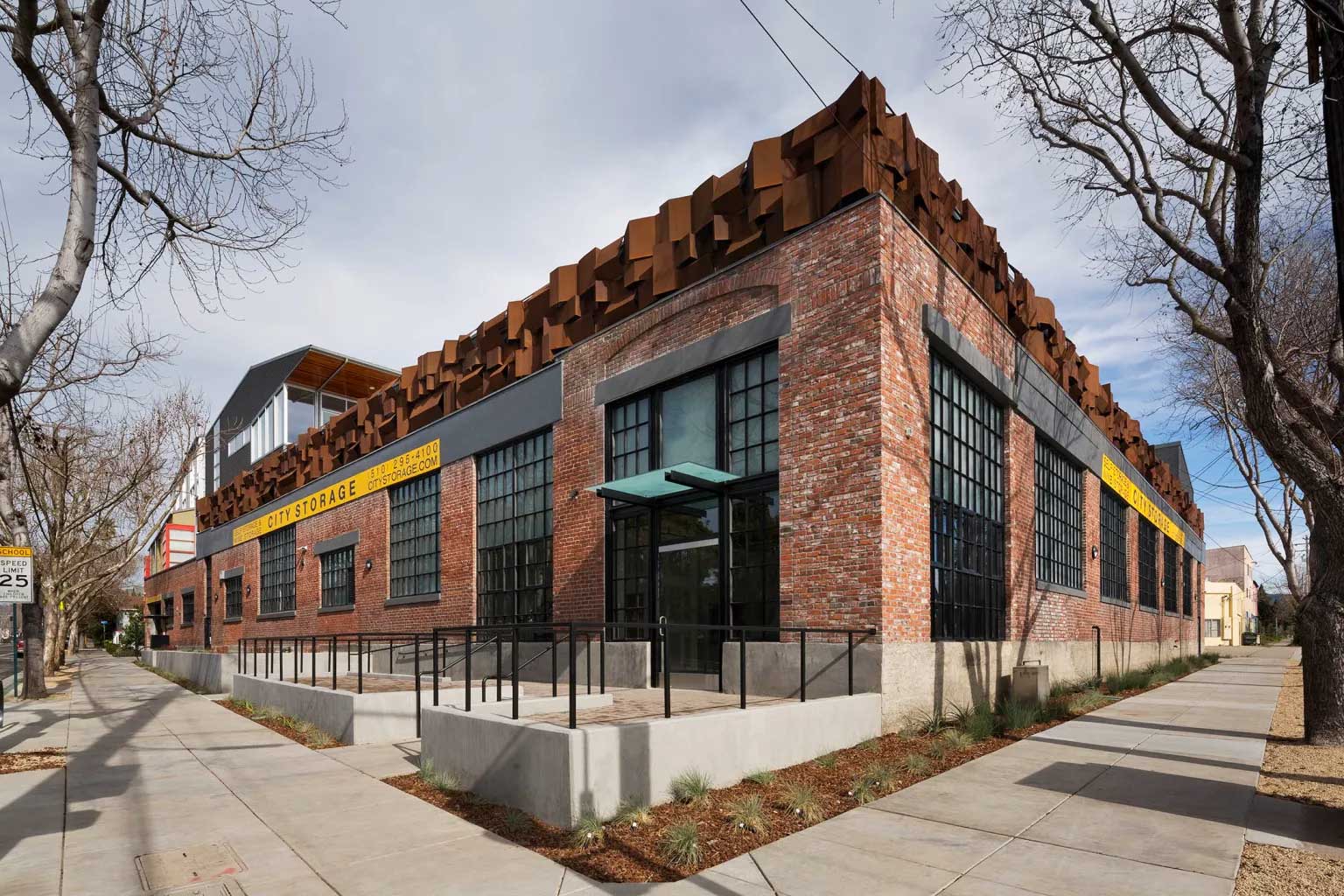
The renovation preserved the original brick facade while adding a rooftop penthouse atop the historic masonry structure. The rustic steel art panels lining the roof were designed by artist Melissa MacDonald.
The corner space was converted to a restaurant, opening as Propaganda in 2016 before becoming Hometown Heroes in 2018 followed by Hidden Spot in 2021.
Today, the building stands as a layered reminder of Emeryville and Oakland’s industrial past—reflecting a century of innovation, craftsmanship, and adaptive reuse.
