



The Santa Fe Railroad Depot (Now East Bridge Shopping Center)
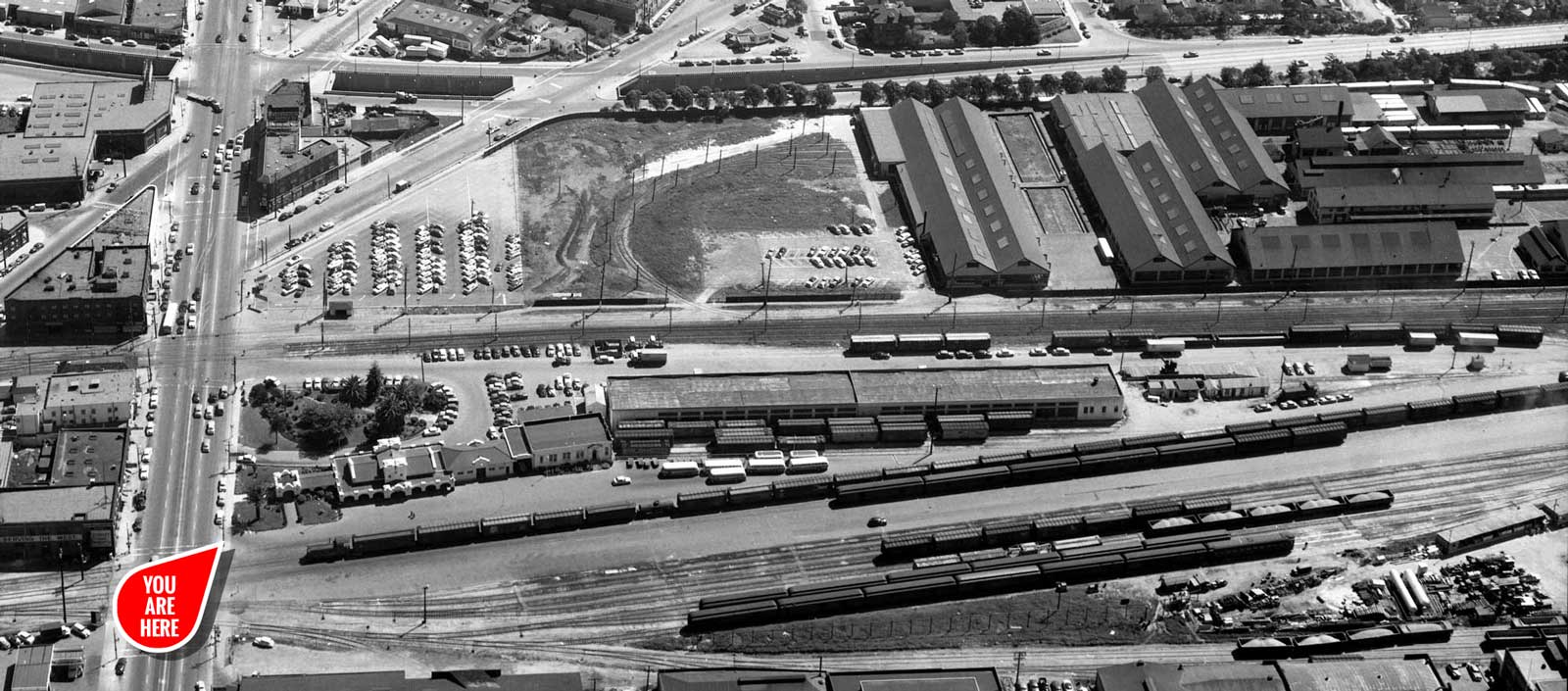
What is now the East Bay Bridge Shopping Center, anchored by Target, Home Depot and the Pak ‘N Save Grocery Store, was once the preeminent transportation gateway of the East Bay.
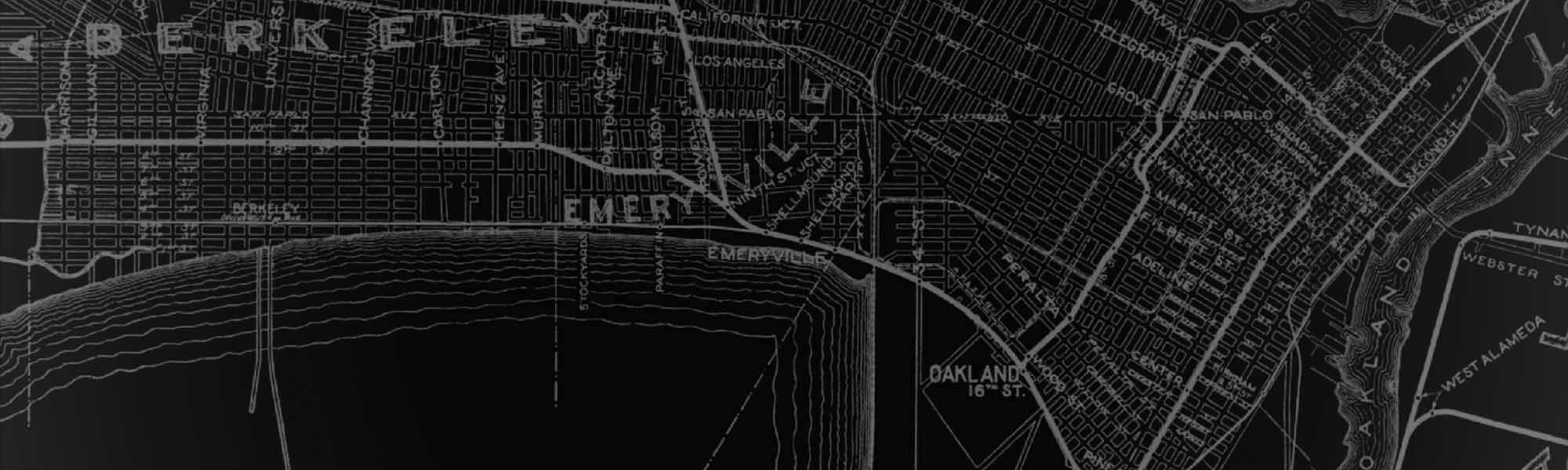
In 1902, the Atchison, Topeka & Santa Fe Railway, commonly known as ATSF or simply “Santa Fe,” acquired the struggling California & Nevada Railroad right of way from Emeryville to Richmond. Santa Fe was looking to compete with Southern Pacific, which dominated rail access to San Francisco and Oakland.
Santa Fe converted the line to standard gauge, rebuilt and upgraded the track, and connected it with its existing transcontinental route that previously terminated in Richmond.
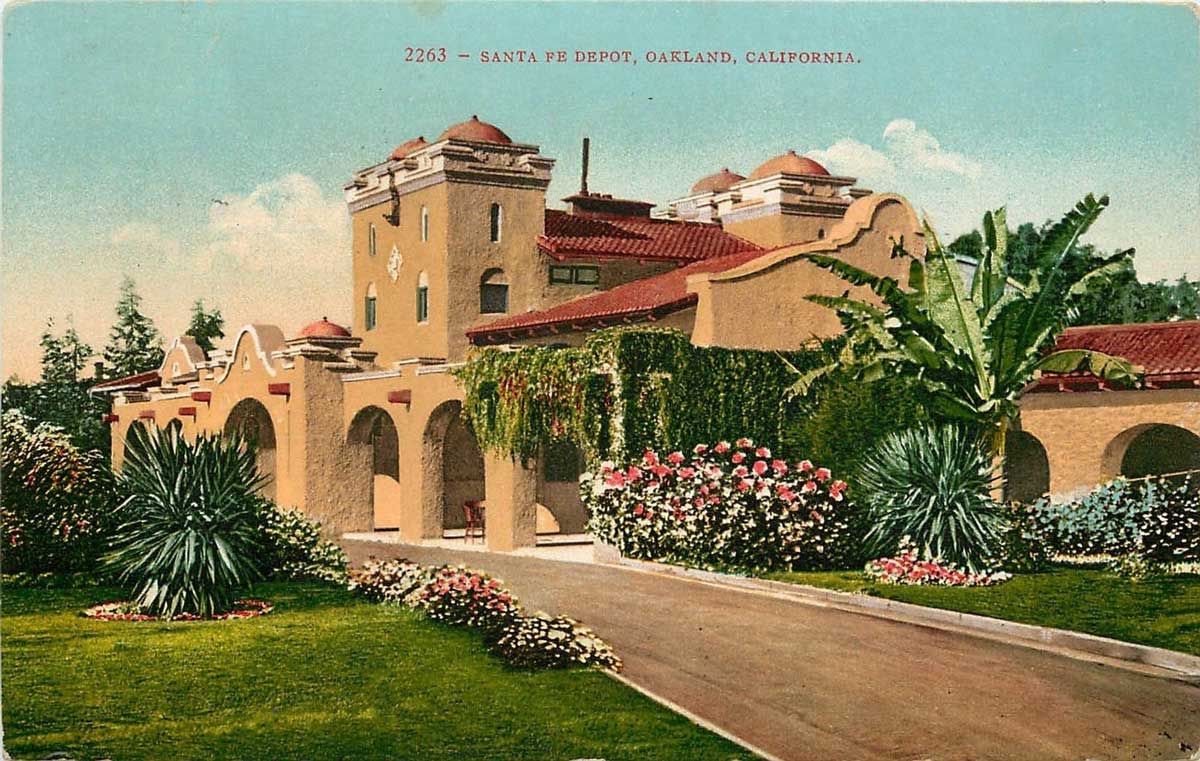
Concurrently, they constructed a new depot here on the corner of Yerba Buena and San Pablo Avenues. It was designed by Santa Fe staff architect C. F. Whittlesay in Mission Revival style with four decorative towers inspired by Mission Santa Barbara.
It was built by Yard & Hichborn at a cost of approximately $11,625. It included separate waiting rooms for men and women, a ticket office, and employee sleeping quarters on the second floor.
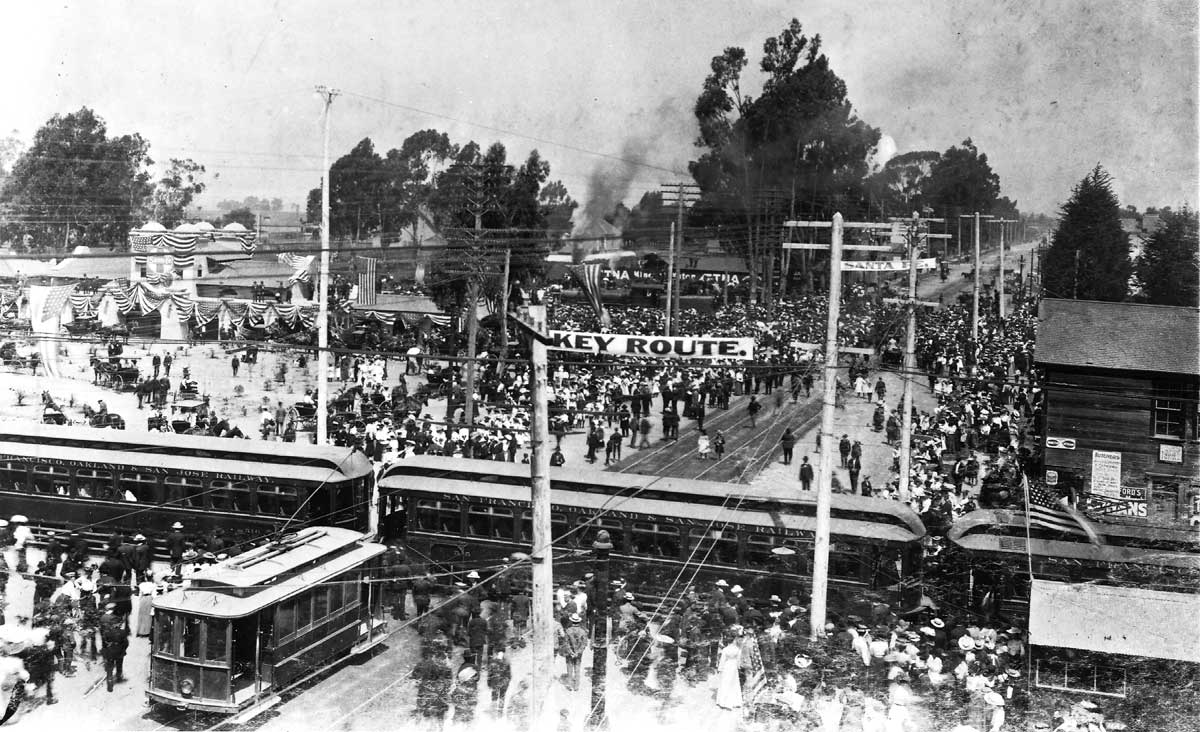
“Santa Fe Day.”
The first passenger train arrived on May 16, 1904, on an occasion dubbed “Santa Fe Day.” Its arrival was greeted by crowds, decorations, and a celebratory parade.
With the depot’s opening, passengers could now travel directly from the Midwest and Southwest to the East Bay on a single railroad line.
Key System Electric Streetcars
At the same time steam-powered rail travel was peaking, a second transportation revolution was unfolding. The Key System and Southern Pacific’s East Bay Electric Lines interurban streetcar network expanded rapidly across the East Bay in the early 20th century. Developed largely under the direction of real-estate magnate Francis “Borax” Smith, the Key System linked new neighborhoods to urban centers while promoting suburban growth.
The system reached its peak in 1936 with the opening of the San Francisco–Oakland Bay Bridge. Key System trains began running directly across the bridge’s lower deck into San Francisco’s Transbay Terminal, eliminating the need for ferries. This innovation reshaped regional travel but also reduced Emeryville’s role as a ferry transfer point, as transbay service shifted inland.
World War II briefly restored heavy rail usage, as defense industries and shipyards relied on mass transit to move workers. But after the war, transportation priorities changed dramatically. Automobile ownership surged, freeways expanded, and public and private investment shifted away from rail. Electric streetcars were increasingly seen as inflexible and outdated, while buses promised lower costs and adaptability. By 1948, the last local streetcars in the East Bay were discontinued.
In 1958, the Key System ran its final trains across the Bay Bridge. Tracks were removed, overhead wires dismantled, and bus service replaced electric rail. Two years later, the publicly owned AC Transit assumed operations, preserving many routes. Unfortunately, most of the Key System’s private rights‑of‑way were relinquished rather than retained for future transit.
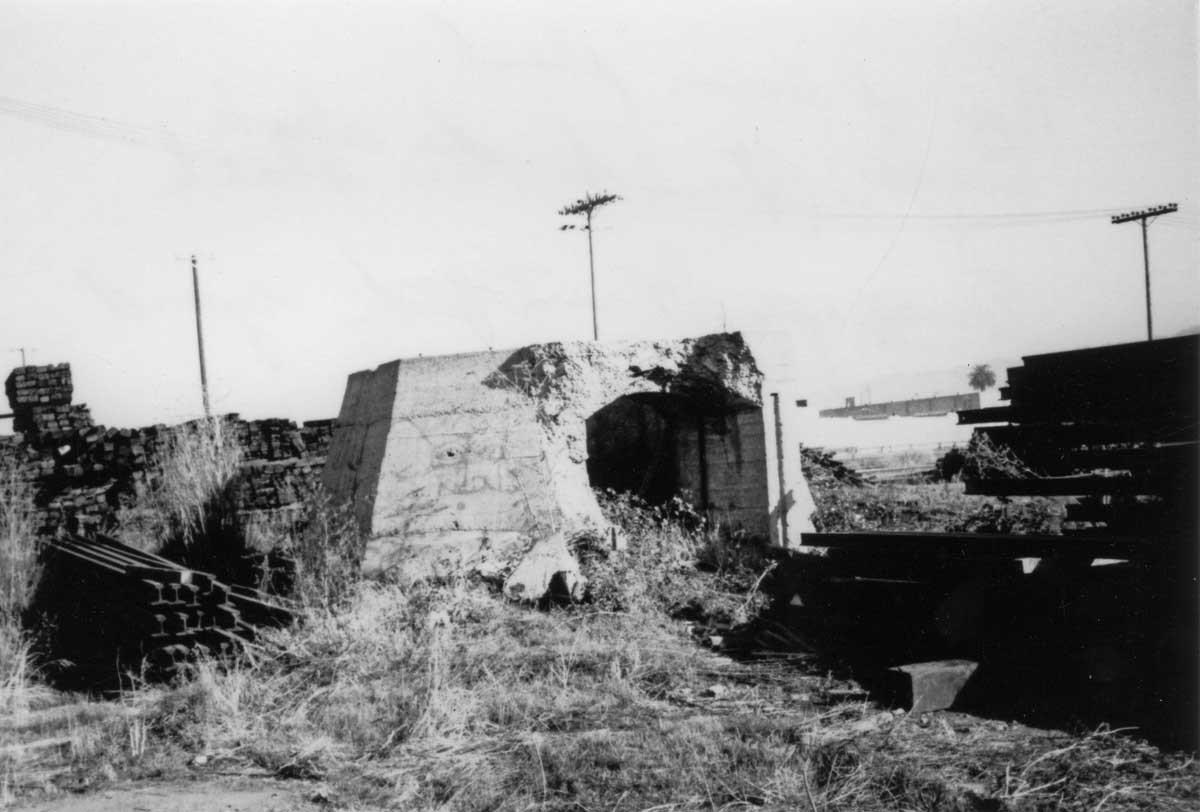
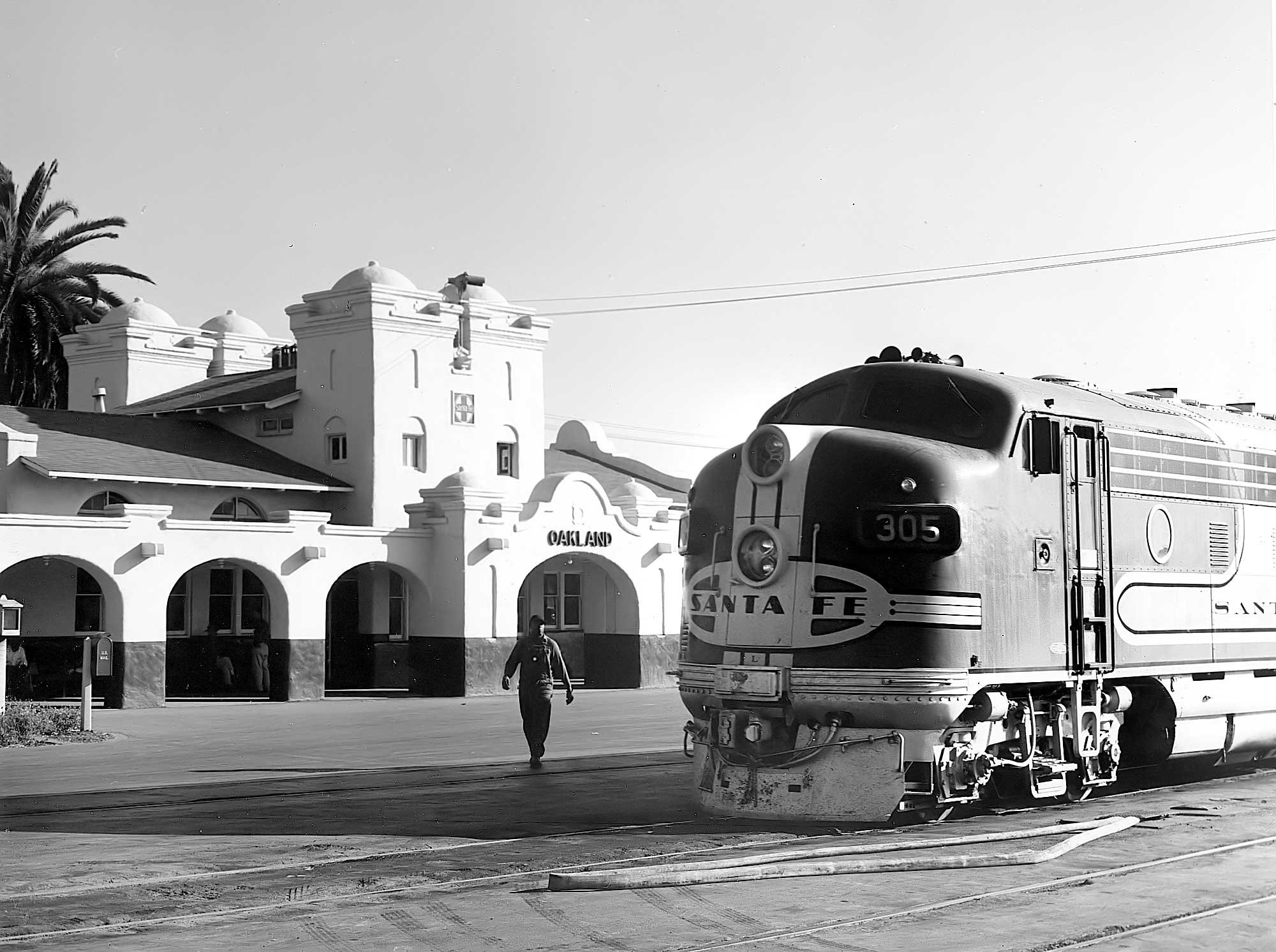
Santa Fe’s passenger service declined along a similar path. As cars and airplanes reshaped travel, long-distance rail ridership fell. In 1958, Santa Fe ended passenger service at the Emeryville depot, closing a chapter that had lasted more than fifty years. Freight service continued until 1978 when Santa Fe received permission to reroute its freight trains onto Southern Pacific’s waterfront mainline.
During this period, industrial tenants that had relied on rail service slowly disappeared as well, leading to further vacancies in the area.
The cessation of rail traffic left large swaths of land largely unused, creating a landscape of “brownfields” and idle industrial parcels along Yerba Buena Avenue and west of San Pablo Avenue.
Over the next decade, the future of the site was debated within the community with some favoring public acquisition of the corridor for public park space and others favoring renewed industrial or office development to create jobs lost to de-industrialization that would contribute to the city’s tax base. Environmental concerns, shoreline protection policies, and the rising cost of cleanup complicated these discussions.
By the early 1990s, the Santa Fe Railroad’s real-estate successor, Catellus Development Corporation, advanced a new vision focused on large-scale retail combined with housing. Because the property straddled the Emeryville–Oakland border, a joint planning agency was formed, sparking public debate but ultimately winning voter approval in 1992.
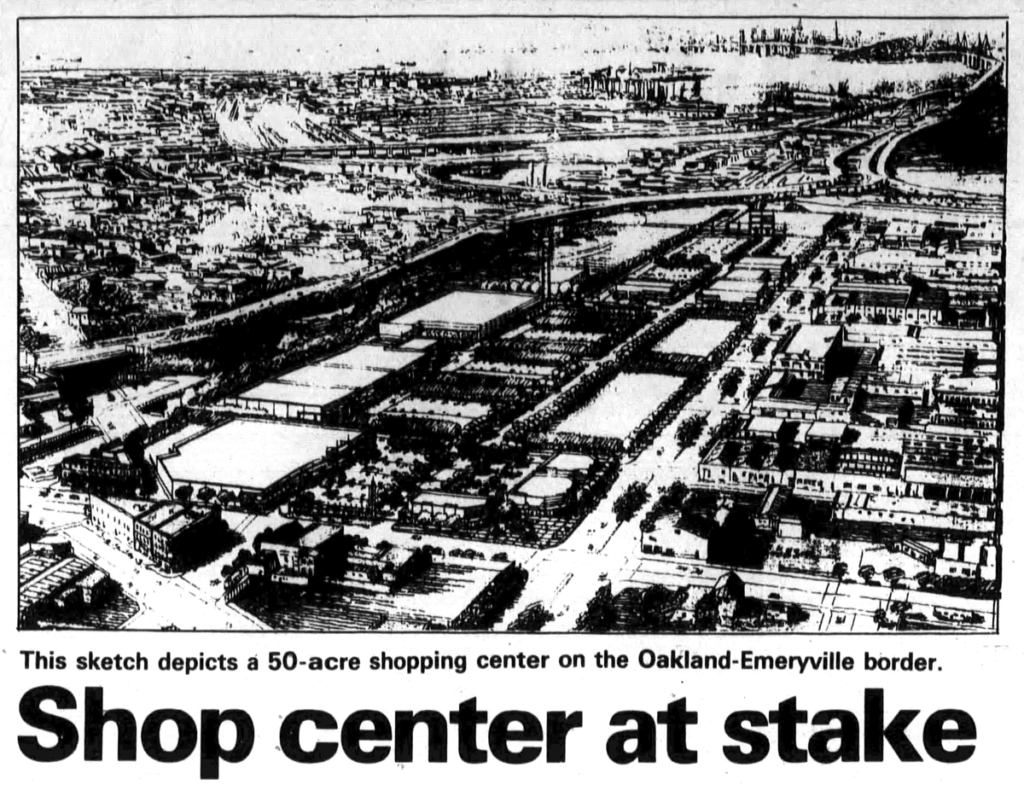
The resulting plan led to the construction of the East Bay Bridge Shopping Center, an auto-centric, warehouse-style retail center that opened in 1994. Almost all of the Emeryville portion of Yerba Buena Ave was absorbed by the development.
The nearby Bridgecourt 220-unit apartment complex was completed three years later in 1997 (acquired and renamed in 2018).
The project marked a decisive shift from rail-based industry to commercial and mixed-use redevelopment, reshaping Emeryville’s Southern edge for a new era.
