



Syndicate Bank Building (Now Avalon Senior Housing)
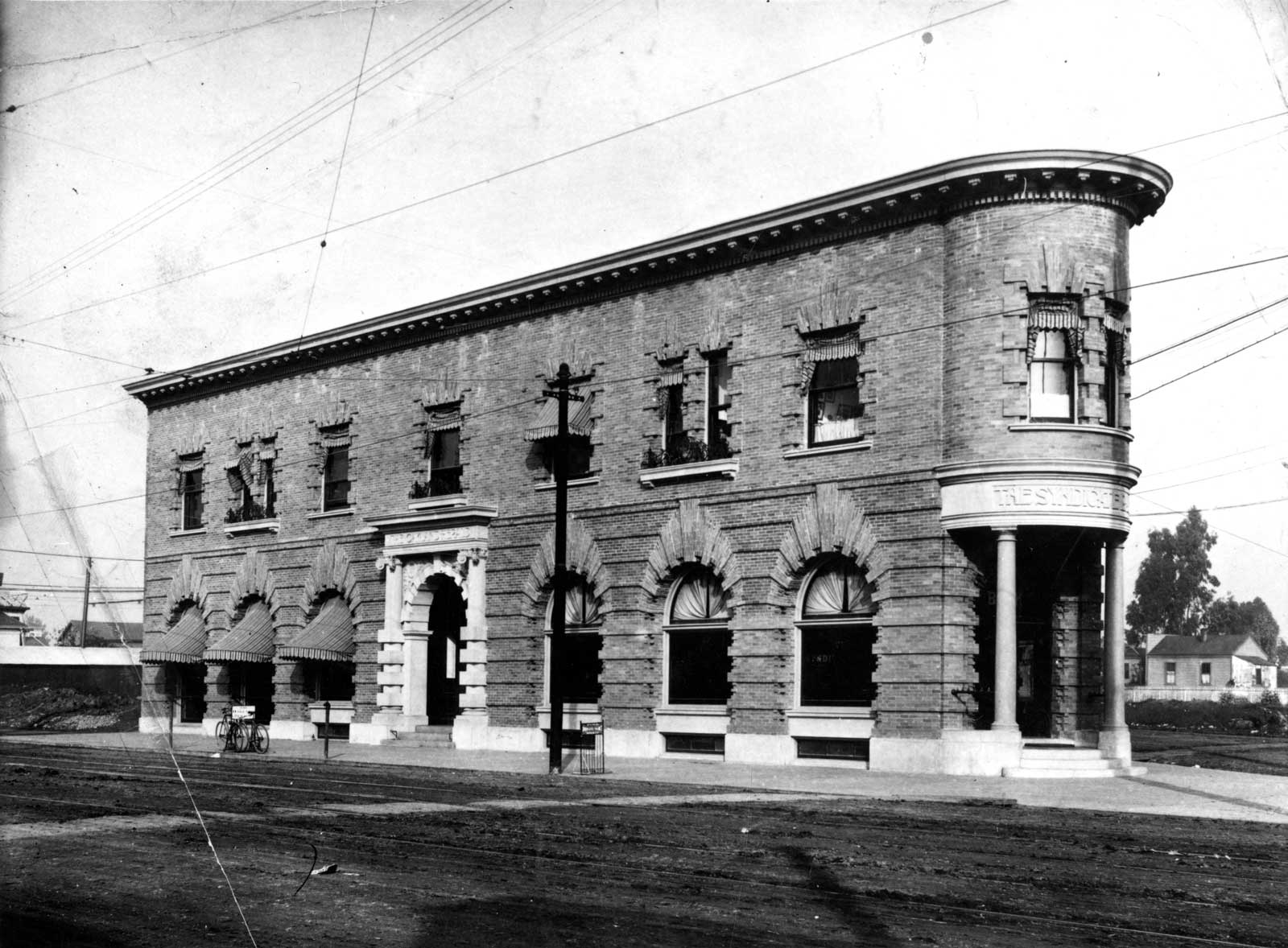
Among Emeryville’s many lost historic structures, few were as distinguished as the flatiron-shaped Syndicate Bank building that once stood at 3850 San Pablo Avenue.
Occupying the triangular gore formed by the intersection with Adeline Street, the building spent most of its life as a financial institution before ending its days as a card club.
The structure was built for the Syndicate Bank, an institution closely associated with the Realty Syndicate and its founders, prominent businessmen F. M. “Borax” Smith and Frank C. Havens among others.
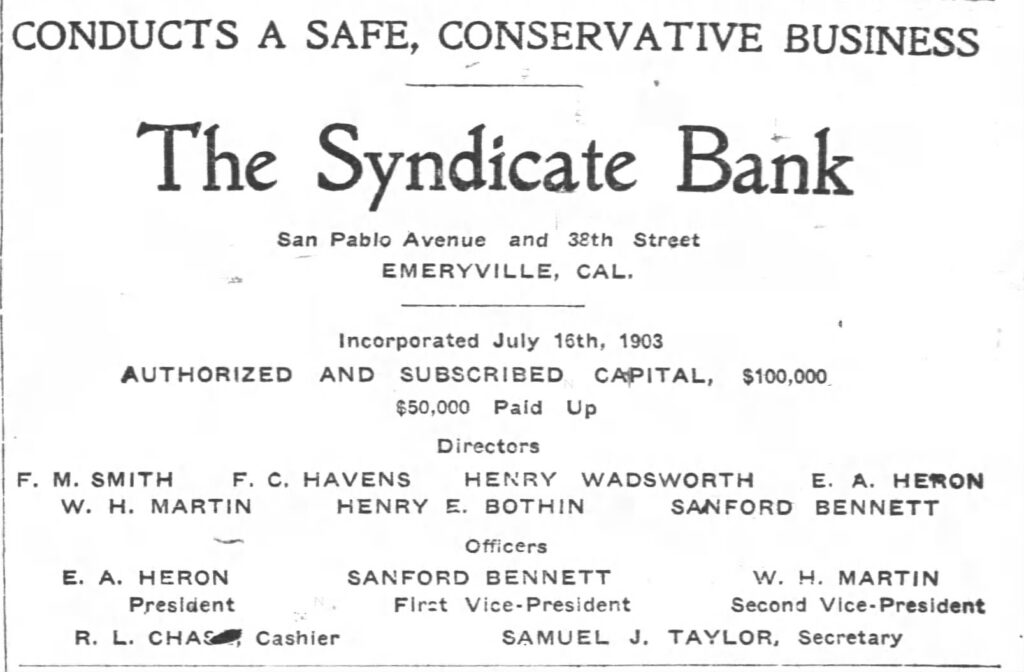
Smith earned his fortune mining and mineral processing (thus his nickname “Borax”) and was the driving force, financier, and visionary behind the electric streetcar Key System.
Havens was also a pivotal figure in the region helping drive East Bay growth through real estate, transportation, banking and water utilities.
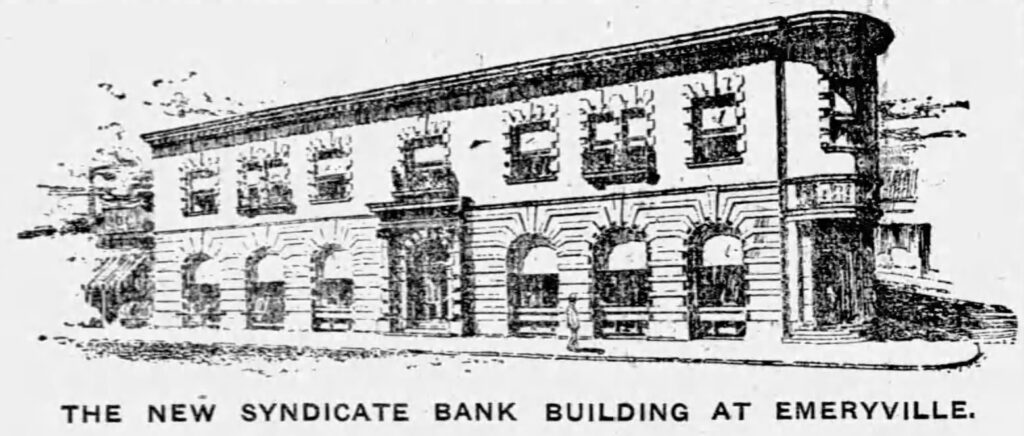
Syndicate Bank incorporated in 1903 and commissioned this building that same year. It was designed by Reid & Reid, also known as the Reid Brothers, who are probably best known for designing the Hotel del Coronado.
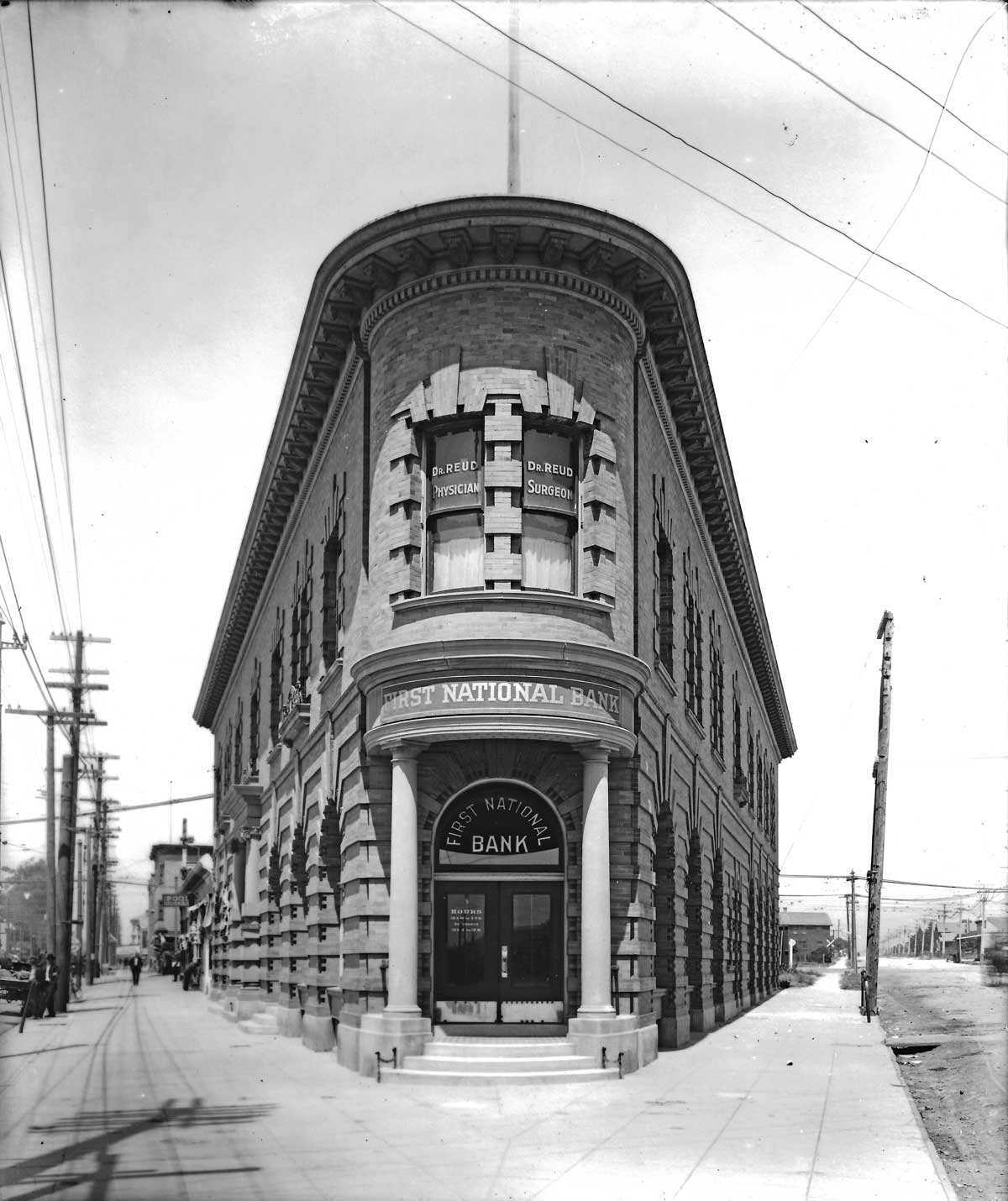
The building was Classical Revival in design and was faced with Roman brick. This brickwork was especially distinctive in the arches over the windows. The building contained two stories with the upstairs leased to the Oakland Herald newspaper that ran from 1903 – 1907.
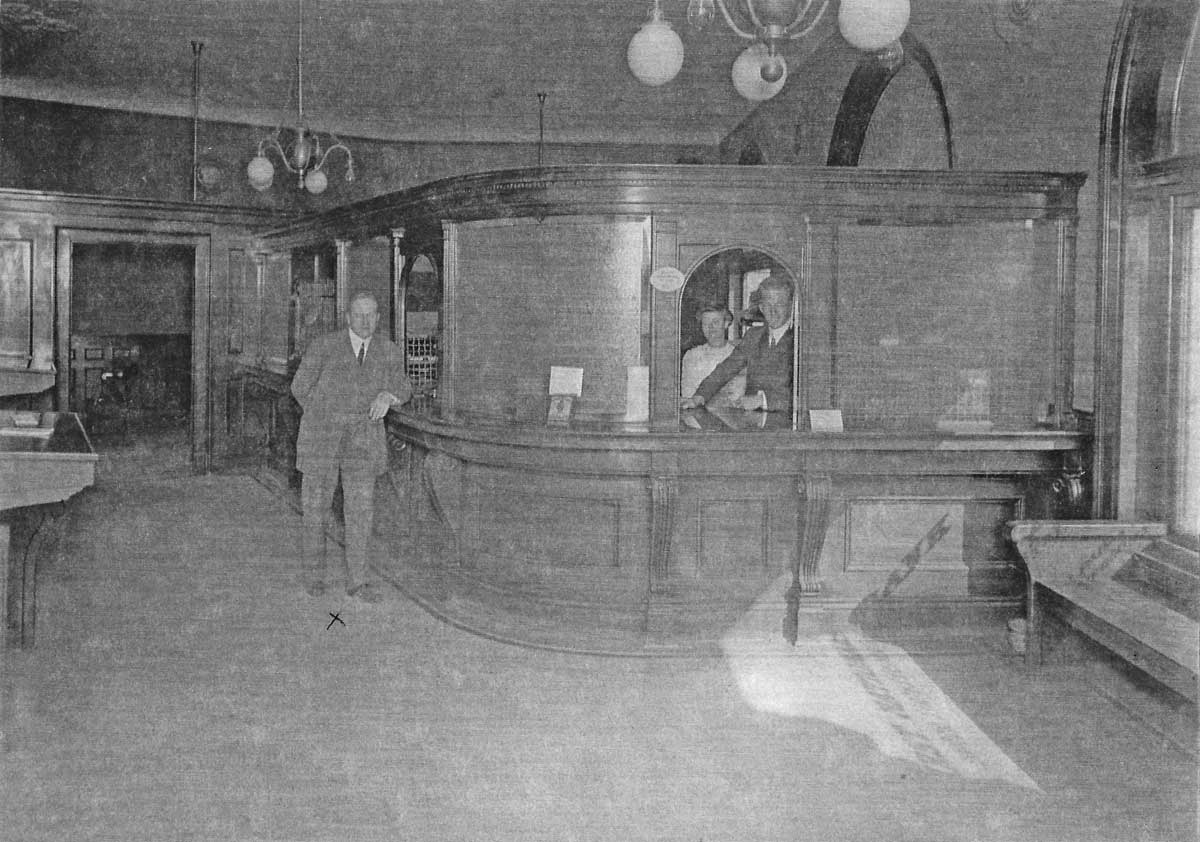
In 1909, The Syndicate Bank became the First National Bank of Emeryville, headed by Smith. In 1911, Smith resigned from the bank’s board and Fred J. Stoer, a prominent local businessman and original town trustee, bought a controlling interest in the bank. Havens previously departed from active involvement in the bank although the precise year is unknown.
In 1922, the bank was sold to the Mercantile Trust Company which merged with the American Bank in 1926, and became the American Trust Company.
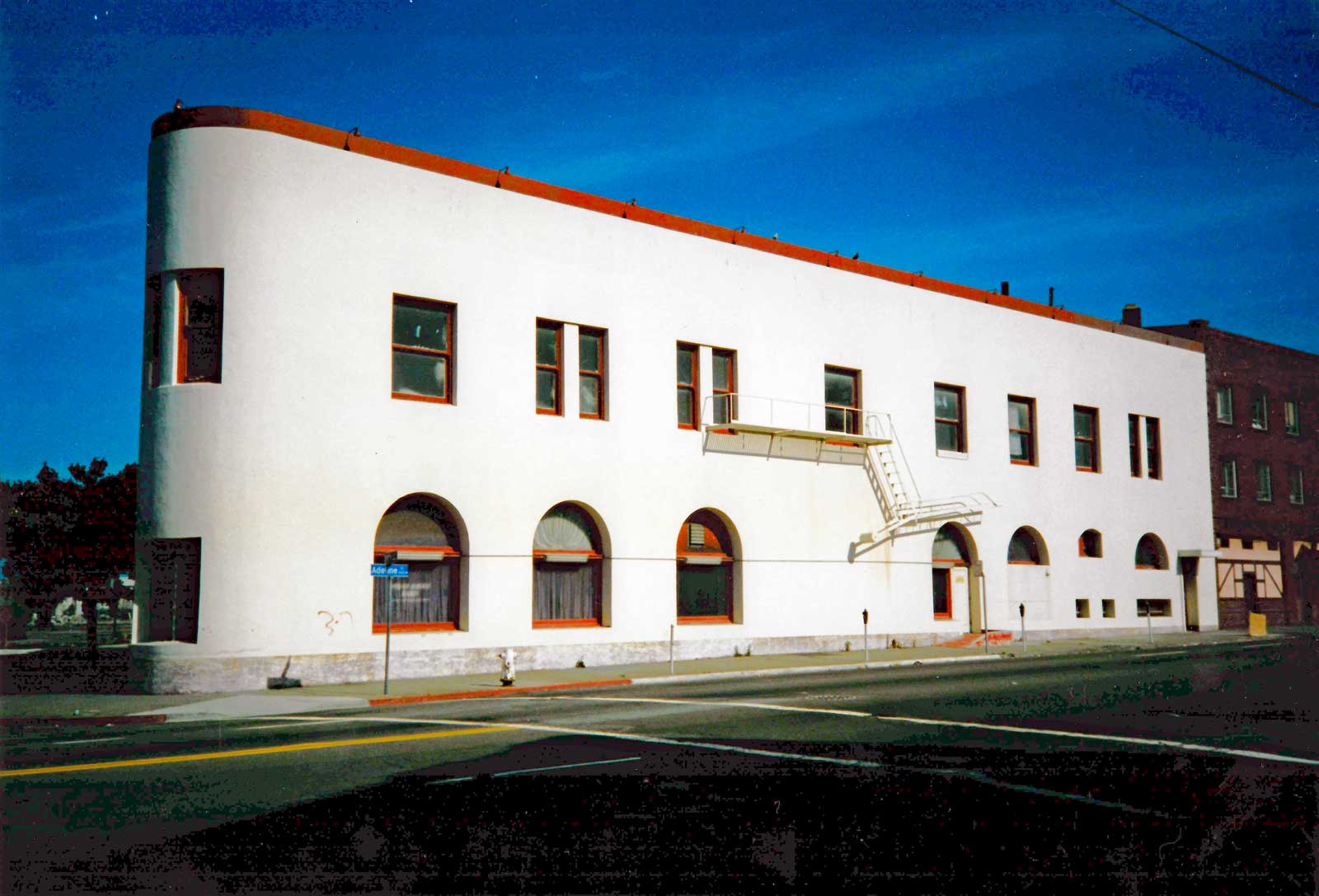
In 1950, the building was stripped of its ornamentation and its Roman brick exterior was stuccoed over, giving it a postwar, streamlined Moderne style reminiscent of an ocean liner. The original entrance columns were removed and replaced with glass brick.
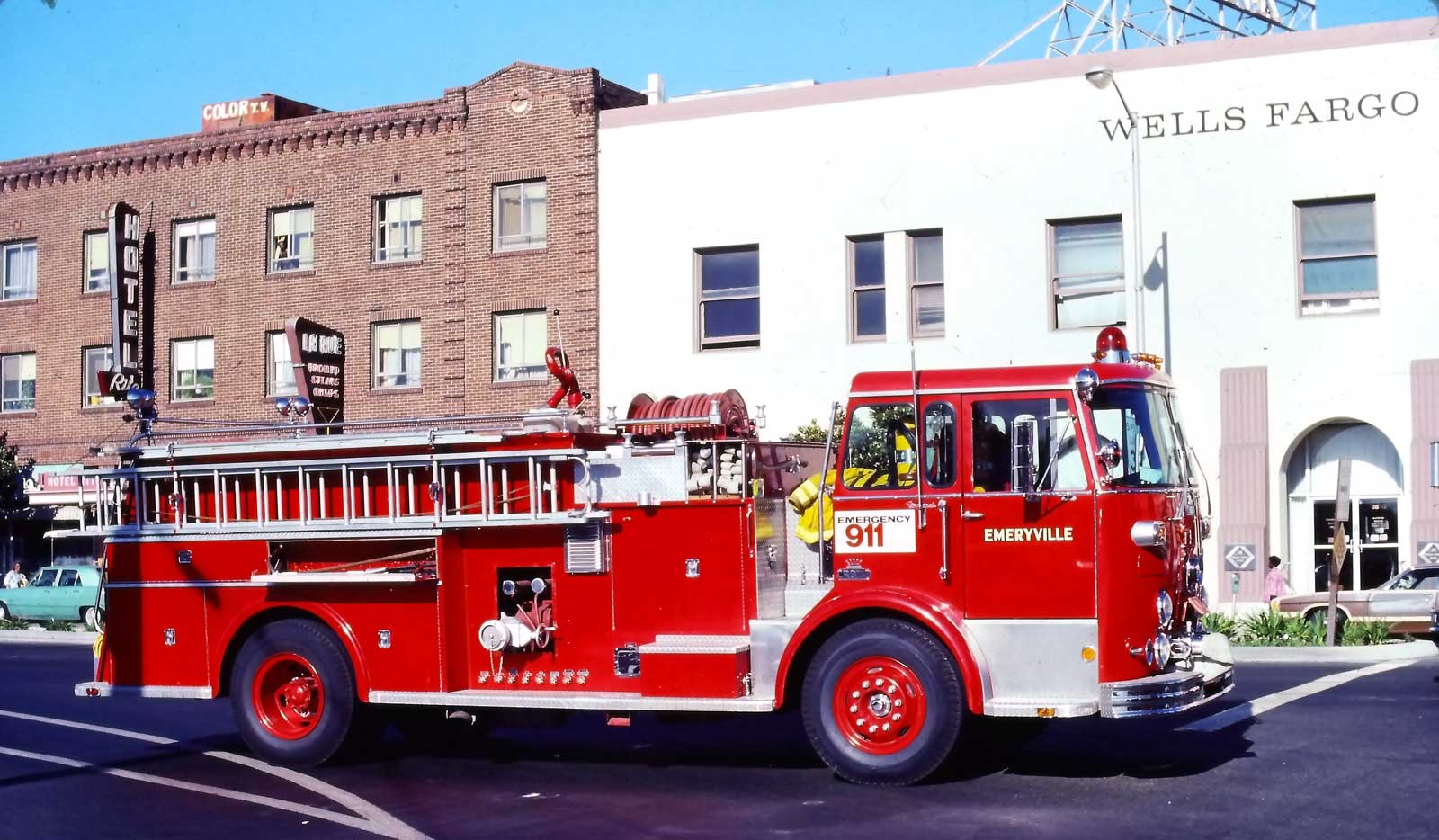
The building became a Wells Fargo branch in 1952 where it operated for over three decades. This branch closed in 1984.
In 1986, after serving various banks for over 80 years, the building was leased to and operated as a card room known as the Sands Club.
The Sands Club previously operated at 4114 San Pablo Ave across from the Oaks Card Club albeit briefly.
A separate Pai Gow Club operated upstairs that catered to a mostly Asian clientele.
Shifting priorities, regulations and economics in this decade saw a huge retraction and consolidation in card clubs in the city with the Sands Club among them. They permanently closed in 1988.
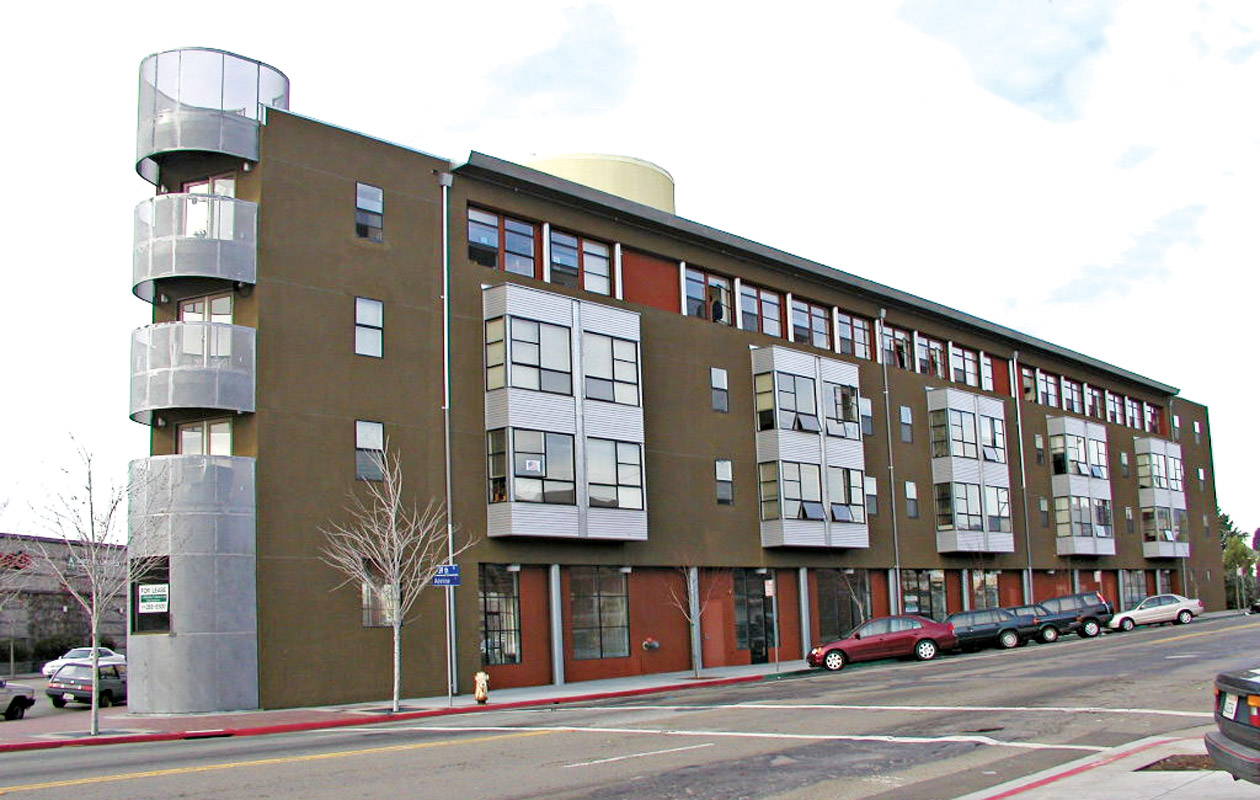
The building stood vacant for several years but was eventually acquired by the city’s Redevelopment Agency and razed to make way for the Avalon Senior Housing complex that was completed in 1999.
