



The East Bay Auto Camp (Now The ECCL)
This large swath of land between 53rd and 47th Streets, straddling the Emeryville–Oakland border, was once home to an “auto camp”, a popular and affordable way for middle-class Americans to explore the country by car in the early 20th century.
Mass production of the automobile surged in the 1910s. Car ownership among American families jumped from about 2% to roughly one-third by 1920, opening new opportunities for leisure travel. The Lincoln Highway, the first transcontinental road, was dedicated in 1913, and San Pablo Avenue quickly became lined with automotive businesses, service stations, and recreational enterprises.
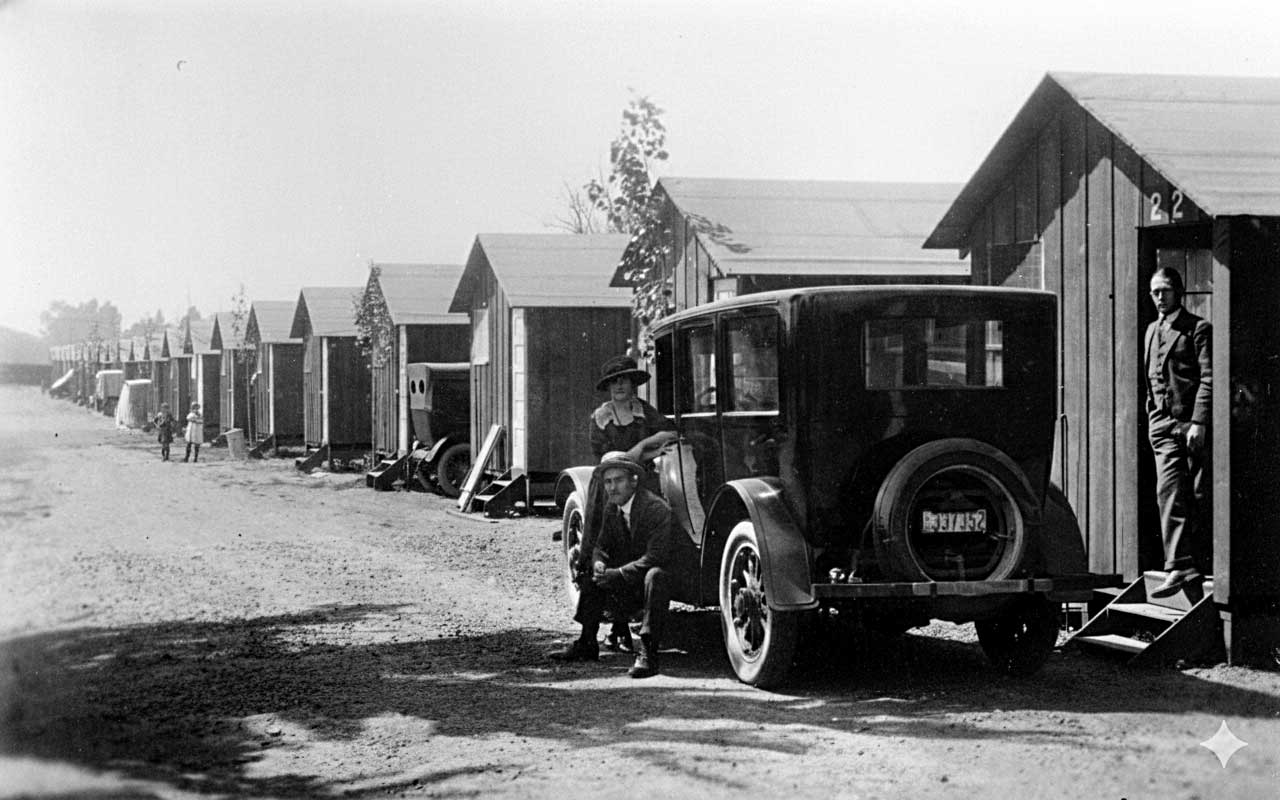
In response to the growing demand for road travel, auto camping emerged—clusters of small cottages or cabins where motorists could stay overnight or for an extended period without the expense of a hotel.
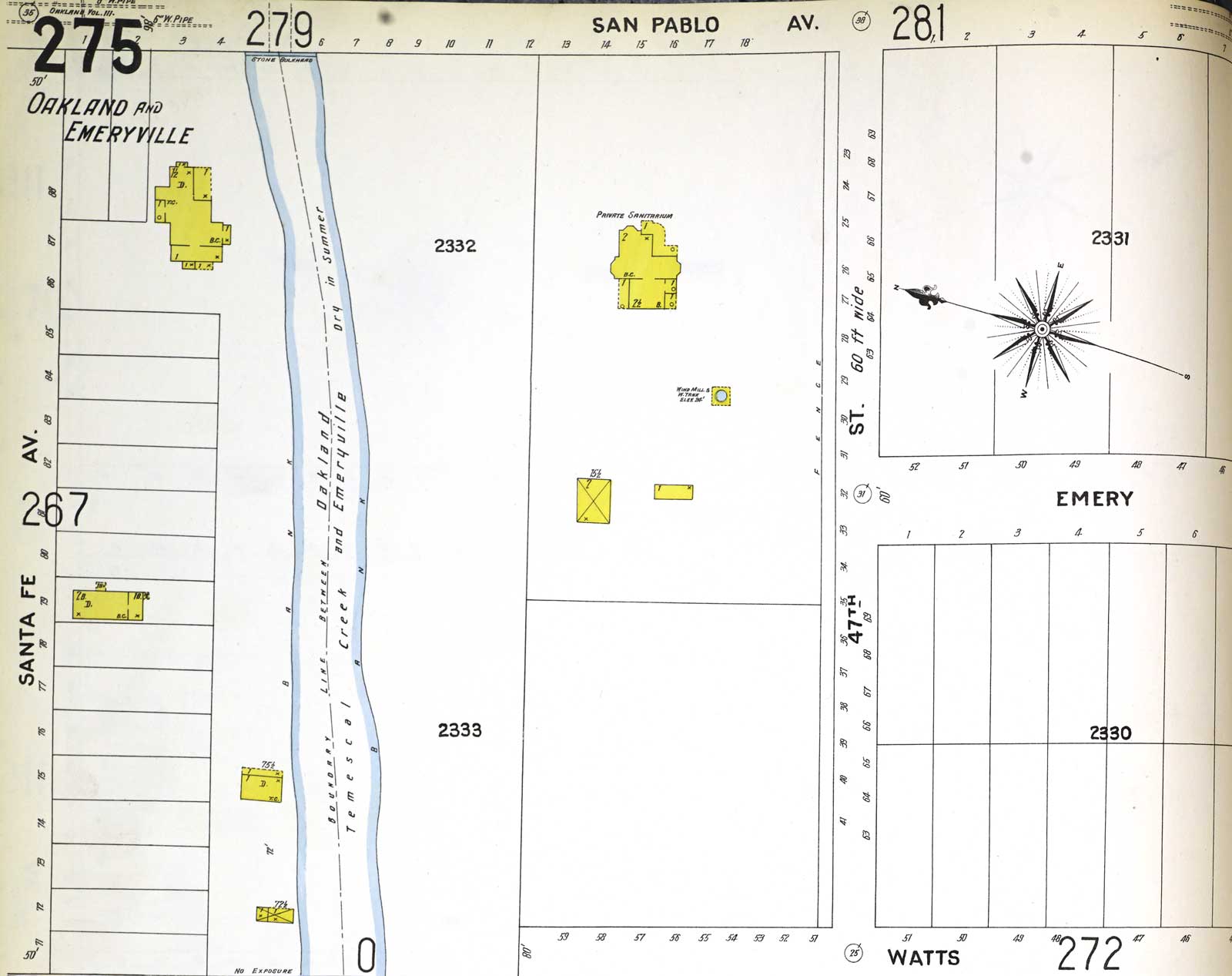
One of these was the East Bay Auto Camp, established in 1922 at 4811 San Pablo Avenue, between 47th and 53rd Streets. Before that, a 1903 Sanborn map lists the site as a “private sanitarium” and mostly vacant lots. In the early 20th century, sanitariums were long-term care facilities, often for tuberculosis patients, where people lived while receiving treatment and recuperation.
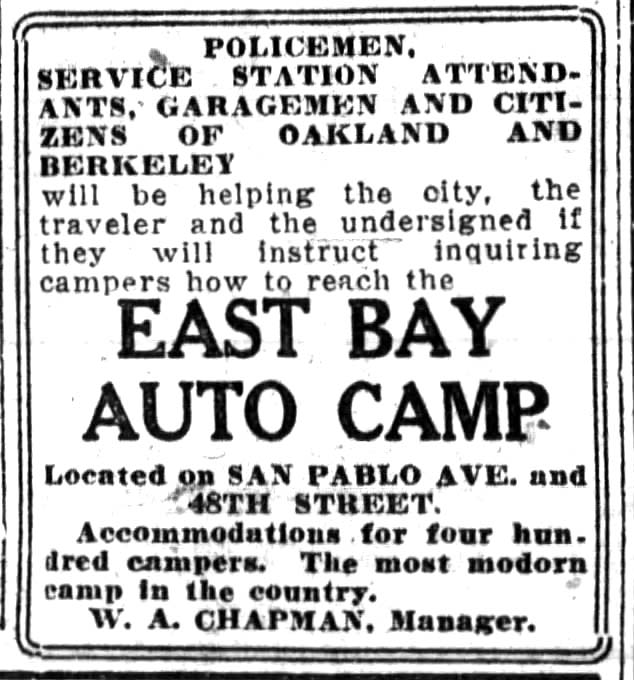
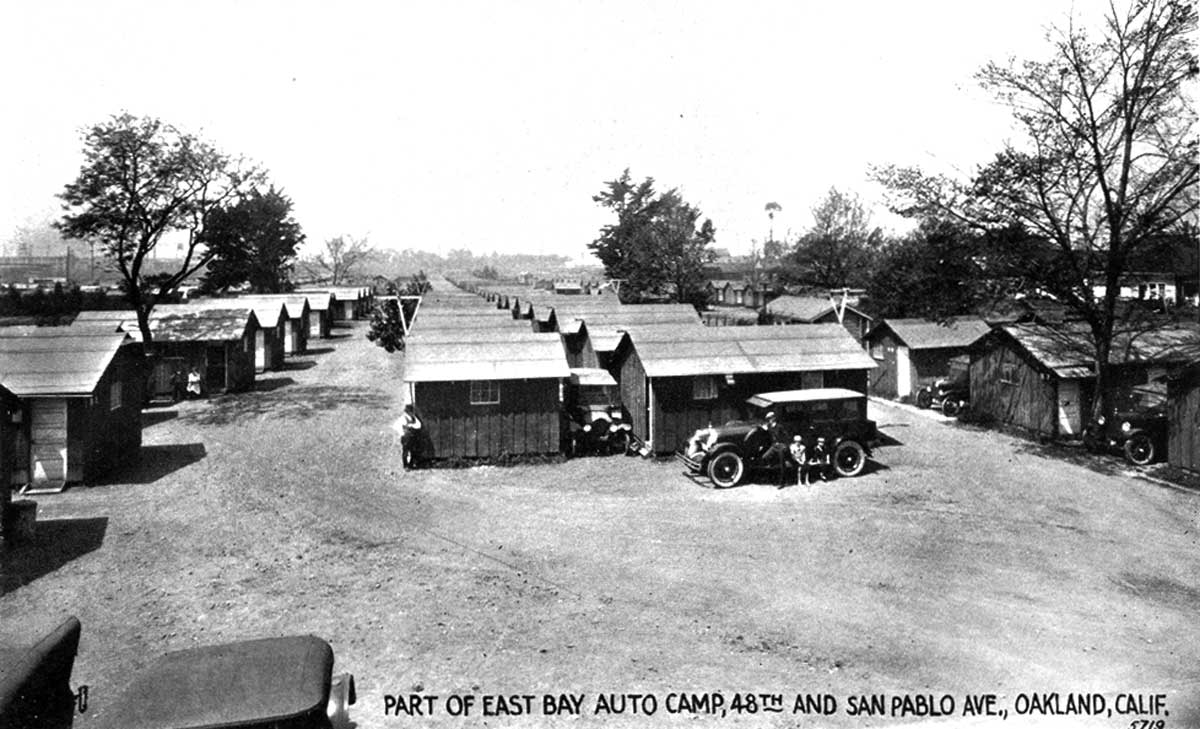
The East Bay Auto Camp was built and operated by Enoch Winsby, a successful businessman and owner of Oakland’s United Iron Works. The camp featured over 250 wooden cabins, measuring roughly 8×10 feet or 9×12 feet, spaced about 10 feet apart—wide enough for tenants to park their cars. Temescal Creek ran through the property, adding a scenic touch.
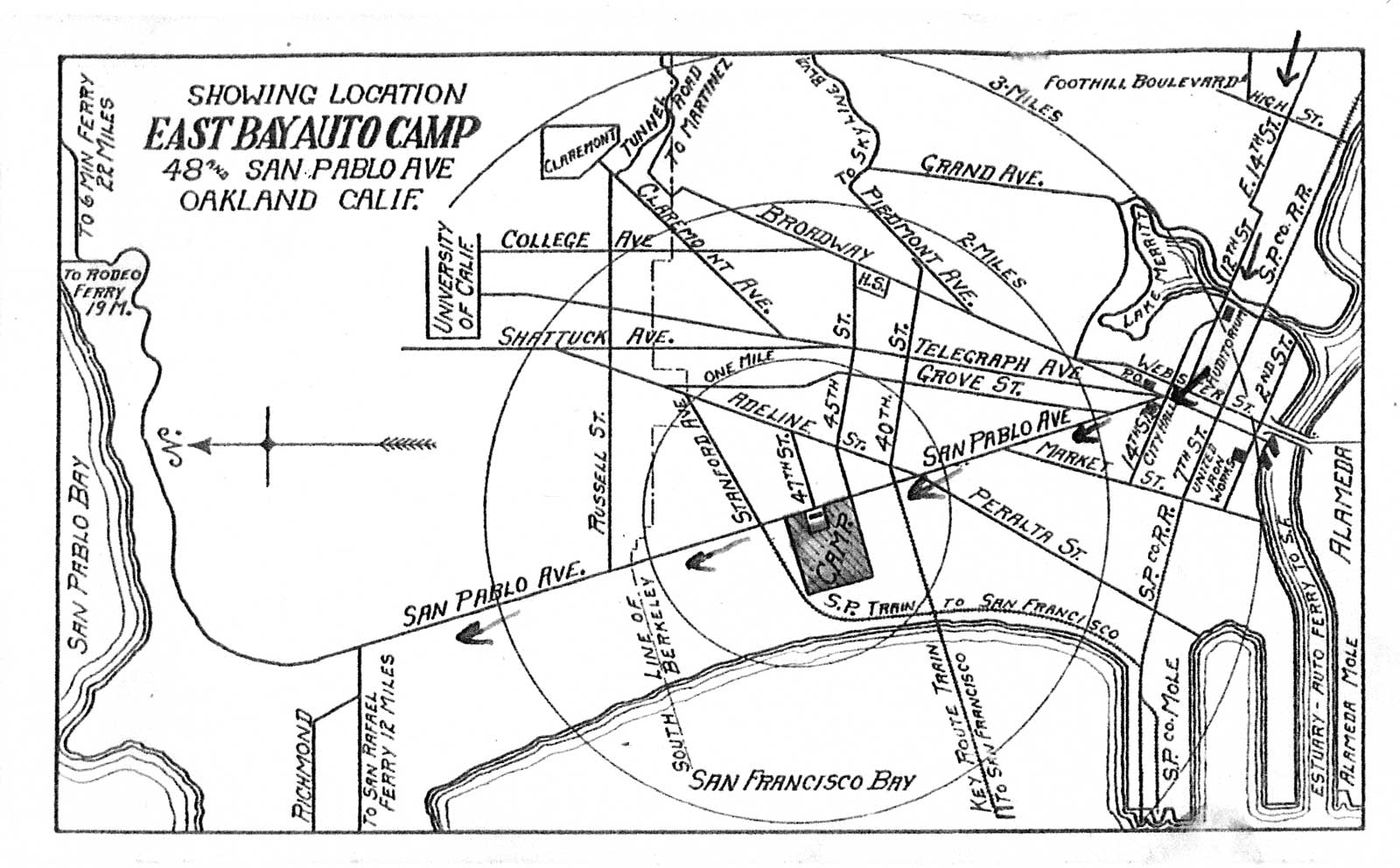
Cabins were arranged in a simple grid with streets named Main, North, South, East, West, Front, 1st, and 2nd. The camp included an office, a gas station, and a grocery store. Most cottages had gas stoves, sinks with cold water, electricity, lighting, and in some cases telephone service.
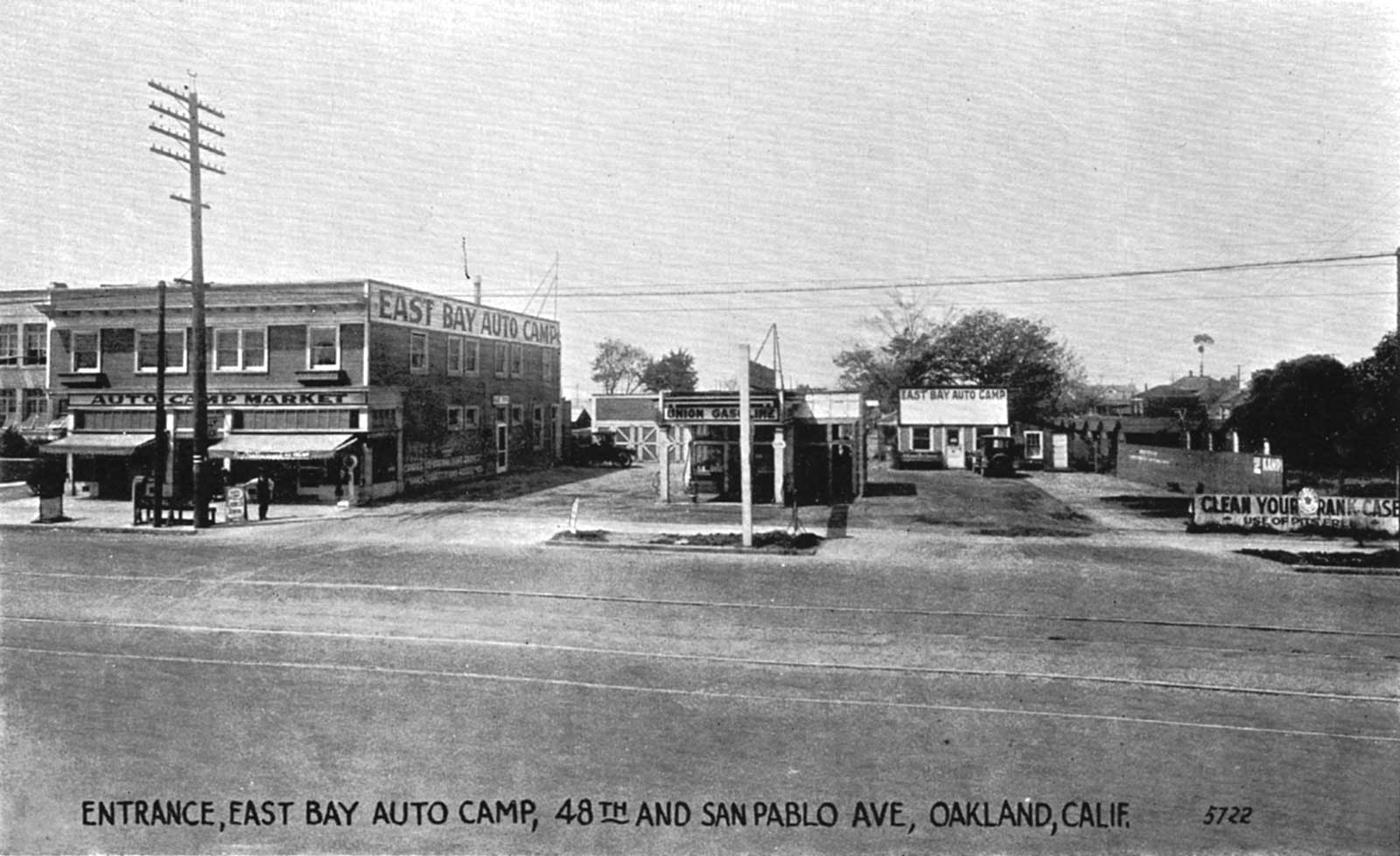
Residents paid a weekly rate, and the camp likely housed a mix of travelers, seasonal workers, and itinerant laborers. However, the operation faced challenges during its four years, including disorderly conduct, bootlegging, and other more heinous crimes.
The East Bay Auto Camp abruptly closed in 1928. While its exact demise is unclear, sanitation concerns, social pressures, and changing traveler expectations—including the demand for private bathrooms—likely contributed. The rise of motels, which expanded rapidly in the 1920s and 1930s, further rendered auto camps obsolete.
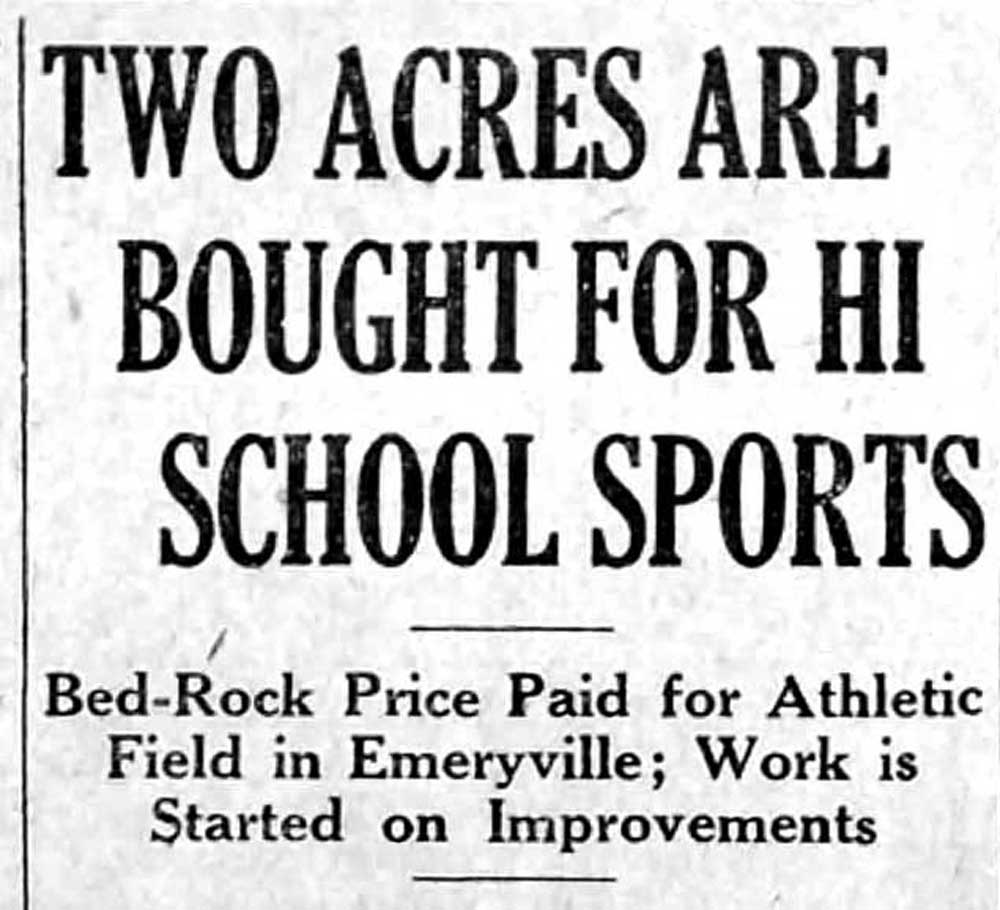
After closure, the wooden cottages were sold for $35 each, often repurposed as chicken coops or backyard cottages. The land was eventually acquired by the school district for athletic fields, marking the end of the area’s brief chapter as a bustling hub of automobile tourism.
