



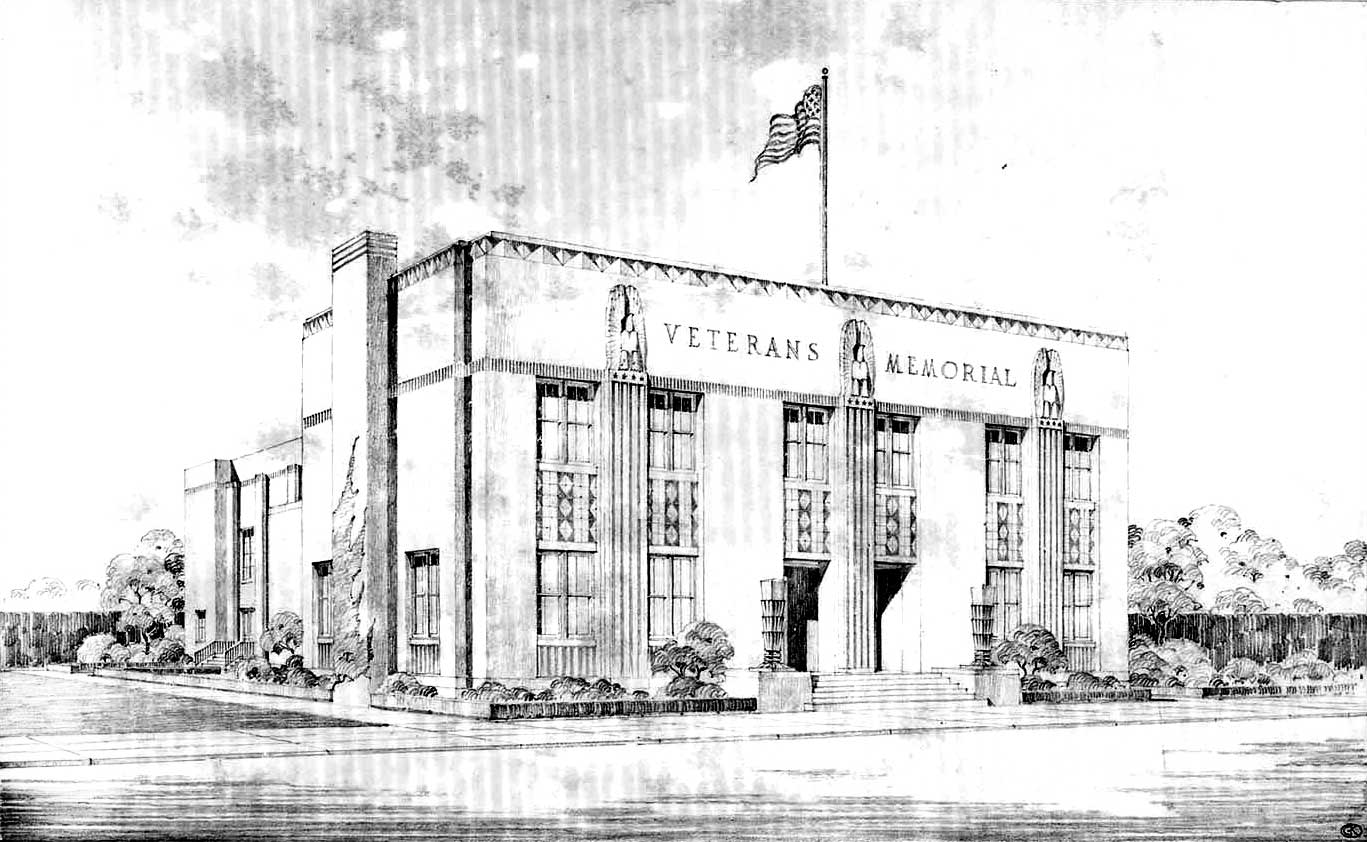
Veterans’ Memorial Building (Now The Emeryville Senior Center)
Today, the Emeryville Senior Center at 4321 Salem Street is a regional destination for older adults, offering meals, health and wellness programs, educational activities, trips, and a vital place for social connection.
The structure that houses it was originally built as a Veteran’s Memorial for the Veterans of Foreign Wars Post 1010.

In the years following World War I, communities across the country began grassroots efforts to acknowledge the 116,000 U.S. soldiers that were killed in the war. These “Posts” were organized and chartered by the American Legion, an advocacy organization for veterans.
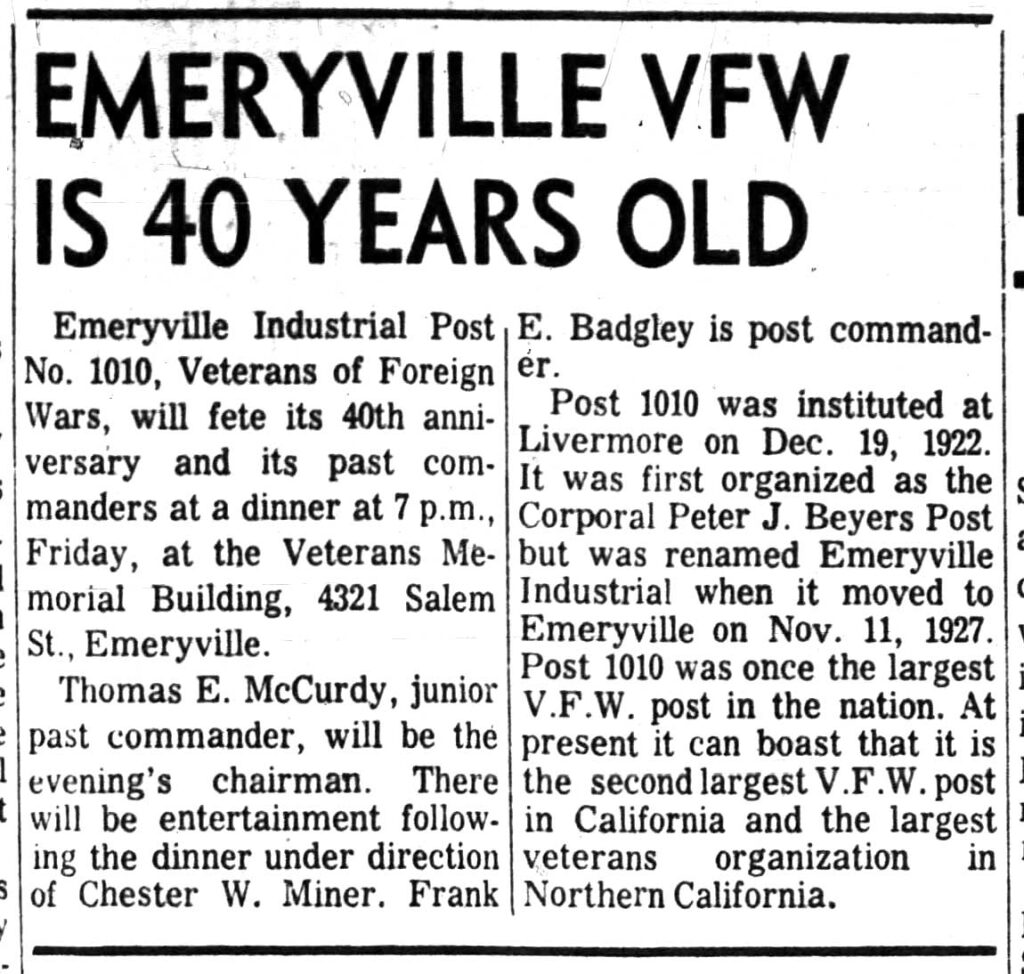
VFW Post 1010 was originally organized in the Livermore Valley in 1922 as the “Peter J. Beyers Post.” It was named after 26-year-old Corporal Peter Beyers who was the first resident of the area to die in World War I. Beyers was killed in an offensive in France on Sept. 27, 1918.
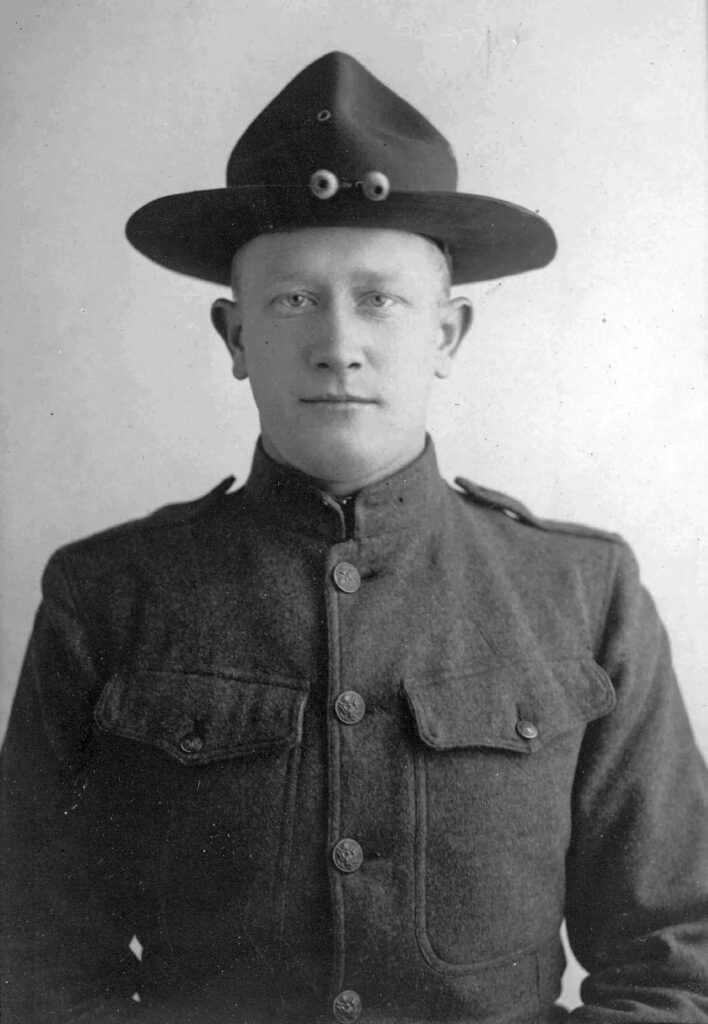
These posts not only provided a social connection to veterans, they provided service and information to them and their families. They were also organized into “companies,” that were occasionally activated to help handle local emergencies, volunteering their diverse skillsets from their military backgrounds and professional occupations.
In 1927, the Peter J. Beyers Post moved to Emeryville and was renamed Emeryville Industrial Post 1010, reflecting the city’s strong manufacturing base. Initial membership was about 40 members. Weekly meetings were held at Emeryville City Hall but the organization longed for a permanent home to conduct their affairs and grow their ranks.
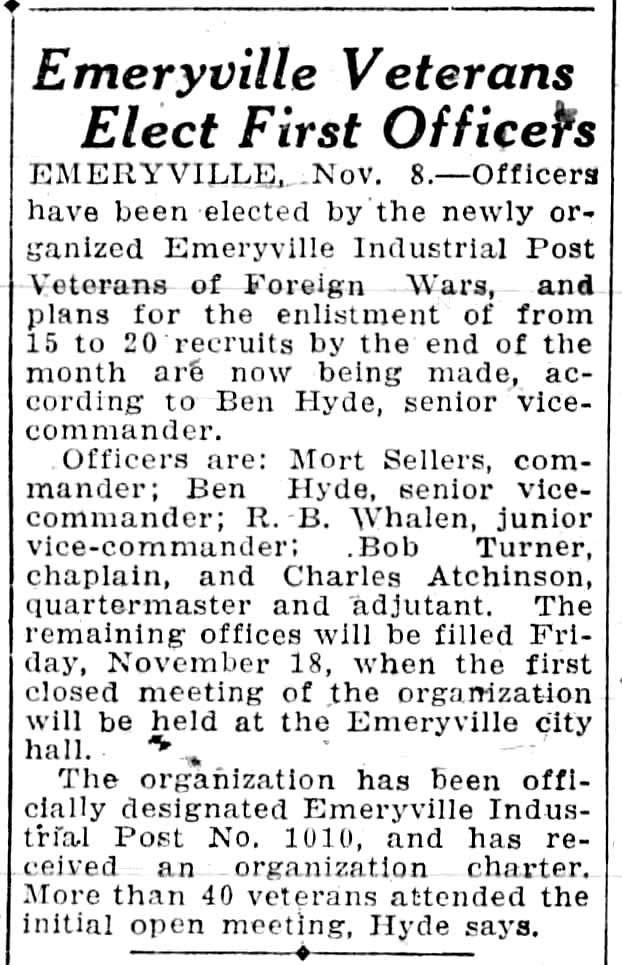
By 1929 the post had swelled to over 500 members and became an influential force in the city.
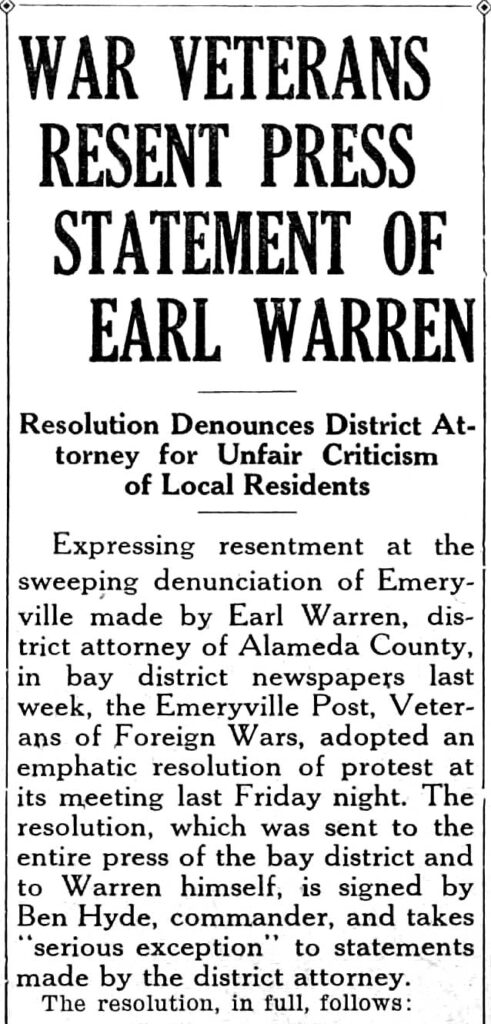
They pushed back on District Attorney Earl Warren’s characterization of the city as “Rotten” and labeling the whole community as “a beautiful vice resort.” They issued a resolution denouncing Warren for his “unfair criticism of local residents” and expressing resentment at the “sweeping denunciation of Emeryville” made by him.
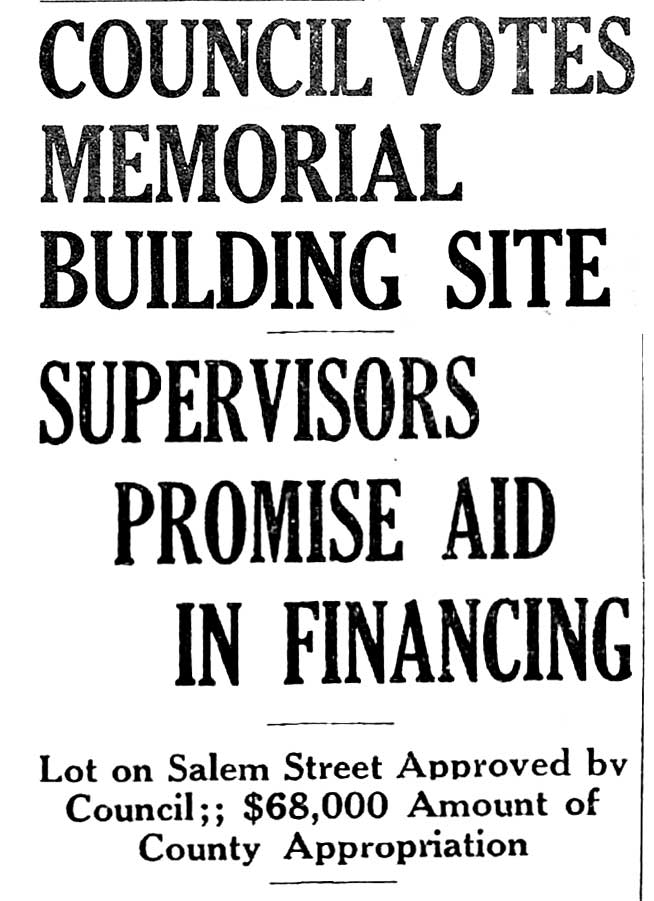
The recruiting success of Post 1010 in the late 1920s attracted the attention of the Alameda County Board of Supervisors. In 1930 they voted to fund the construction of a Veterans Building in Emeryville. The City contributed to the project by donating a lot in a residential area on Salem Street.
Designed in the streamline moderne style by architects Henry H. Meyers and George Klinkhardt, the two-story building was completed in just seven months at a cost of $90,000.
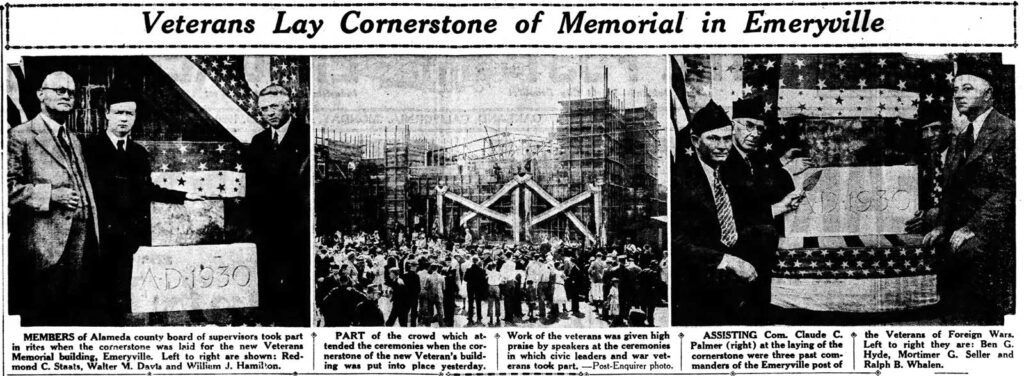
The symbolic cornerstone was laid on August 24, 1930, containing documents that recorded the history and purpose of the memorial.
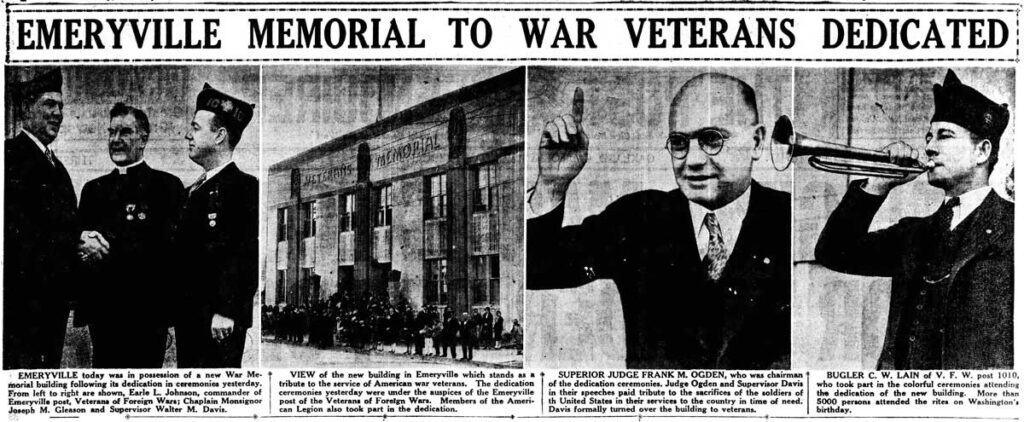
The Emeryville Veterans’ Memorial Building was formally dedicated on February 22, 1931 to a reported crowd of 5,000.
The first floor featured a 750-seat auditorium, stage, projection booth, kitchen, club room, and bar, while the second floor housed a lodge room and offices.
The influential Emeryville Industries Association also made the building its home.
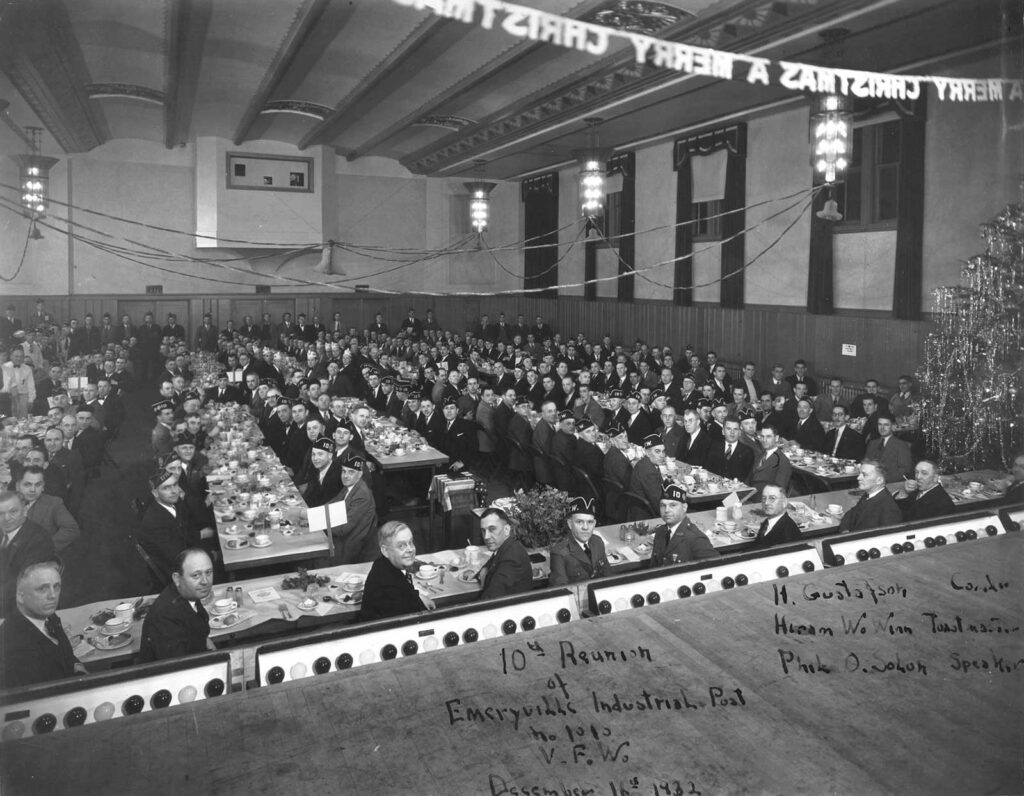
The Veteran Memorial became a key social institution in the 1930s, serving as a relief and employment agency during the depression. It also joined a county program to provide food for needy veterans.
Post 1010 facilitated various activities through the building including sports, drum corps, dancing and rifle, baseball and bowling teams.
WWII
During World War II, the building was converted into barracks for active-duty troops, including a 200-member unit of the Minnesota National Guard that occupied the structure for two years.
At the conclusion of WWII, membership in Post 1010 increased dramatically. By 1944 with a membership of over 4,000, it was considered the largest post in California.
Conversion to Senior Center
In subsequent decades, however, participation steadily declined as members aged and moved away. The last mention of the organization in news archives was in 1983 and presumed to have been dissolved or absorbed shortly thereafter.
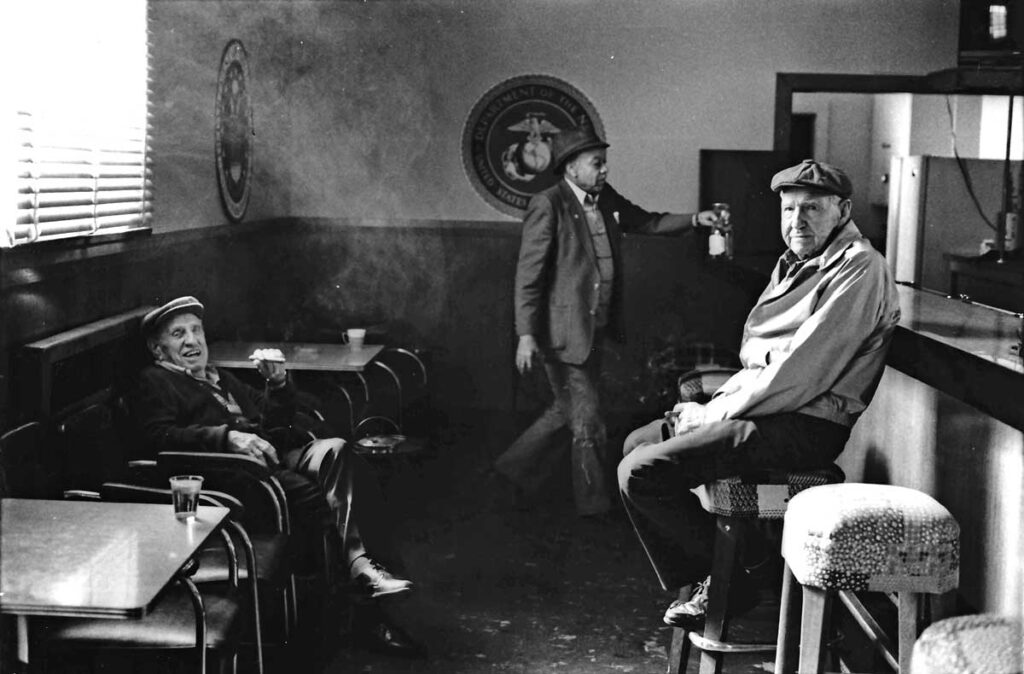
Community advocates eventually pushed for the sparsely used building’s reuse as a senior facility. Emeryville purchased the building from Alameda County in April 1991 and took over maintenance responsibilities. The “Emeryville Senior Citizens Center” opened in 1977.
In 2015, the city undertook a $2 million renovation of the center to address years of deferred maintenance and needed seismic upgrades. The revitalized center reopened in 2016.
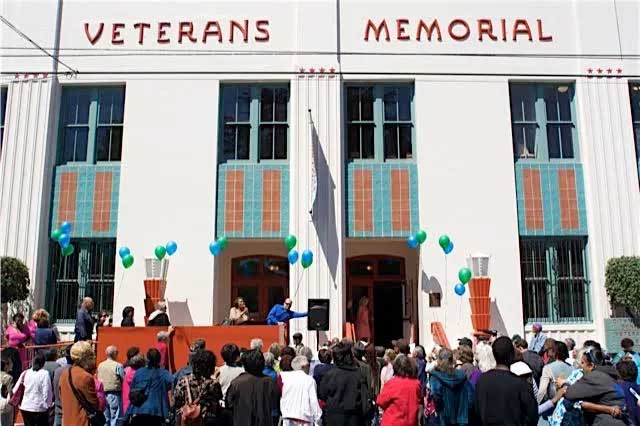
Today, the former Veterans’ Memorial continues its legacy of service—supporting independence, connection, and quality of life for Emeryville’s older residents while standing as a lasting monument to the city’s veterans and civic spirit.
A more comprehensive history of the structure that was first published in the city’s centennial edition can be read here.
